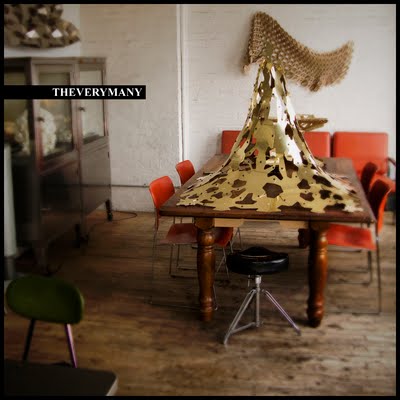
Tuesday, June 03, 2008

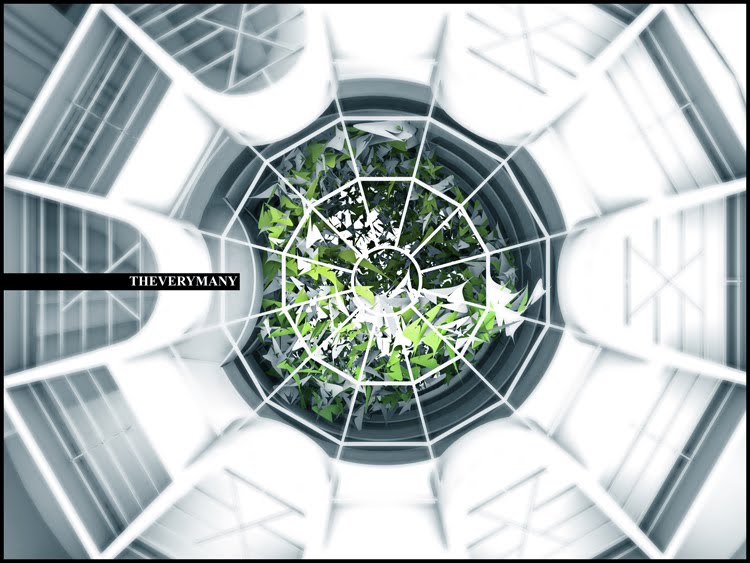
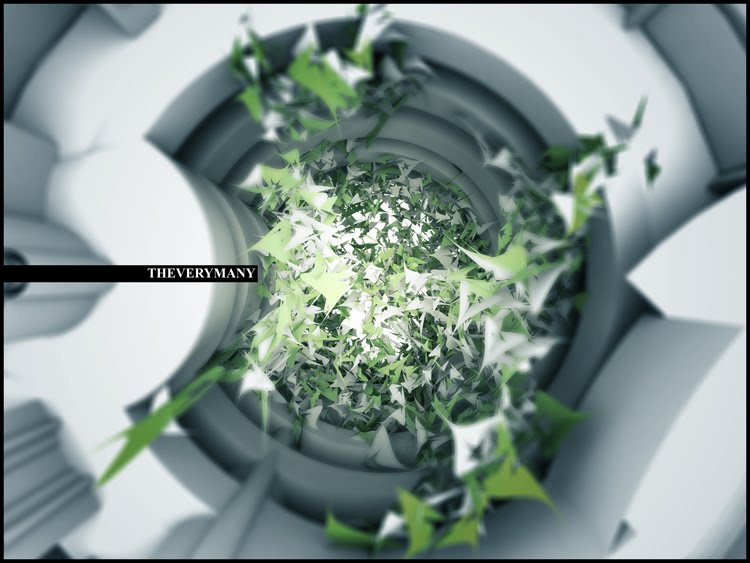
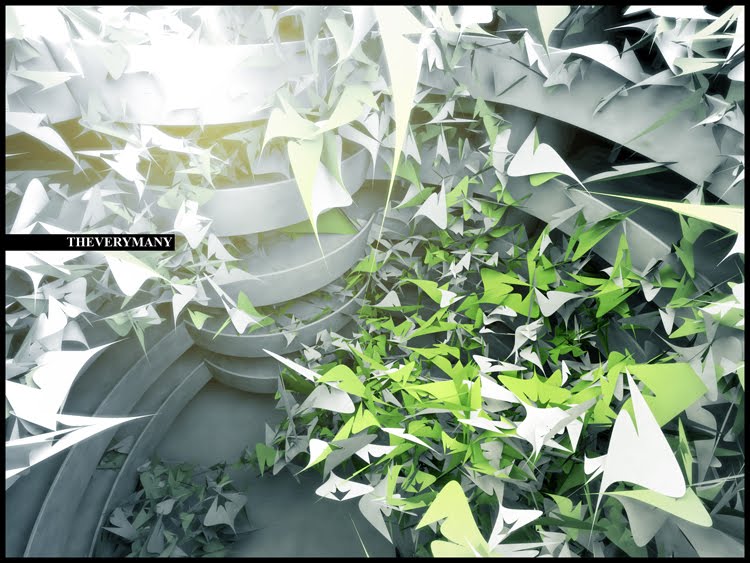
080603_CoLab: R&Sie + THEVERYMANY (001)


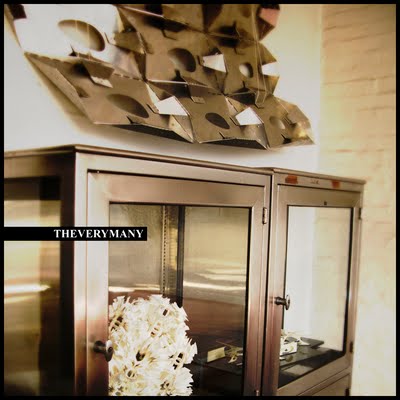
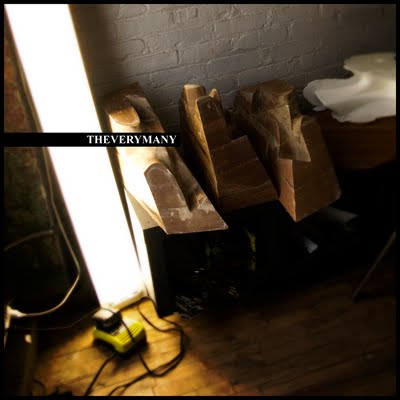
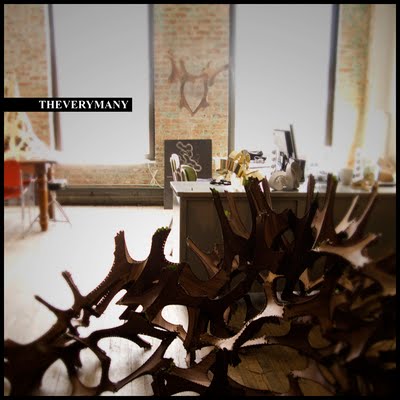
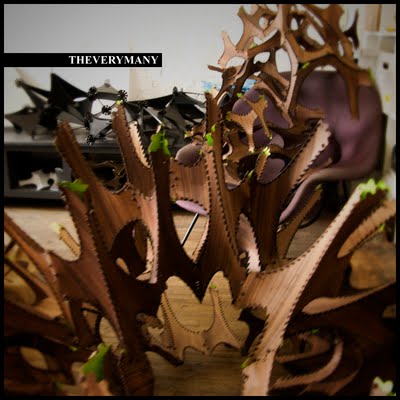
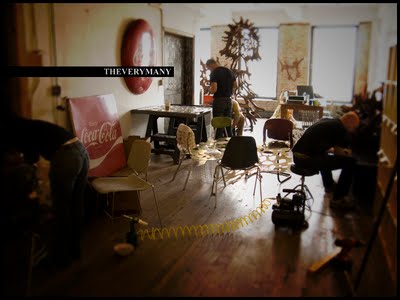
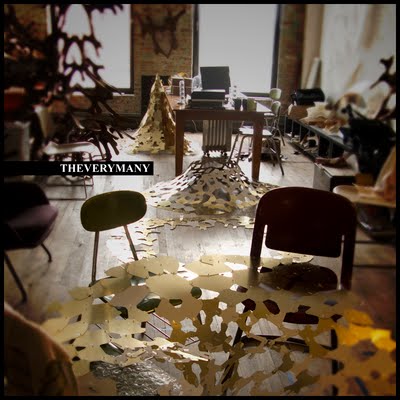
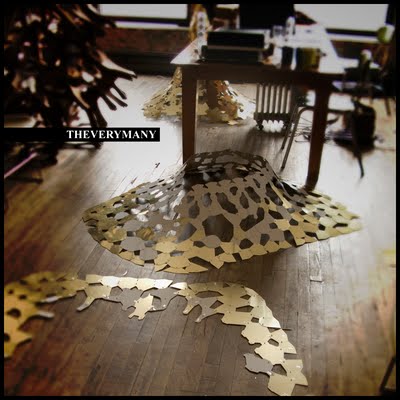
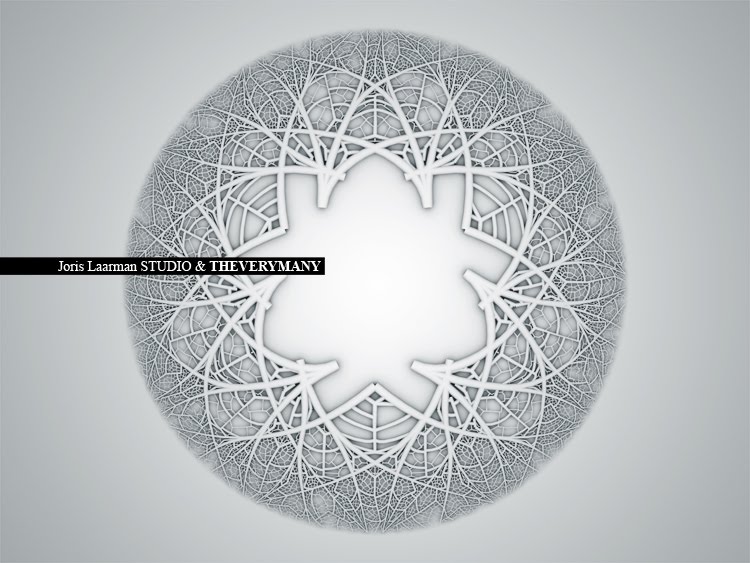
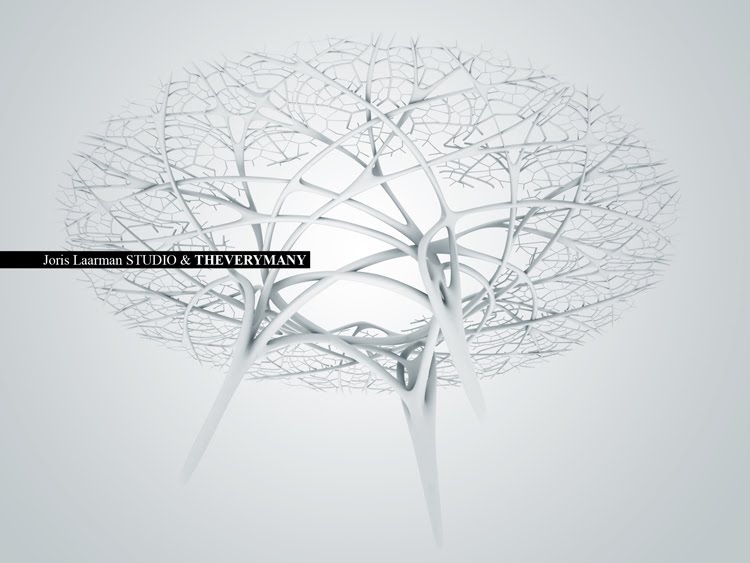
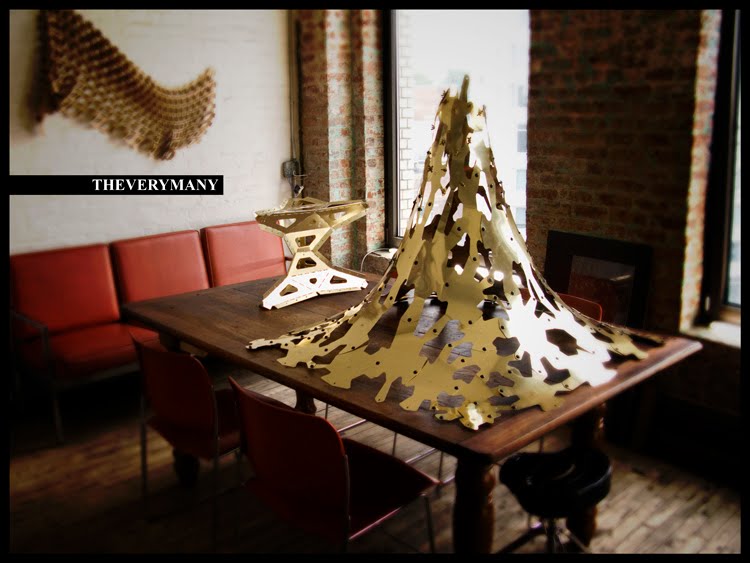
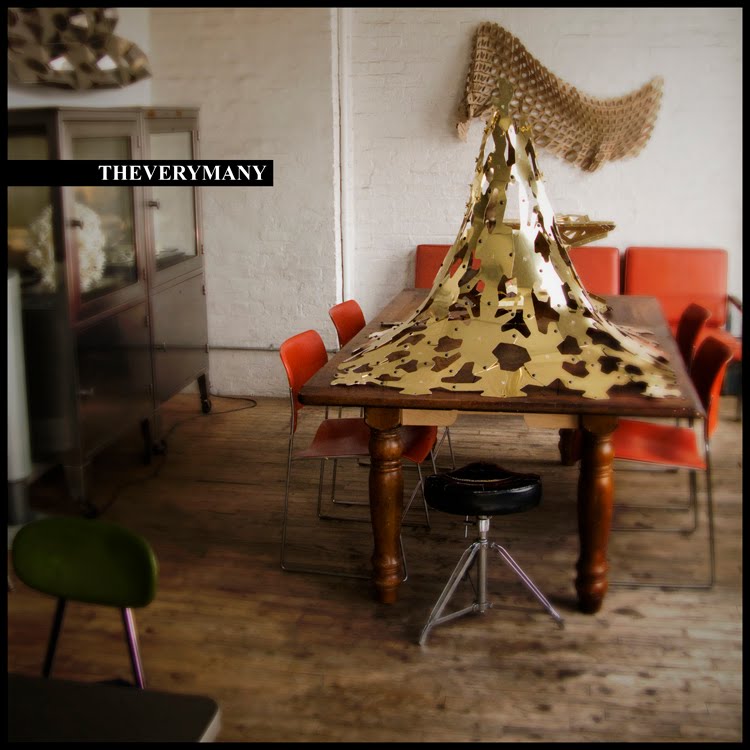
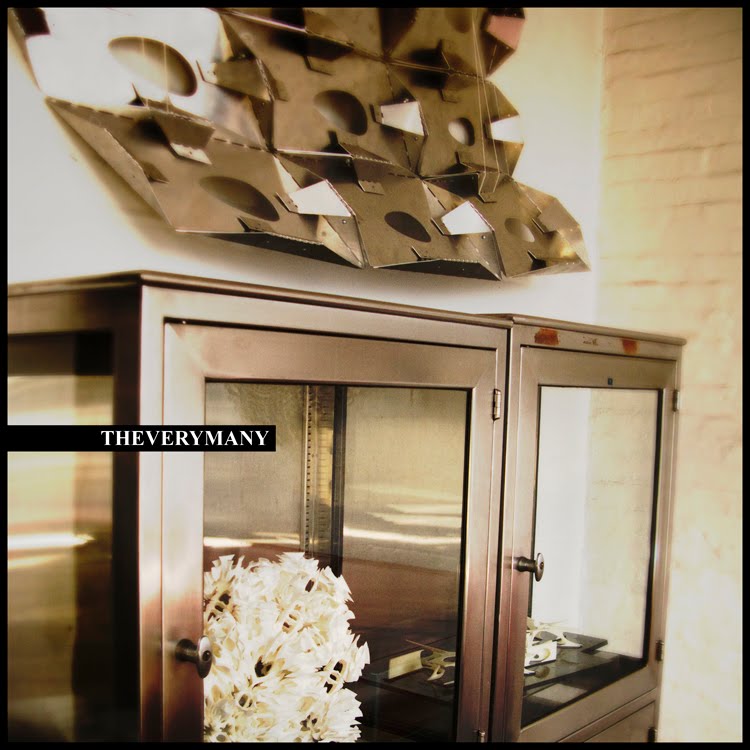
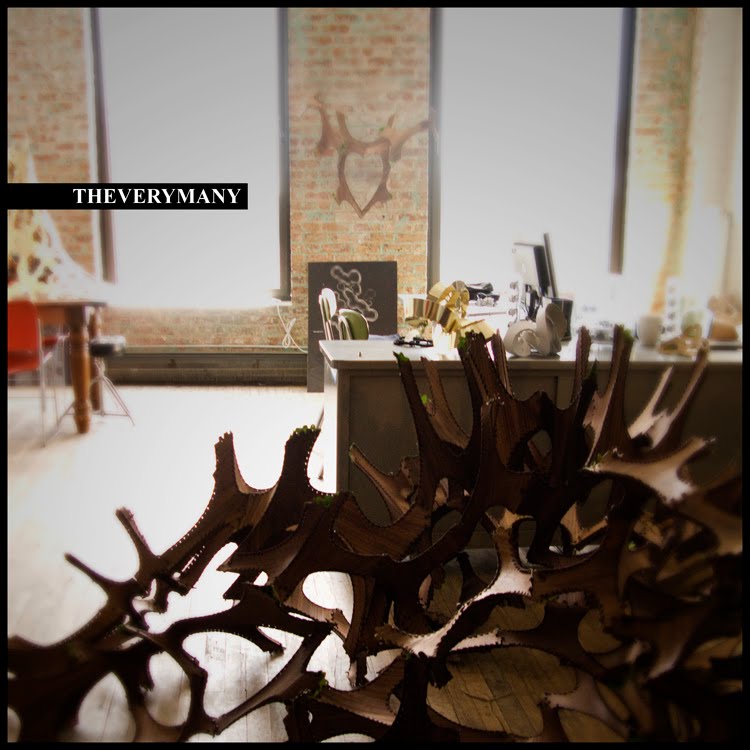
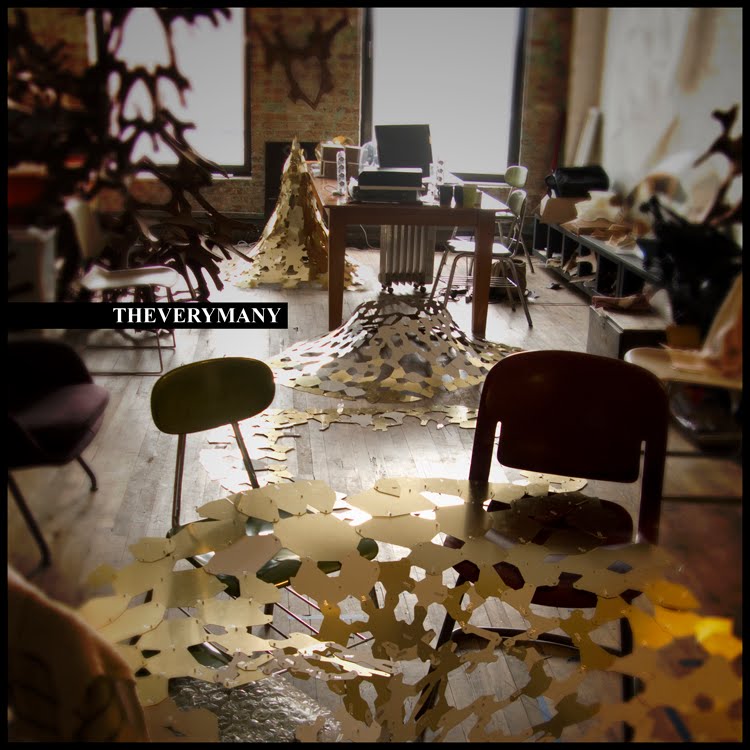
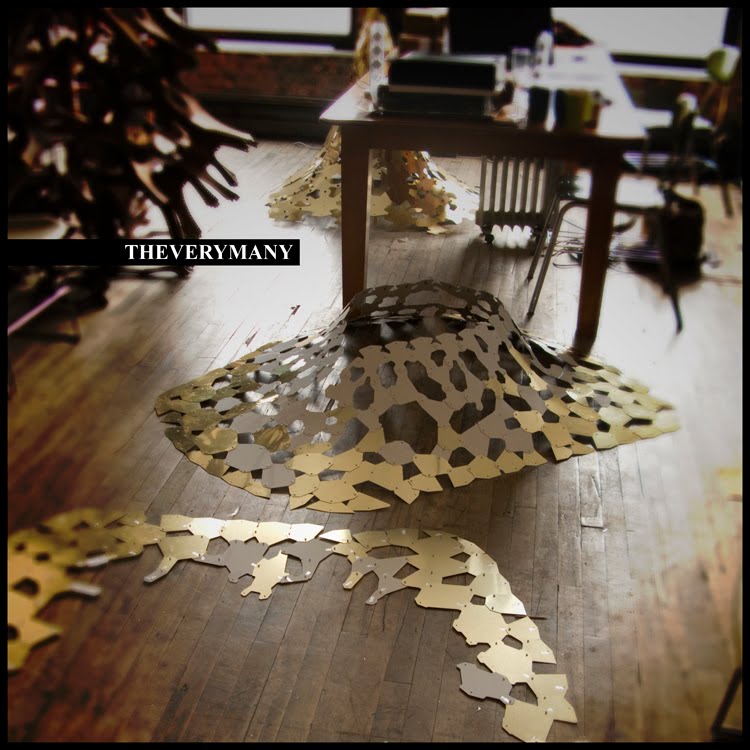
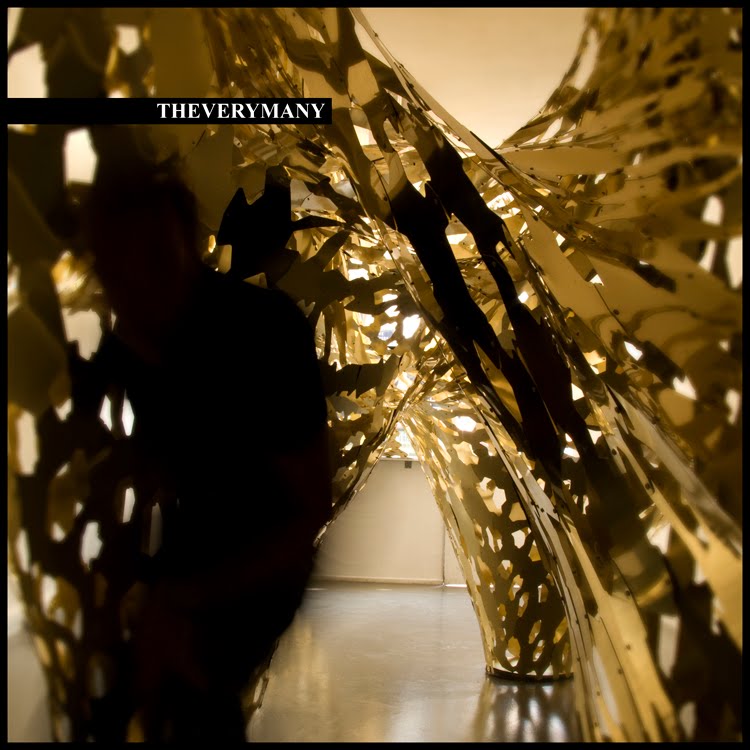
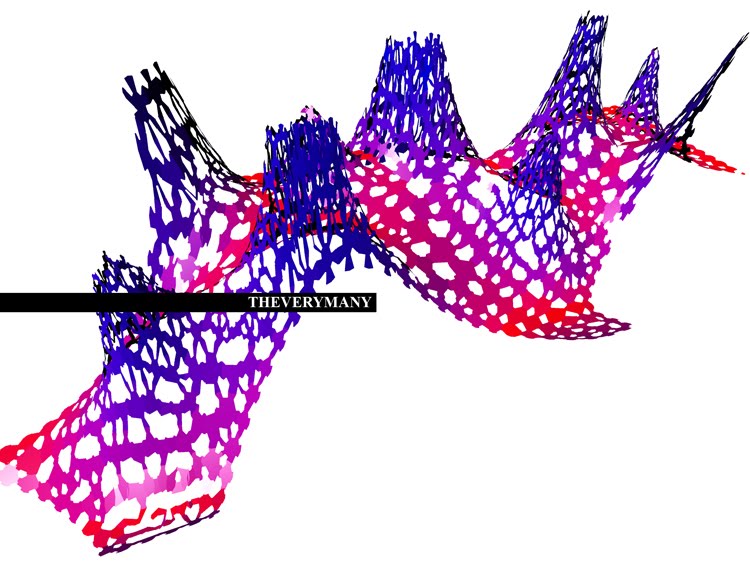
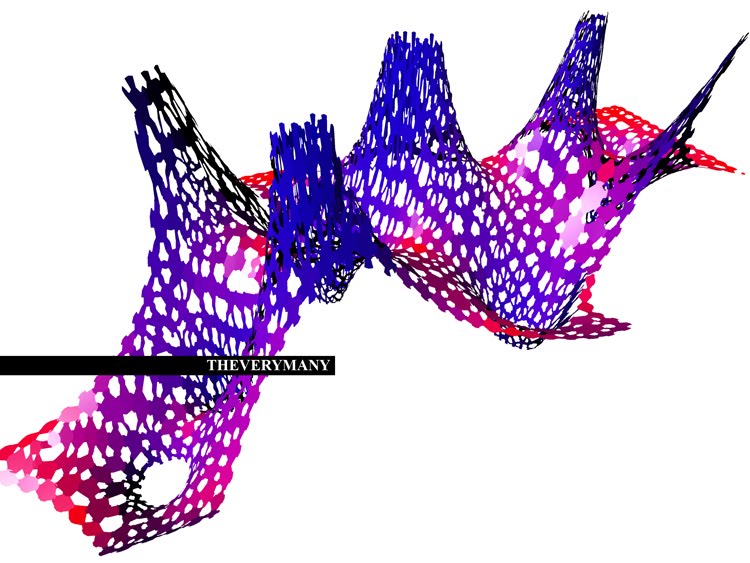
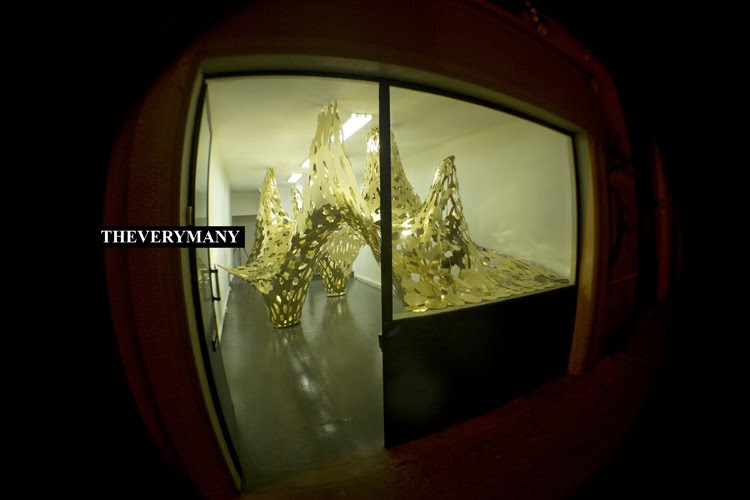
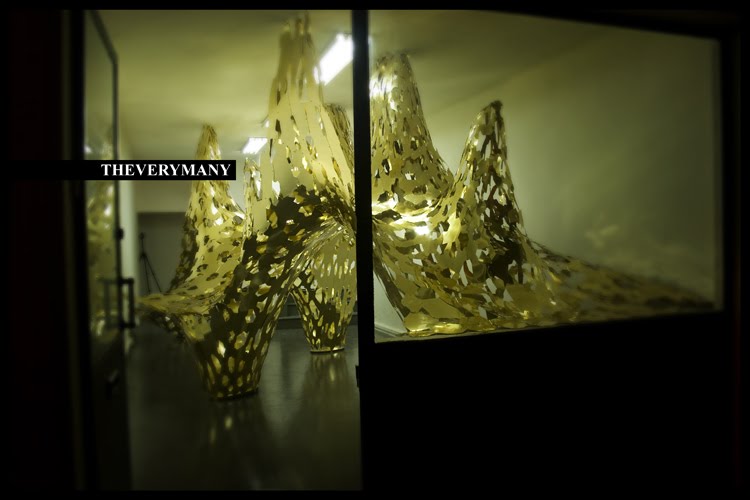
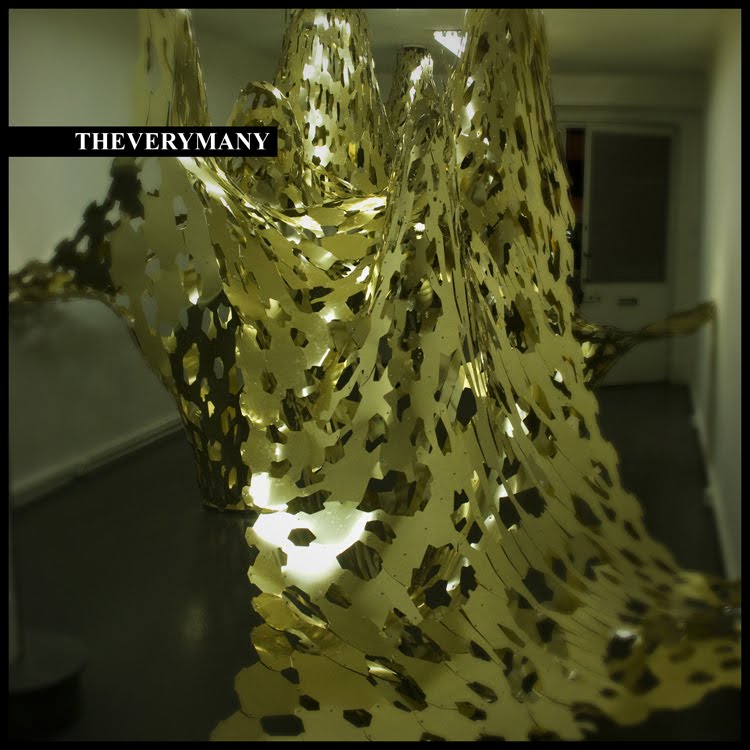
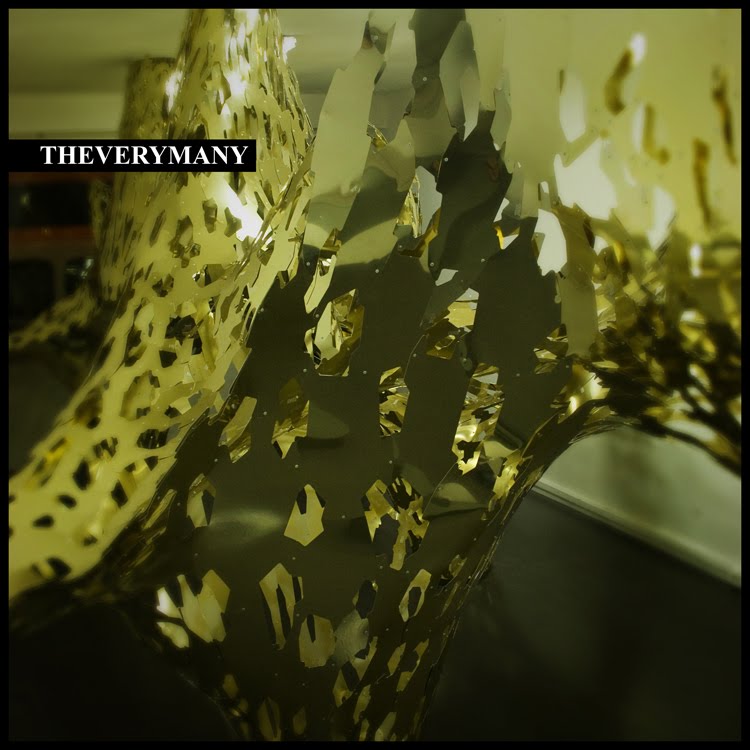
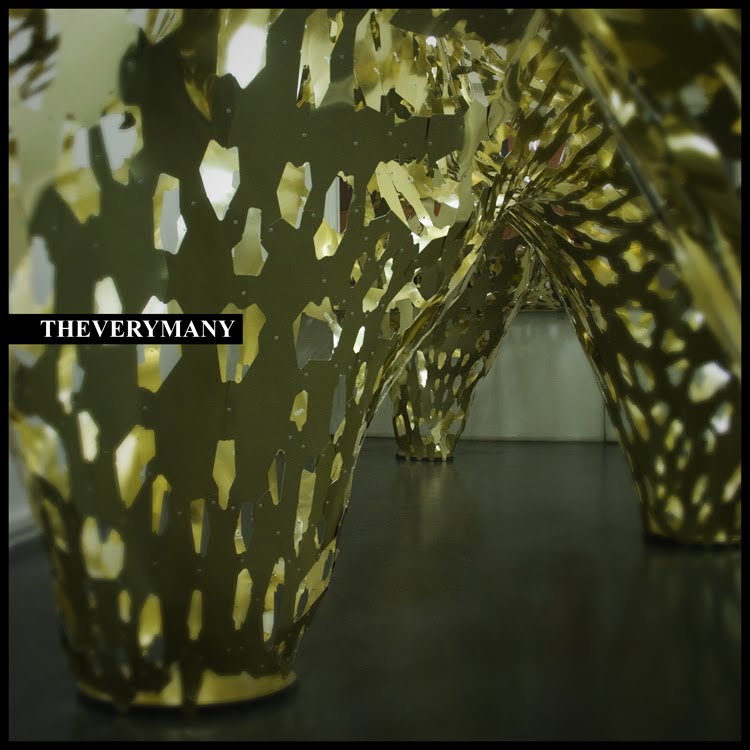
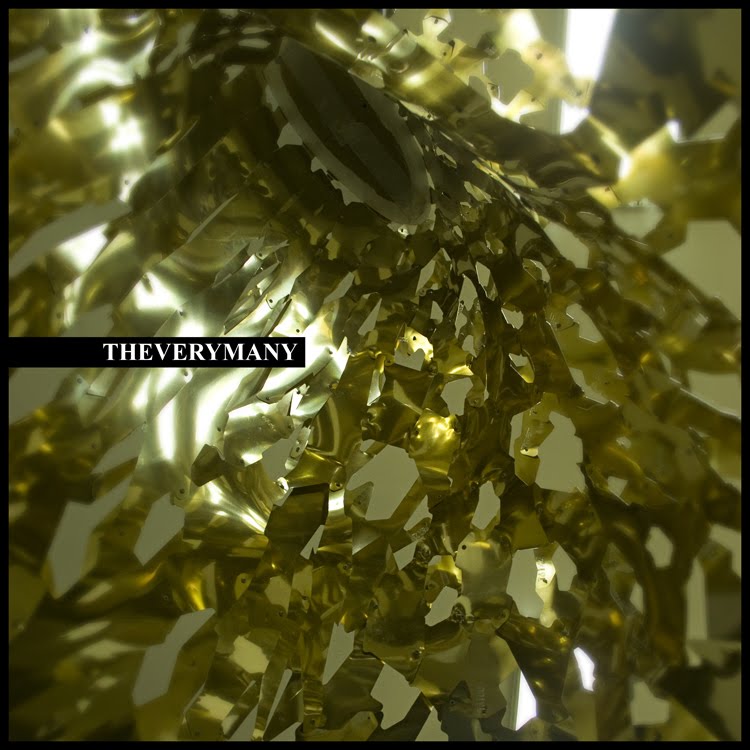
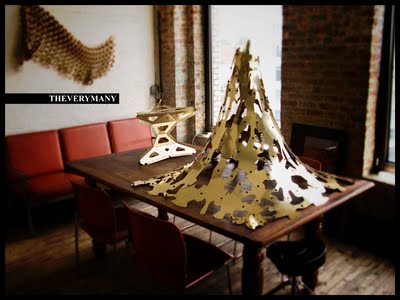
As part of the current update sequence on the work of THEVERYMANY onto its weblog - here is a collaboration (quite old as already last february) with Francois Roche, principal of R&Sie (www.new-territories.com).


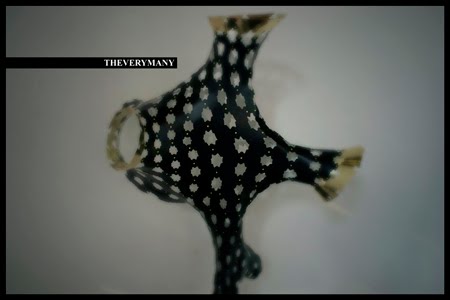
THEVERYMANY was initially asked to developed a plugins looking at weaving structures - that first post from a series is showing some very first generic tests... more to come! (if ever not experiencing further difficulties with blogger!)


Labels: , , , , ,

Friday, May 30, 2008

080530_WORKSHOP_Rhinoscripting (McNeel)


RhinoScript workshop for professionals organized by McNeel Europe in Paris
E.N.S.A.P.L.V. - 17-18 juin - 9:00 to 17:00
http://blog.rhino3d.com/2008/05/rhinoscript-workshop-in-paris.html
http://www.eu.rhino3d.com/e-news/rhinoscript_france0508.htm

Marc Fornes will teach how to get the most from RhinoScript starting from the basics (operators and functions, conditions, arrays) to the final analysis, description, reconstruction and tessellation of NURBS surfaces.

Marc Fornes, Architect DPLG, is the founder of THEVERYMANY, a design studio and collaborative research forum engaging the field of architecture via encoded and explicit processes. Rhino and RhinoScript expert, Marc collaborates with McNeel on a regular basis.


Ecole Nationale Supérieure d'Architecture de Paris La Villette
11, Rue de Cambrai
Rez-de-chaussée, Bâtiment Nº. 31
Paris 75019
Metro : Corentin Cariou

Labels: , , , , , ,

Wednesday, May 28, 2008

080528_National Science Foundation Workshop


THEVERYMANY (Marc Fornes & Skylar Tibbits) have kindly been invited by Conrad Gleber to present their work within a workshop on "Algorithms and Scripting for Visual Art" at La Salle University.

THURSDAY 29 MAY (afternoon) / La Salle University, Philadelphia, PA
http://conradgleber.com/conradgleber/nsf_cpath/

National Science Foundation CPATH Grant
Revitalizing Computer Science Education Through the Science of Digital Media

Jennifer Burg, Wake Forest University, Principal Investigator
Conrad Gleber, La Salle University, Co-Principal Investigator

While computers have become indispensable in communication, social networking, creativity, business, science, academics, and research, the number of students majoring in computer science has fallen dramatically in recent years. Clearly, computer science educators are not taking advantage of the exciting and relevant nature of their discipline. This project investigates ways to make computer science curriculum more interesting and relevant to today's students by linking it to the science of digital media. The interdisciplinary nature of digital media -- with connections to the visual arts, engineering, music, scientific visualization, movies, television, and mobile media -- will be explored through workshops at seven colleges/universities throughout the United States. Representatives from business and industry and diverse academic fields will be asked to identify the knowledge and skills they would like to see in computer scientists involved with them in interdisciplinary collaborations. Over a three-year period, a proposal for college-level computer science curriculum changes will be made that reflects input from educators, industry representatives, artists, and practitioners in areas involving digital media. The resulting curriculum is intended to have a strong scientific base linked to practice in other disciplines in ways that motivate learning and take advantage of the centrality of digital media in modern-day life.

La Salle University: Algorithms, Scripting, and Programming for Visual Art

Can computer programming in a visual context serve as a foundation for teaching computer science? This workshop will research the use of programming for architecture, 3-D design and prototype development, data visualizations, dynamic and interactive displays and will look at the use of computer programming in commercial and academic fields. The aim is to suggest ways to incorporate the findings into computer science curricula.

Participants:
Ken Baldauf, Florida State University, Director of Interdisciplinary Computing
Tom Blum, La Salle University, Computer Scientist
Deloy Cole, Greenville College
Cezanne J. Charles, rootoftwo and ArtServe Michigan
H. Quynh Dinh, Stevens Institute, Computer Scientist
Marc Fornes with Skylar Tibbits, THEVERYMANY, Architects
Ira Greenberg, Miami University, Associate Professor, Interacitve Media Studies/Art
Kyle Gower-Winter, Florida State University, Program in Interdisciplinary Computing (PIC)
Hubert Johnson, Montclair State, Computer Scientist
Dan Falabella, Albright College, Computer Scientist
Abbe Forman,Temple University, Computer Scientist
Jeff Nyhoff,Calvin College, Computer Scientist
John Marshall, University of Michigan, School of Art & Design
Margaret McCoey, La Salle University, Computer Scientist
Todd Pashak, Miami University
Mike Redmond, LaSalle University, Computer Scientist
Gail Rubini, Florida State University, Visual Art and Design
Bill Weaver
David Wicks

080522_INSTALLATION_Tesselion


TEST ONE-TWO ONE-TWO...
Great blogging again since experiencing some issues with blogspot (and by now kindly sort out by their technical team - THX!) - so hopefully this post will start a series of updates on few projects, colab or research I have been involved with those last few weeks/months...


As a very first update - I would like to congratulate Skylar Tibbits for his final thesis project - "Tesselion" - MANY CONGRATS!!

Skylar - now associate within theverymany on several projects - has invited me several months ago to extend one of THEVERYMANY's on going research and investigation onto Nurbs surface - recently entitled "Partly Surfaces" - or ways to describe them and reconstruct them through different tessellation studies exclusively using flat parts (for simple "constructability" issue)...
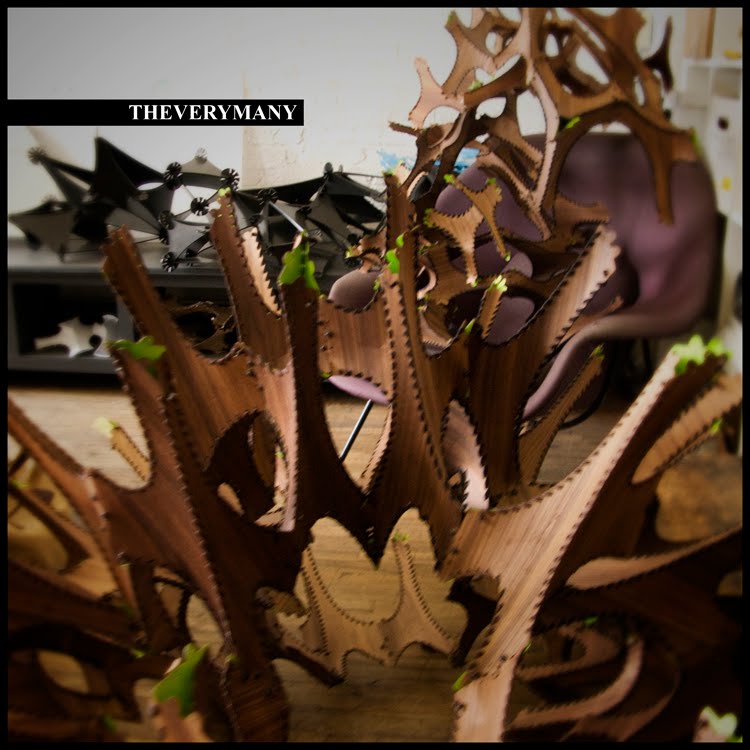
Officially invited as thesis advisor my only reserve at the time was -in order to step ahead from the now over crowded paradigm of cosmetic components array onto surface- to require a scale one test proof of the system that would eventually be developed - so here it is finally standing! (hopefully more pictures to come & already many more on the Tesselion blog)

and yes - this can not been seen as "architectural" but rather to my eyes as required "prototypical"...


TESSELATION : Adaptive Quadrilateral Flat Panelization.
www.tesselion.wordpress.com

THEVERYMANY
Skylar Tibbits (design & code)
Marc Fornes (thesis & code advisor)

Material Sponsor: Alliance Metals (www.alliancemetals.com)
Fabrication Sponsor: Jared Laucks and Continental Signs (www.continentalsigns.net)

Labels: , , , , , ,

Wednesday, May 07, 2008

080507_"let's go MENTAL"_Lopud Seminar 2008


Last minute log - Marc Fornes / THEVERYMANY has been kindly invited (through Francois Roche / R&Sie) to join Lopud Seminar 2008.

"let's go MENTAL"
Lopud Seminar 2008
DURATION: May 9 - May 12, 2008
LOCATION: Lopud Island, Croatia
http://tba21.org/program/seminars/53/page_2?category=seminars

FundaMENTAL
The most prominent interdisciplinary areas of human interest today are probably those often referred to as generative sciences. The chaos theory, information theory, social network analysis, philosophy of science, epistemology, cybernetics, systems theory and process physics, to mention just a few, belong to this category.
A salient "member" of the group, the complexity theory, explores concepts essential for our understanding of nonlinearity underlying to all reality. It deals with emergence, a construct used to describe a universal phenomenon of a system's increasing complexity spawning processes and/or properties which cannot be detected in the constituting elements or subsystems. The logic of this quantum leap relentlessly applies in a single cell or a living organism, whole eco-systems or man-made structures and systems, whether they are real or virtual, concrete or abstract, material or theoretical.
Often, the related dependency graph is counter-intuitive and a largely non-symmetrical function - our knowledge of any particular level may be useless when it comes to understanding the workings of the next one. We need a different set of tools and concepts. New sciences. Cognition itself is a generative process.
This is a broadening field, which we believe to incorporate an intellectual synthesis of art, architecture music and science which is reflected in the foundation's commissions and events. Peter Corning wrote in 2002: “The synergies associated with emergence are real and measurable, even if nobody is there to observe them." This 2008 workshop, organised on the occasion of the reopening of Your Black Horizon art pavilion by David Adjaye and Olafur Eliasson on Lopud, is the third in a series of such investigations and shall deal with conservation, architecture, design, music, toxicity and botany as well. Experts from all fields are invited.

MedicaMENTAL
Shamanism, healing, religious practice, collective experiences, rituals... Indigenous medicine appears to implicitly rely on emergent properties of both the cure and the organism. This opposes the reductionist approach reflected in extraction of active substances and division of the body to subsystems treated independently. Is this holistic view inherent to all traditional healing techniques? If so, assumed these sets of practices are supervenient to the respective social contexts, how is this cross-cultural feature explained? To which extent was discontinuity of these techniques a transformative process rather than manifest suppression? How much of it was assimilation and/or diffusion into other domains and how did those changes occur? Who are today’s shamans? If rituals can be understood as markers of transformation, does the proverbial use of entheogens have an analogue function? Arcane nature of the knowledge involved affords authority - does that make shamanism as such virtually impossible in a culture increasingly defined by instant access to an accumulated abundance of information - an emergence we're only beginning to evaluate?

ExperiMENTAL
The Garden of Earthly Delights alias Toxic Garden engages with the historical site of the Renaissance garden on Lopud by trying to create a continuity of its actual history and adding a new layer. In this case, the architects introduce the rumours of fear and awe, as it is well documented that the monks of the region actually had standardized their expansive pharmacological knowledge on the medical as well as toxic use of plants and experimented with dosage and effectiveness (possibly on themselves) and the production of antidotes and forms of decontamination. Alongside with the tangible, the intangible heritage is revived and further transformed into an active element of the project - an experiment involving (phyto-) therapy and the confrontation, incorporation and embracement of danger and fear through the actual presence of the toxic substance. More than just participation is taking place: a cathartic cleansing, actively keeping the history intact/alive by accepting it in its very nature. This is also expressed in the morphology of the green house, the form of which actually follows the gravity force by sliding and dripping over the existing terraces - wild in nature rather than domesticated. But, while the randomness is just apparent on the material layer of the carefully "architected" project, the interactions that it triggers represent its indeterminable and experimental aspect.

EnvironMENTAL
Concepts of sustainability and sustainable environmental technologies are essential when contemplating development ranging from the urban landscape to Mediterranean islands. Ecological strategies play a crucial role in redesigning and rehabilitating of cultural landscapes. But concepts of sustainability and environmental solutions often function as ethical branding, driven by market interests, whereas tourism as the main industry of any region involves tendencies that contradict the principles of both sustainability and conservation alike. Many areas suffer from a paradoxical discrepancy between the growing interest they generate and the banality of the daily problems resulting from unresolved environmental and infrastructural issues. Lopud is no exception. Which usable options are presently offered by environmental technologies to a site defined by parameters similar to Lopud's? What are the limits of deployability of such solutions? Which constraints are to be considered? Which experiences can the local community benefit from? Which emergent processes have been reported? Ideally, such solutions should be part of a sustainable strategy that would integrate social and economical aspects as well. Is it conceivable to devise one that would restrain the negative implications of tourism? Which role could and should be played by architects in designing and implementing those strategies? What are the incentives for artists and architects to work with and within such systems in introducing change?

MonuMENTAL
How can one actively make use of or revive the information that is stored in today’s places of memory? What strategies do art and contemporary architecture follow in this process? How can cultural heritage be made accessible without transforming the city and countryside into a big open-air museum? An integral part of a conservation process, rehabilitation by definition implies enabling either continuity of original or compatible contemporary use of a historic site. Is it possible to formulate an approach that would more aptly take into account the evolving and fluctuating circumstances of the site? If the measures of preservation are given the necessary attention - does conservation have to be conservative?

InstruMENTAL
Implementing the results of our experiments and the creation of new radical projects as a result of these departures is instrumental to create a spirit of change and collaboration. We all want that so lets go MENTAL!

Participants of the Debate Sessions are:
Alisa Andrasek (architect, Biothing)
Ben Aranda/Chris Lasch (architects, Aranda/Lasch)
Allora Calzadilla (Jennifer Allora & Guillermo Calzadilla)
Beatriz Colomina (theoretician, Princeton University)
Klaus Daniels (ecological sustainable architecture / technical)
Marc Fornes (architect, THEVERYMANY)
Helene Furjan (architect, Princeton University),
Vit Havránek (curator, tranzit Prague)
Florian Hecker (artist)
Russell Haswell (artist)
Carsten Höller (artist)
Mark Oppitz (ethnographer, Ethnographic Museum, Zurich)
Boris Ondreicka (artist / curator, tranzit Bratislava)
Damian O’Sullivan (designer)
Jorge Otero-Pailos (architect, preservation, Columbia University)
Neri Oxman (architect, MATERIALECOLOGY)
Barbara Ozimec (botanist)
Antonia Majaca (curator, critic)
Marina Mlakar (Rudjer Boskvic Institute)
Maroje Mrduljas (journalist, ORIS)
Tony Myatt (MRS York)
Christian Rätsch (anthropologist)
François Roche/Stéphanie Lavaux (architects, R&Sie(n))
David Rych (artist)
Ognjen Skunca (UNDP Coast Project)
Goran Stojanovic (Dolphin Dream Organization)
Slaven Tolj (artist)
Superflex - Jakob Fenger/Bjørnstjerne Christiansen (artists)
Mark Wigley (architect, Columbia University)


RELATED:

as part of the program we will visit the historic gardens, the proposed site of "The Garden of Earthly Delights" by R&Sie(n) - François Roche and Stéphanie Lavaux.
http://new-territories.com/toxics%20gardenlopud.htm

"The Garden of Earthly Delights" reintroduces rumor and the unknown as a potential narrative of the site, and proposes to keep its vitality and productive imaginary. It is a toxic garden which serves as a link to the historical presence of medicinal gardens, medieval botany, and the preparation of medical tonics, poisons and antidotes by the knowledgeable Franciscan and Dominican monk community in Dalmatia, with contemporary architectural form. This biosphere will serve as a water harvester, a green house, a tea-room (for phyto-therapy) and will be energy self-sufficient. It will serve as a model for eco tourism in Croatia, as well as becoming a historical reference to the past and the distant future of the region.

Saturday, April 19, 2008

080406_APERIODIC VERTEBRAE v2.0.2


Finally back from several events and wanderings all over the place (Paris, New York, Frankfurt, Strasbourg, Barcelona,...) - here is a first update on the prototype THEVERYMANY produced for Node08 / Frankfurt.

Its assembly has this time been a success (and hughe improvement since v1.0) as it took less than 24 hours & 2 people & 2 laptops to (re-)assemble the 360 panels and 320 nodes...

Once more demonstrating us "one better spend its time within development embedding assembly logic rather than waiting the material world to solve the fuzzines..."

(I will update the "information modeling" improvements on the previous post more focused on the digital back bone approach of the piece...)


"Aperiodic Vertebrae v2.0"
THEVERYMANY (project team: Marc Fornes / Skylar Tibbits)
NODE08 (www.node08.vvvv.org)
April 5th - 12th, Frankfurt / Germany

Many thanks to Eno Henze (http://www.enohenze.de/) & the entire VVVV team (http://vvvv.org) for their invitation & sponsorship

Also many more thanks to our sponsors for the piece:

- Quadrant EPP USA, Inc. (www.quadrantepp.com) > provided us sheets of polyethylene (3/16″ thick)

- Continental Signs (www.continentalsigns.net) and Jared Laucks > CNC cut of the panels

- Dick Dunlop > laser cut of the 320 unique connections (3/16″ acryclic)

Labels: , , , , , , , , ,

Sunday, April 06, 2008

080406_APERIODIC VERTEBRAE v2.0


"Aperiodic Vertebrae v2.0"
THEVERYMANY
(project team: Marc Fornes / Skylar Tibbits)
NODE08 (www.node08.vvvv.org)
April 5th - 12th, Frankfurt / Germany

Many thanks to Eno Henze (http://www.enohenze.de/) & the entire VVVV team (http://vvvv.org/) for their invitation & sponsorship


TEMPLATES FOR FABRICATION:
Like the form finding, all the panels, connections pieces and "helpers" coded strings engraved have all been 100% the result of a performative explicit protocol entirely coded in vb...
That part - even though presented down the row as a formal exercice / sculpture - has always been though from scratch as performative test / prototypical methodologie/process to convince further consulting work...


Here are the templates for CNC milling of the panels; 12 unique shapes only are much easier to nest (simple arrays) than all custom pieces...
Many thanks to Quadrant EPP USA, Inc. (http://www.quadrantepp.com/) for providing the 7 sheets of polyethylene required (3/16″ thick)
Many thanks to Continental Signs (http://www.continentalsigns.net/) and Jared Laucks for the CNC cut of those panels


Here are 5 (out of 7) templates for the connections to be laser cut on acrylic sheets (3/16″ thick) - total of 320 unique pieces
Many thanks to Dick Dunlop for the access to the laser cutter (3/16″ acryclic)

Labels: , , , , , , , , , , ,

080406_CONSULTANT_Automatic(Notche+Unroll)


(credits: original photos by Arkfinder via CONTEMPORIST)

[C]space is the winning competition entry in the ‘AADRLTen’ Pavilion project, an advanced technology concrete structure that will be erected in Bedford Square,London. The AADRL10 exhibition will open on the 22 February 2008 and the Pavilion will officialy open on 13 March 2008 along with the release of the DRL10 Book. The structure is being designed and developed by Alan Dempsey and Alvin Huang with Adams Kara Taylor and members of the DRL. (http://cspacepavilion.blogspot.com)


In advance of the work on site, the team built a 1:10 scale model to do a final check on the fit of all 850 peices. The model uses 3mm thick mdf, which is about twice the thickness of the real elements so the real structure will look even more delicate than the model.....but it will still come to around 30 tons of concrete and 7 tons of steel. (http://cspacepavilion.blogspot.com)


This post is finally an update about a consultancy job done already quite some times ago now (last November!); THEVERYMANY was then asked by Alving Huang /[C]SPACE Pavilion to write some codes to generate all the assembly notches at the intersection of the structural members and automatically unroll their profiles; the different codes were finally wrapped up within a vb.NET plug-in.


(credits: original photo by photographer Philippe Brysse)

CREDITS: DRL TEN Pavilion

Alan Dempsey / Alvin Huang
Material Consultants: Wolfgang Rieder, Maria Pixner, Gerhard Enn,
Arnold Leiter, Bodo Röder
Structural Engineers: Hanif Kara, Reuben Brambleby,
Oliver Bruckermann, Jugatx Ansotegui
3D Scripting Consultants: Marc Fornes, Eugene Han
Construction Team: João Bravo da Costa, Arnold Leiter,
Aditya C Chandra, Alan Jinsoo Kim, Jwalant Mahadevwala,
Rashiq Muhammad Ali and current Phase 1 students, DRL V.11.1

Special respect to Alvin Huang for the quality of the design... and congrats to everyone else involved!!!

Sunday, March 30, 2008

080330_LOG

Currently working in parallel on many projects/collaborations while being temporally delocated back and forth to Europe (currently in Paris) - here is a fast furious post to log on three future events I will be participating within the coming two weeks: MIND08 (New York), SIMAE (Barcelona), NODE08 (Barcelona)

------------------------------------------------------------------------

- MIND08 Design and the Elastic Mind Symposium (New York)
http://www.mind08.com/

Marc FORNES & SKYLAR TIBBITS will be giving a talk entitled "Partly surface";

Friday, April 4 9:00 AM to 6:00 PM
Parsons The New School For Design
Tishman Auditorium
66 West 12th Street, New York City

Collaboration between science and design is yielding a radical new way of visualizing, understanding, and manipulating the natural world. MIND08 is a conference, presented by Seed and MoMA and inspired by Design and the Elastic Mind, which aims to catalyze this convergence. Bringing together an eclectic group of speakers and participants, including leading scientists, designers, and architects, the conference will explore topics such as the personal genome, brain visualization, generative architecture, and collective design. MIND08 is an opportunity to interact with the ideas and thinkers transforming our visual and intellectual landscape.

"Experiments in Organic Design"
11:15 AM – 12:45 PM Introduction by Paola Antonelli and Adam Bly
- Neri Oxman - Materialecology
- Erik Demaine - Computational Origami
- Bradley Samuels - Nature and Artifice
- Skylar Tibbits / Marc Fornes - Partly Surface
- Greg Lynn - New City

------------------------------------------------------------------------

- SIMAE Contemporary Techniques, New Strategies (Barcelona)
http://simae.net/en/simposi.php

Marc Fornes / THEVERYMANY will be giving a talk (Friday April 11th)

2008 International Architecture Symposium
9-11 April 2008

Everything we see and witness around us is affected by technological progress and the force of social issues, especially the economic factors of our times. We have experienced fundamental, irreversible changes in a myriad of contexts: globalization, the technological and digital revolution, and new production systems, with delocalization to other continents, and their subsequent increase in purchasing power. These changes even affect the delicate balance of our ecosystem.

SPEAKERS (Friday 11th)
Denis Dollens ( EXODESIC / Santa Fe Art Institute )
Frederic Fol Leymarie ( University of London, UK )
Alvin Huang & Alan Dempsey ( Future Systems Architects, UK )
Marc Fornes ( THEVERYMANY, USA )
Joan Guash ( RDI, Grans Projectes ASCAMM )
Alberto Estevez ( Director Ma Arquitectura Biodigital EsArq_UIC )

Bernard Cache ( Objectile, France )
Evan Douglis ( Chairman, Pratt School of Architecture, USA )
Ali Rahim ( University of Pennsylvania PennDesign, USA )

Moderated by Evan Douglis
Special Guest: Alejandro Zaera ( FOA, UK )

------------------------------------------------------------------------

- NODE08 (Frankfurt)
http://node08.vvvv.org/?

THEVERYMANY ( Marc Fornes & SKYLAR TIBBITS ) will be giving a talk entitled "Explicit&Encoded" and setting up "APERIODIC VERTEBRAE v2.0";

APRIL 5-12TH - VELVET CLUB - FRANKFURT

NODE08 is dedicated to the arts of digital media. Whether its about media art, controlling lighting systems, interactions with the real world, synaesthetic experiences or video projections into 3d spaces – either way, software becomes the central working media. The focus of this event lies in the workshops and speeches in which artists, designers, architects and the technical minded share their knowledge and works by means of various exhibitions and situations with the Luminale audience. Meet renowned artists from all over the world and developers who – inspired by the many possibilities – realize a great deal of their projects employing the software project vvvv, which started out in Frankfurt am Main.

TUESDAY APRIL 08TH
Symposium moderated by Eno Henze at the Velvet Club
(Weissfrauenstrasse 12-16, Frankfurt)

Joreg + Sebastian Gregor + Sebastian Oschatz + Max Wolf
Paul Prudence (www.dataisnature.com)
Berthold Scharrer "SINE Matters - computed geometry in architecture"
Herbert W. Franke "Grafik aus dem Computer - Auf dem Weg zum Cyberspace"
Casey Reas (www.processing.org) "FORM + CODE"
What are the relationships between code (computer programs) and visual form? This presentation is centered around seven themes: What is Code?, Computers and Form, Repetition, Transformation, Parameters, Visualization, and Simulation. Using these themes as a foundation, the history of procedural and algorithmic work is discussed through examples from visual design, art, and architecture.
Mark Fornes & Skylar Tibbits (THEVERYMANY) "Explicit & Encoded"
Regine Debatty (www.we-make-money-not-art.com) "Genetically Modified Art"
Verena Kuni - "back to the future".

Saturday, March 08, 2008

080308_RecursiveGrowth_Series03


RECURSIVE SERIES (update 080308)

SIDE_TRACK ON RECURSION: "Droste effect" (wikipedia.org)
The Droste effect is a Dutch term for a specific kind of recursive picture[1], one that in heraldry is termed mise en abyme. An image exhibiting the Droste effect depicts a smaller version of itself in a place where a similar picture would realistically be expected to appear. This smaller version then depicts an even smaller version of itself in the same place, and so on. Only in theory could this go on forever, practically it continues only as long as the resolution of the picture allows, which is relatively short, since each iteration exponentially reduces the picture's size. It is a visual example of a strange loop, a self-referential system.


LOG "SMART GEOMETRY 2008":
I am just back from the smartgeometry conference 2008 hosted within the Coop Himmelblau BMW building in Munich (Germany) - even more than during the last year event in New York the historical consensus within the founding partner of the event on the specific platform sponsoring the event is definitively re-questioned - hopefully that artificially maintained monopole (clearly understood as a funding issue) will shift in the next venue toward a much larger agenda on the use of computation within the field of architecture - anyway many interesting work presented - sustainability and solar gain are definitively the hot topics...

to all the many people I have met through the conference keep in touch...

Labels: , , , ,

Thursday, February 21, 2008

080219_RecursiveGrowth_Series02


First images of a second series based on Recursion - here the major difference in morpholgy is due to tests for future connexions panels to panels - each panel is now sharing an entire edge with its neighbor but also with its previous generation...
Also the recursive subdivision isn't uniform anymore through the entire aggregate...

Labels: , , , , , , ,

Monday, February 18, 2008

080217_RecursiveGrowth_Series01


BIO(x)...

"BIOmorphic" it first became (or eventually came back for the one who believes in trend periodicity...)

"Architectural theory" directly responded early 2000 by the concept of "BIOmimetism" as the hot topic for architects surfing on the what's next weave after the "BIOmimicry" which emerged in parallel from the animation software at the end of the nineties... yes it does make sense to look "how nature would solved a problem" rather than looking at nature itself - though each of us had to re-discovered that yes "in nature form is free and structure is expensive"... and therefore -except if your extreme diva character allows you to afford sometimes absurd ways of manufacturing- one might rather look at post modernism as the human Nature way of saving on form (though btw also often wasting on structure via demonstrative cantilevers)...

"Ecologies" -which emerged nearly five years ago within the architectural discourse- seems to be still the current natural evolution of the Bio(x) phenomenon: yes there should be some kind of balance since so many different feedbacks can be input as parameters onto what is often simply pictured as a gigantic "design process dash board" aiming toward performances - it is somehow making sense, or eventually once more it should make sense...

This Bio(x) history has no intention to be accurate or exhaustive - it can definitively be seen as a very cliche summary - though here required as frame work or axiom of that specific series...


"BIOmodelism"

THEVERYMANY "series" have yet no pretention to be smart as biomimetism or aiming toward new ecologies... there are based on a very simple and straight forward oldschool empiric lab approach trying first to understand existing mathematical/geometrical models as explicit and ordered sets of instruction, learn to replicate them through coding and finally within that process strategize in terms of design...

That last step often result in compromising the integrity of the original model - I am calling that approach "Modelism" as a derivate from "building model" where you're first trying to understand the kit of parts and then reassemble it to match the model - THERYMANY "series" are based on such process except that it is somehow like building blind or simply without the schematic where the emergent tolerances are distinguishing the result as "design" from its diagram...

Though yes - as some of those models are directly coming from early ways trying to replicate natural phenomenon - a direct resemblance to nature often emerge through the resultant form and structures...

this can sometimes reveal itself quite tricky looking at the current trend of Voronoi mimicry, soon it will replace the post modern box as standard! though at least for once intricate detailing about it and a slight notion of scale could transform it into architecture rather than simply inhabitable diagrams... sorry for such sarcasm as THEVERYMANY has actively collaborate to its success but as sort of young Jedi constantly trying to master new techniques within the field, I am afraid many more prototypical models will than unfortunately follow such downfall...

THEVERYMANY « Series » - "une histoire a suivre..."


RECURSION in mathematics and computer science, is a method of defining functions in which the function being defined is applied within its own definition. The term is also used more generally to describe a process of repeating objects in a self-similar way. For instance, when the surfaces of two mirrors are almost parallel with each other the nested images that occur are a form of recursion. (ie wikipedia),

RECURSIVEGROWTH - Generation 1 to 7 - is based on a coming back to "Recursion" (ie previous tests on subdivision, etc...) as the ultimo model of periodicity - why periodicity after many non-linear approaches? simple: the last series based on aperiodic tilling or replication were used because of high repetition within its model - therefore whenever one is approaching the concept of repetition its ultimo and endless quest is maximizing it...

periodicity for its advantages: easy nesting because exact same elements, also therefore easy nomenclature, ornamentation can be more intricate as repetitive, etc...

material system: flat panels - 4 types - also high repetition within the connections
to be continued...

Labels: , , , , , , ,

Friday, February 01, 2008

080131_Exhibition: Aperiodic_Vertebrae (day4)


"Generator.x 2.0: beyond the screen..." an exhibition curated by Marius Watz at the DAM(Berlin) with works by Jared Tarbell (US), Commonwealth (US), Theverymany (FR/US), Leander Herzog (CH), Marius Watz (NO) and participants of the Generator.x 2.0 Workshop...
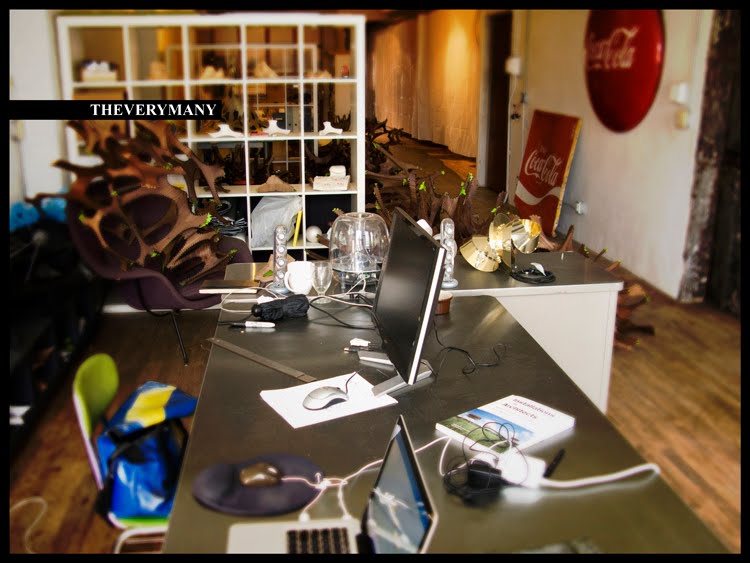
THEVERYMANY (Marc Fornes, Skylar Tibbits) / Aperiodic_Vertebrae
LOG_assembly_day_04: things are going smoother - one day to go before the opening...

Labels: , , , , , , , , , , , ,

Thursday, January 31, 2008

080130_Exhibition: Aperiodic_Vertebrae


THEVERYMANY has been set up based on a continuum research on explicit and encoded protocols within design - the first implicit consequence of its core is to let traces; those traces - often under the format of simple text files - allow to exactly reproduce or alter the model, eventually share axioms... but it somehow also requires to admit and assume those traces, if so, one can learn from mistakes, errors and/or tolerances of previous stages or generation based on feed back...


Yesterday was the kick start in Berlin of the assembly process for the installation -once again the amount of components generated through a long chaine of various small codes / utilities has directly revealled "dirt"/issues hidden behind a fast/furious seamless process... yet nothing extraordinary beyond the purpose of a physical mock up: large scale test for a complete automate pipe line of form & drawing generation...


DIRTY DIGITAL:
One of the significant issue we came across is related to the nature of tiling and computation - the subdivision algorythm is based on a recursive protocol (or SUBSTITUTION) which is first drawing a primitve pyramide (within a choice of four primitives) which then gets subdivide - the process is repeated many times within itself to generate self-similarity... the issue there is that within each generation the protocol requires to "compare" (points, lenght, areas, etc...) and that matching process needs to determine whether two geometry or parameters are "equal" given an inevitable rounding errors... unfortunately the rounding errors are bound to accumulate whithin each generation...
Yet it wasn't any special issue except when point connection gets generated and therefore requires to increase the tolerance factor not to miss any neighbors... though applying overal tolerance is triggering other error trapping while small naming or matching utilities code are running as host on the larger protocol...
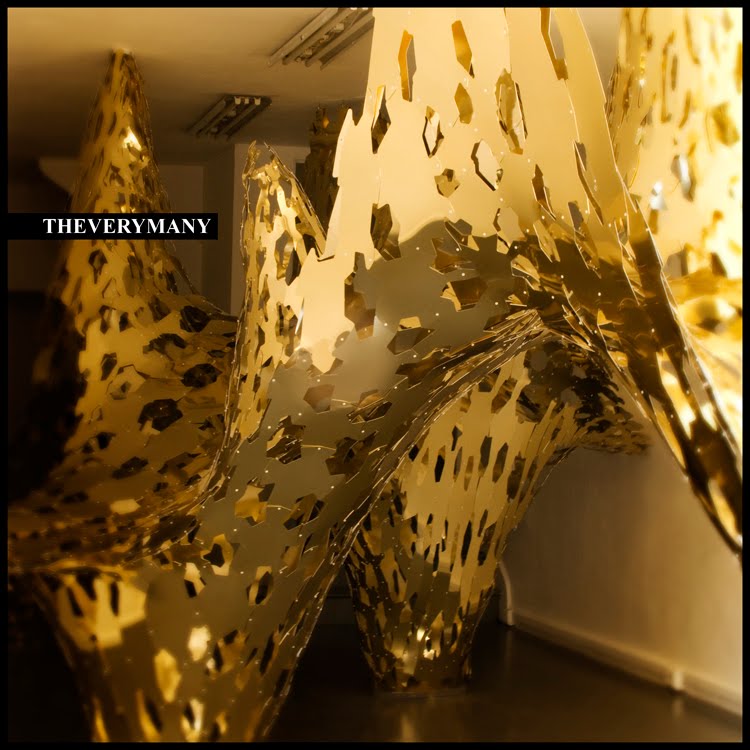
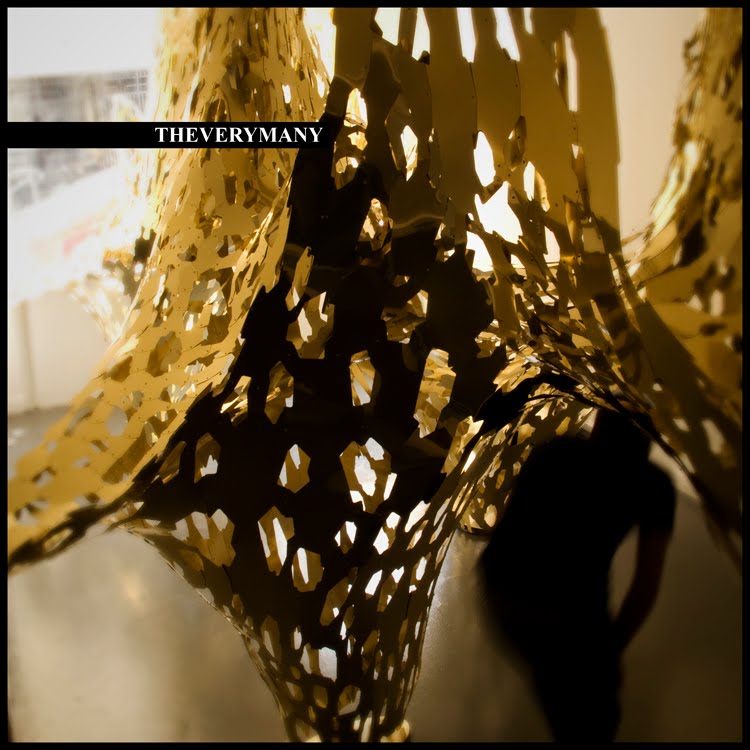
Anyway - suming up it is yet still triggering slight erros and confusion - though I'd like to be transparent and learn within those error trapping - it is defintively part of a certain material paradigm debugging...
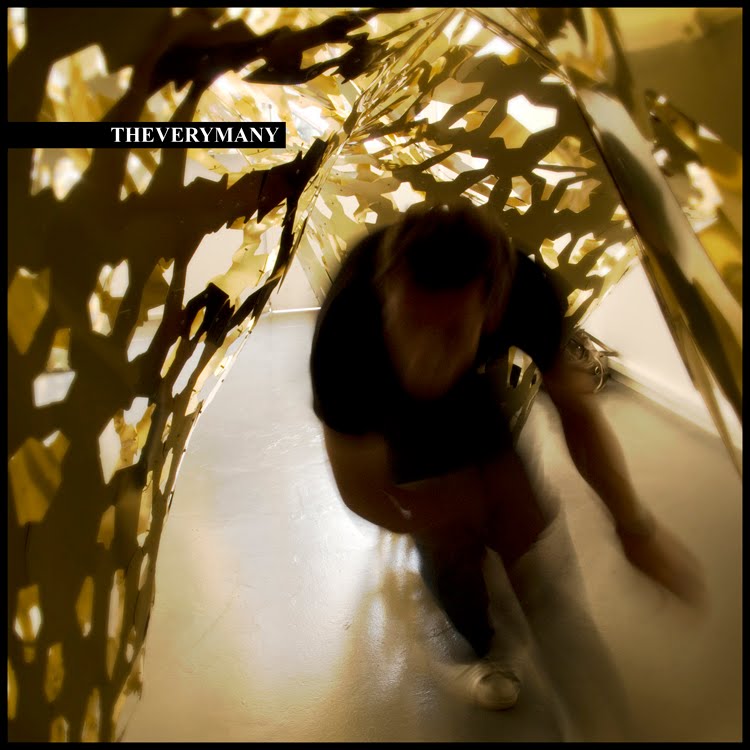

Let see which surprises are we getting tomorrow...
"a chaque jour sa peine..."

Labels: , , , , , , , , , ,

Friday, January 25, 2008

080124_Exhibition: Aperiodic_Vertebrae


THEVERYMANY (Marc Fornes, Skylar Tibbits) has been kindly invited to exhibit a physical piece at "Generator.X v2.0: Beyond the screen" - a workshop and exhibition about digital fabrication and generative systems curated by Marius Watz (http://www.generatorx.no/) in collaboration with Club Transmediale and [DAM] Berlin.


Based onto earlier experimentation (Aperiodic series) the installation is an assembly of nearly 500 flat panels (11 types) all milled within 6 sheets (8 feet by 4 feet) of corrugated plastic (4 colors: black, silver grey, white and translucent) and also nearly 500 assembly details (moreless all unique!) all laser cut onto 7 sheets of transparent acrylic...
Despite mesuring 13 feet long (after been scaled nearly by half for simple reason of space available within the gallery!) all the panels and assembly details are now flying over nested within one suitcase only...
(pictures of the assembly process should come up soon)


It has been quite some intense moments of scripting since last weekend - mainly sequences of utilities codes - in order to perform a complete automaton starting from the first 4 nurbs curve (those ones were drafted!), the generation of the geometries till the production of each components, notches, unroll, color coding, naming, etc... but there were also a lot of discussion on logic, sequence and protocols to be set up in order to PRE-facilitate as much as we can the entire physical re-fold-assembly of nearly a thousand parts...
Illustrated above (top) the layout of one of the acrylic sheet (number 6) with 66 assembly details - all got named with the number of the piece (as text + name of the object) + each notche with the color of the brick it should connect to and the name of its panel it should locked in...
Illustrated above (bottom) the lay out of one of the 11 types of panels onto a sheets of corrugated plastic - the intersting figure is that the nesting of the panels sheets has been the only hand protocols as a simple traight forward array of the same geometry - this is where it is a hughe gain of time and energy as nesting for so many parts if different would take ages (if even only possible) to find an efficient nested solution...
That starting hypothesis of embeded relative simplicity due to the self-similarity (without even counting the labor time saved to look for the right panels when assembling - imagine a pile of 500 panels to pick from?!!) is RE-questioning the complete mass customization fashion and other kit of parts...
Though the amount of components generated which have to be RE-assembled is also RE-questioning the limit of using generative processes without going further down the line using assembly robots...


Generator.x 2.0: Beyond the Screen
24 Jan -­ 2 Feb 2008, Ballhaus Naunynstrasse / [DAM] Berlin

Credits:
Design: THEVERYMANY (Marc Fornes + Skylar Tibbits)
Scripting: Marc Fornes
Manufacturing protocols: Marc Fornes + Skylar Tibbits
Laser cutting: Skylar Tibbits
CNC & material research: Jared Laucks
Assembling: Skylar Tibbits (+ helpers!)

ANYONE IN BERLIN INTERESTED TO HELP ASSEMBLING IS HIGHLY WELCOME!!
PLEASE COME OVER AT THE [DAM] GALLERY
(starting on the Jan 29th till February 2nd)

Labels: , , , , , , ,

Monday, January 21, 2008

080121_Consulting: polyhedrons frame structure 02


following up on some side escapism while running on more "rational" automaton for an exhibition in berlin (more to come soon)
here the previous code developped for the course of a friend at Knowlton School of Architecture has been applied onto some random polyhedrons.


Labels: , , , , ,

Saturday, January 19, 2008

080118_Consulting: polyhedrons frame structure 01


I recently happen to write few codes for Aurel Von Richtofen who is teaching a course/seminar based on rhinoscript at the Knowlton School Of Architecture (Ohio State University) like: select points within closed polygones, points relaxation/explosion, frame along the edge of polygons, etc...
Whenever I have here or there an hour to kill I often happen to re-read a previous code, clean it and often push it slightly further to render few frames - here are some random fast track results...


PROTOCOL (original version):
- for each closed polygons
- for each faces
- extract edges
- add polylines: array(edge start pt, end pt,face centroide)
- offset the curve (on face - toward the centroide)


Many "quick fix" upgrades are possible:
recursive subdivision according to face aera, membrure thickness according to edge length, etc...

Labels: , , , , ,

Tuesday, January 15, 2008

080115_"SunCare"


Tooling development (in progress) for SOM - different codes:

- Panels: honeycomb subdivision of a nurbs surface based on the UV coordinates of an host nurbs surface (here a sphere) - each cells is re-subdivided into planar panels (triangles) which are able to rotate onto the edge they share with the original cell.

- "SUNCARE" : the facade panels are rotating based on a Sun path "analysis" - in that exemple a random arc inclined 45 degree - though can easily be ploted based on the GPS coordinates of the site and the sun data using as parameters the azimuth and elevation (thx to Neil Katz).

- Animation: rhino animation (number of frame according to sun data sampling) where the honeycomb panels open whenever directly exposed to the sun (with decay)...

AZIMUTH AND ELEVATION - an angular coordinate system for locating positions in the sky. Azimuth is measured clockwise from true north to the point on the horizon directly below the object. Elevation is measured vertically from that point on the horizon up to the object. If you know the azimuth of a constellation is 135° from north, and the elevation is 30°, you can look toward the southeast, about a third of the way up from the horizon to locate that constellation. Because our planet rotates, azimuth and elevation numbers for stars and planets are constantly changing with time and with the observer's location on earth.

Labels: , , , ,

Monday, January 14, 2008

080114_Boolean_Series002


Since my very traditionalist architectural educational background in France - the Sphere has been unfortunatly very early on associated my history & theory course and french Neo-classical (though utopist) architects such as "Nicolas Ledoux" - and therefore temporally banished from my formal language ever since; so what is it that suddenly brings it back? was it the Star Wars "baby boom"? is it Rem Koolhaas and his (re-)recent fascination for the icone as primitives like in his recent proposal for the Ras al Khaimah Convention and Exhibition Centre in the UAE?


PROTOCOL:
- pick a closed surface or polysurface
- plot random points within that solid
- assign a sphere to each of the points; its radius being either the same for each or weighted according to the color of the point
- for every point boolean its sphere with his neighbours


"SIDE TRACK" : ELEVEN PROPERTIES OF A SPHERE (ie wikipedia.org)
In their book Geometry and the imagination David Hilbert and Stephan Cohn-Vossen describe eleven properties of the sphere and discuss whether these properties uniquely determine the sphere. Several properties hold for the plane which can be thought of as a sphere with infinite radius. These properties are:


The points on the sphere are all the same distance from a fixed point. Also, the ratio of the distance of its points from two fixed points is constant.
The first part is the usual definition of the sphere and determines it uniquely. The second part can be easily deduced and follows a similar result of Apollonius of Perga for the circle. This second part also holds for the plane.

The contours and plane sections of the sphere are circles.
This property defines the sphere uniquely.

The sphere has constant width and constant girth.
The width of a surface is the distance between pairs of parallel tangent planes. There are numerous other closed convex surfaces which have constant width, for example Meissner's tetrahedron. The girth of a surface is the circumference of the boundary of its orthogonal projection on to a plane. It can be proved that each of these properties implies the other.
A normal vector to a sphere, a normal plane and its normal section. The curvature of the curve of intersection is the sectional curvature. For the sphere each normal section through a given point will be a circle of the same radius, the radius of the sphere. This means that every point on the sphere will be an umbilical point.

All points of a sphere are umbilics.
At any point on a surface we can find a normal direction which is at right angles to the surface, for the sphere these on the lines radiating out from the center of the sphere. The intersection of a plane containing the normal with the surface will form a curve called a normal section and the curvature of this curve is the sectional curvature. For most points on a surfaces different sections will have different curvatures, the maximum and minimum values of these are called the principal curvatures. It can be proved that any closed surface will have at least four points called umbilical points. At an umbilic all the sectional curvatures are equal, in particular the principal curvature's are equal. Umbilical points can be thought of as the points where the surface is closely approximated by a sphere.
For the sphere the curvatures of all normal sections are equal, so every point is an umbilic. The sphere and plane are the only surfaces with this property.

The sphere does not have a surface of centers.
For a given normal section there is a circle whose curvature is the same as the sectional curvature, is tangent to the surface and whose center lines along on the normal line. Take the two center corresponding to the maximum and minimum sectional curvatures these are called the focal points, and the set of all such centers forms the focal surface.
For most surfaces the focal surface forms two sheets each of which is a surface and which come together at umbilical points. There are a number of special cases. For canal surfaces one sheet forms a curve and the other sheet is a surface; For cones, cylinders, toruses and cyclides both sheets form curves. For the sphere the center of every osculating circle is at the center of the sphere and the focal surface forms a single point. This is a unique property of the sphere.

All geodesics of the sphere are closed curves.
Geodesics are curves on a surface which give the shortest distance between two points. They are generalisation of the concept of a straight line in the plane. For the sphere the geodesics are great circles. There are many other surfaces with this property.

Of all the solids having a given volume, the sphere is the one with the smallest surface area; of all solids having a given surface area, the sphere is the one having the greatest volume.
These properties define the sphere uniquely. These properties can be seen by observing soap bubbles. A soap bubble will enclose a fixed volume and due to surface tension it will try to minimize its surface area. Therefore a free floating soap bubble will be approximately a sphere, factors like gravity will cause a slight distortion.

The sphere has the smallest total mean curvature among all convex solids with a given surface area.
The mean curvature is the average of the two principal curvatures and as these are constant at all points of the sphere then so is the mean curvature.

The sphere has constant positive mean curvature.
The sphere is the only surface without boundary or singularities with constant positive mean curvature. There are other surfaces with constant mean curvature, the minimal surfaces have zero mean curvature.

The sphere has constant positive Gaussian curvature.
Gaussian curvature is the product of the two principle curvatures. It is an intrinsic property which can be determined by measuring length and angles and does not depend on the way the surface is embedded in space. Hence, bending a surface will not alter the Gaussian curvature and other surfaces with constant positive Gaussian curvature can be obtained by cutting a small slit in the sphere and bending it. All these other surfaces would have boundaries and the sphere is the only surface without boundary with constant positive Gaussian curvature. The pseudosphere is an example of a surface with constant negative Gaussian curvature.

The sphere is transformed into itself by a three-parameter family of rigid motions.
Consider a unit sphere place at the origin, a rotation around the x, y or z axis will map the sphere onto itself, indeed any rotation about a line through the origin can be expressed as a combination of rotations around the three coordinate axis, see Euler angles. Thus there is a three parameter family of rotations which transform the sphere onto itself, this is the rotation group, SO(3). The plane is the only other surface with a three parameter family of transformations (translations along the x and y axis and rotations around the origin). Circular cylinders are the only surfaces with two parameter families of rigid motions and the surfaces of revolution and helicoids are the only surfaces with a one parameter family.

Labels: , , ,

Friday, January 11, 2008

080110_Boolean_Series001


"SIDE TRACK" : CONSTRUCTIVE SOLID GEOMETRY (CSG) (ie wikipedia.org)
Constructive solid geometry (CSG) is a technique used in solid modeling. CSG is often, but not always, a procedural modeling technique used in 3D computer graphics and CAD. Constructive solid geometry allows a modeler to create a complex surface or object by using Boolean operators to combine objects. Often CSG presents a model or surface that appears visually complex, but is actually little more than cleverly combined or decombined objects. (In some cases, constructive solid geometry is performed on polygonal meshes, and may or may not be procedural and/or parametric.)

The simplest solid objects used for the representation are called primitives. Typically they are the objects of simple shape: cuboids, cylinders, prisms, pyramids, spheres, cones. The set of allowable primitives is limited by each software package. Some software packages allow CSG on curved objects while other packages do not.


It is said that an object is constructed from primitives by means of allowable operations, which are typically Boolean operations on sets: union, intersection and difference.

A primitive can typically be described by a procedure which accepts some number of parameters; for example, a sphere may be described by the coordinates of its center point, along with a radius value. These primitives can be combined into compound objects using operations like these:
- boolean union: the merger of two objects into one.
- boolean difference: the subtraction of one object from another.
- boolean intersection: the portion common to both objects

Combining these elementary operations it is possible to build up objects with high complexity starting from simple ones.


EXTEND:
in the case of spheres as primitives - if all have the same exact radius, the complex composite object -resultant from a set of boolean operations- can be describe out of one spherical mould from which all the different parts are trimmed: the challenge here will be to describe and catalogue all the parts not as geometry but rather as 3d trim paths for robotic arm...

Labels: , , ,