Saturday, April 19, 2008

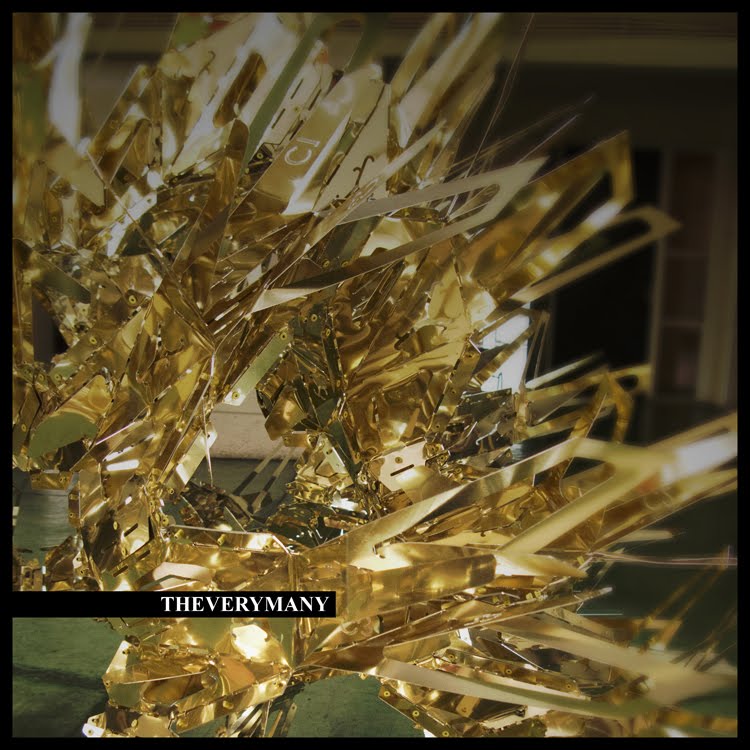
080406_APERIODIC VERTEBRAE v2.0.2


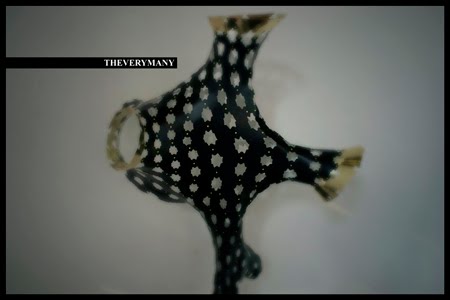
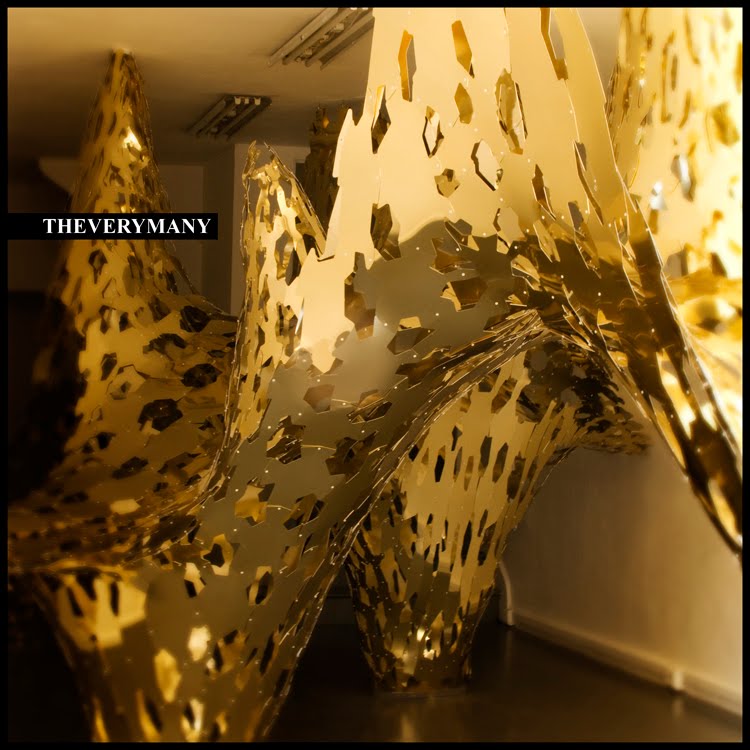
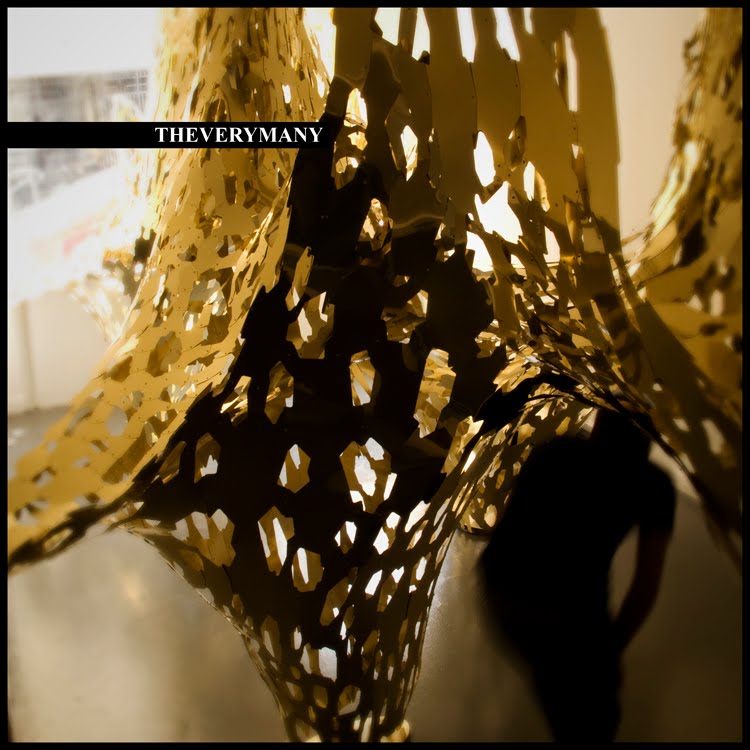
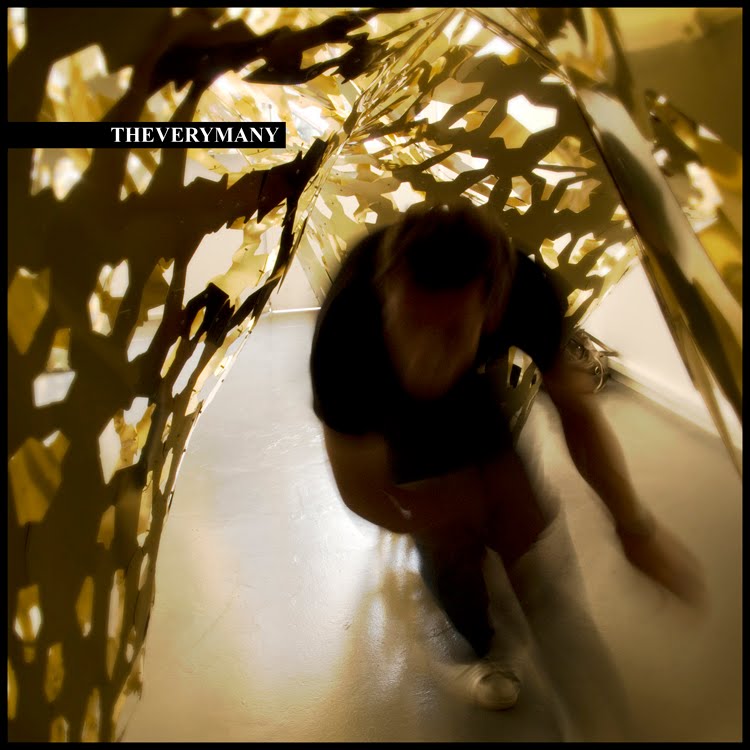
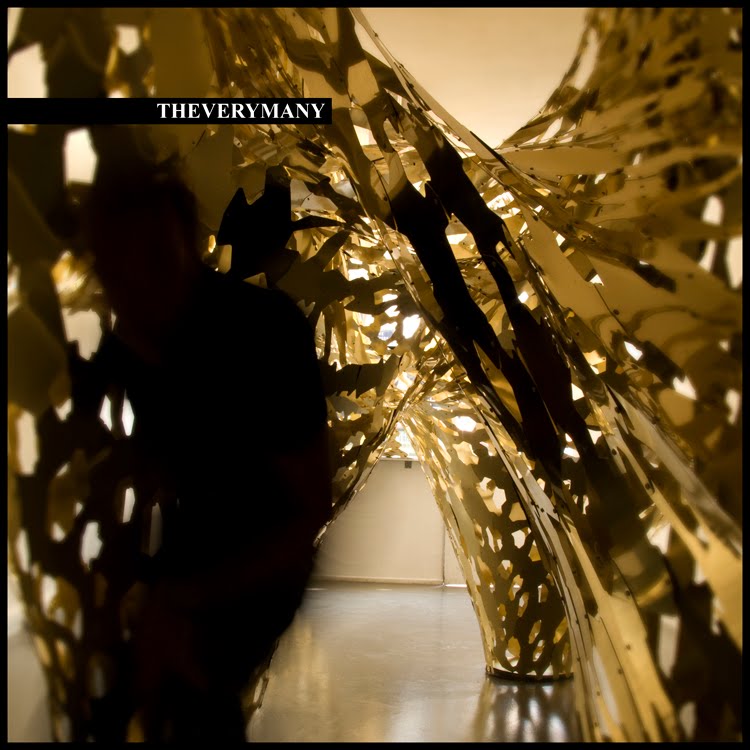
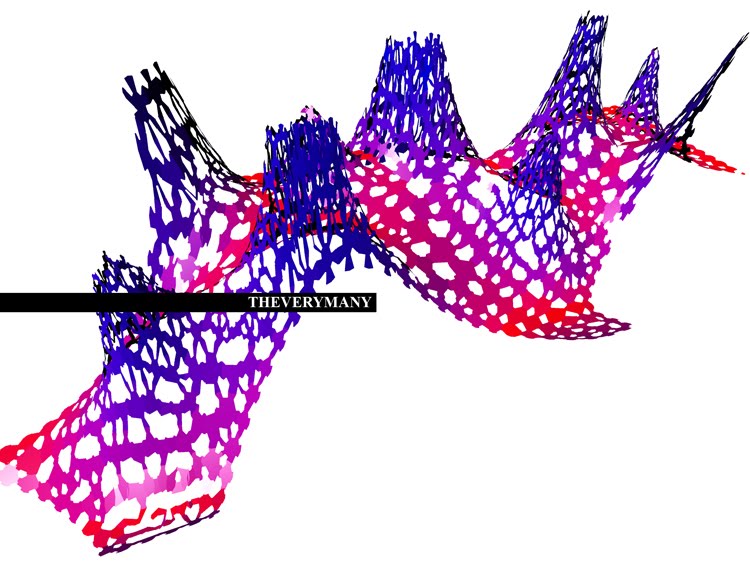
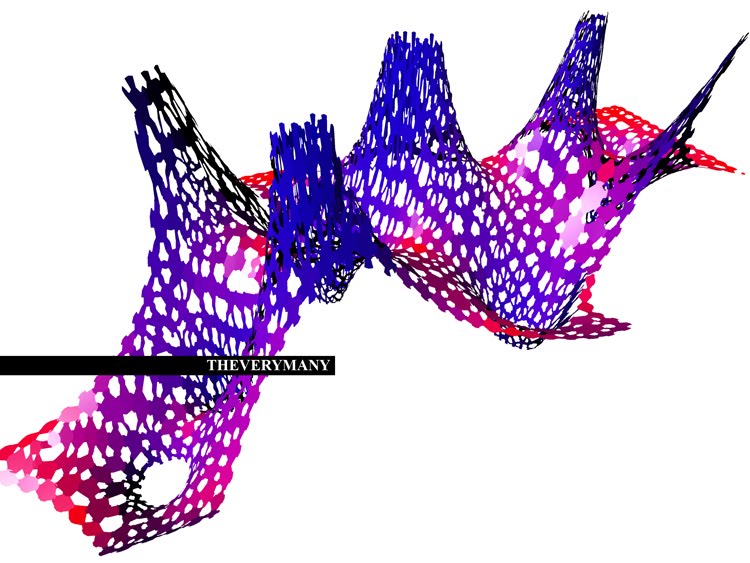
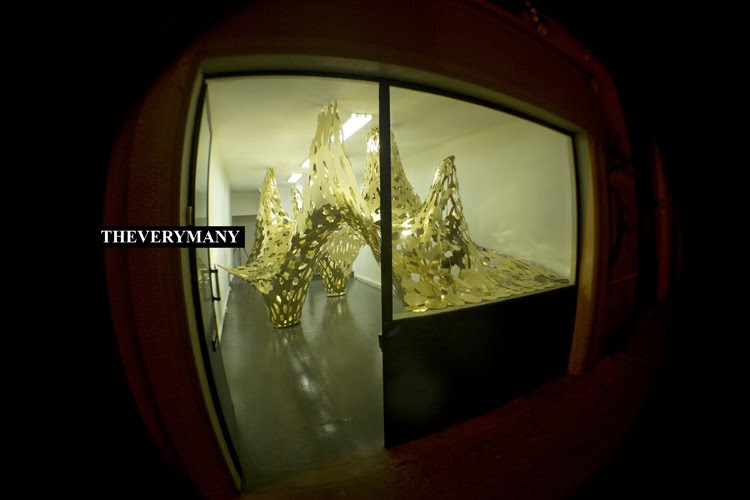
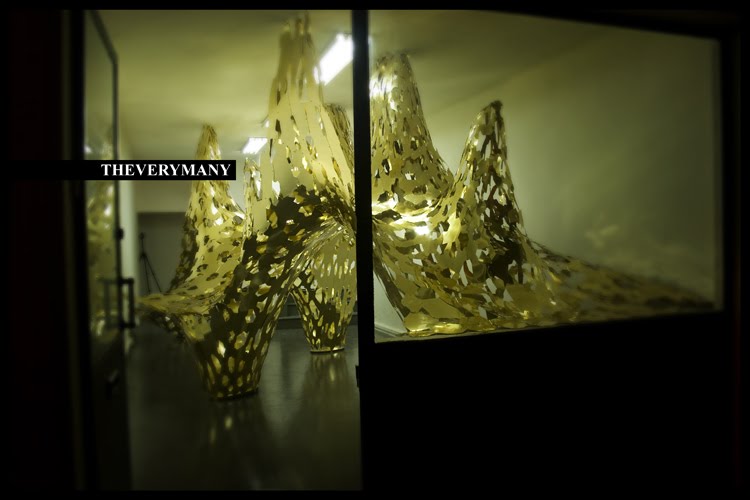
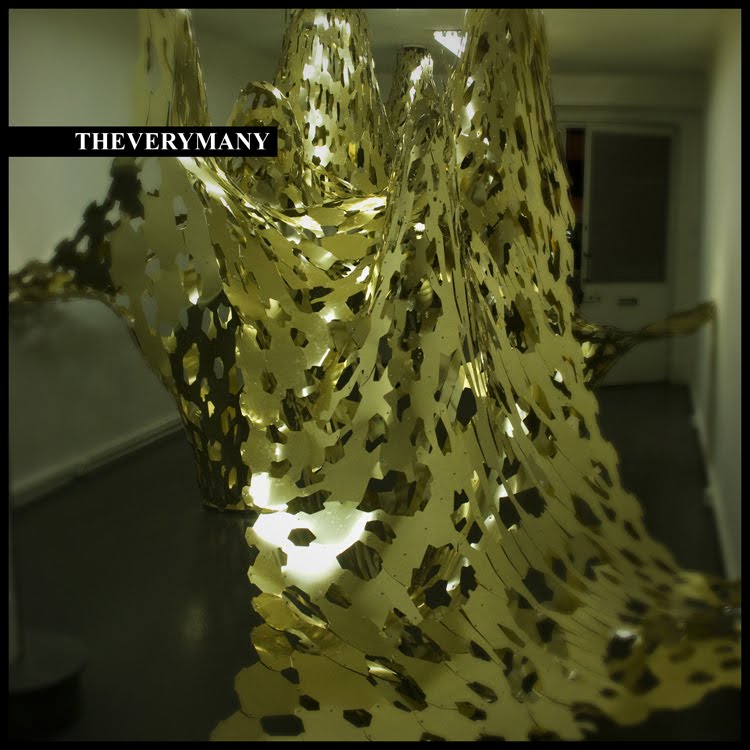
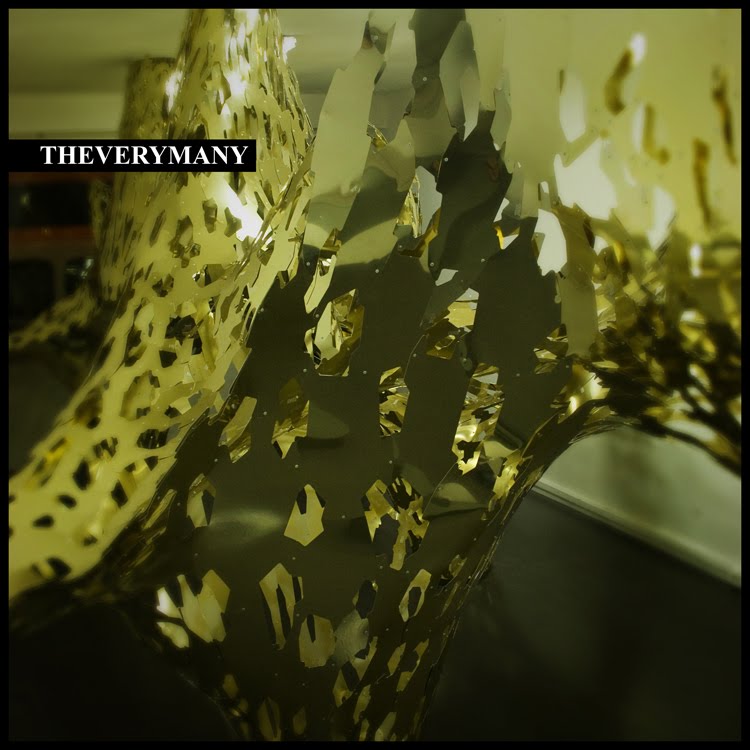
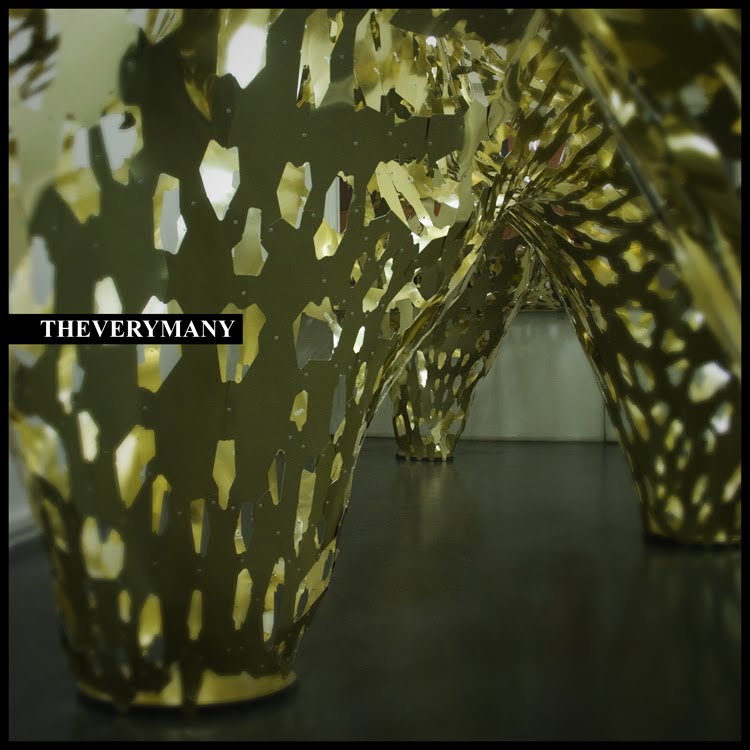
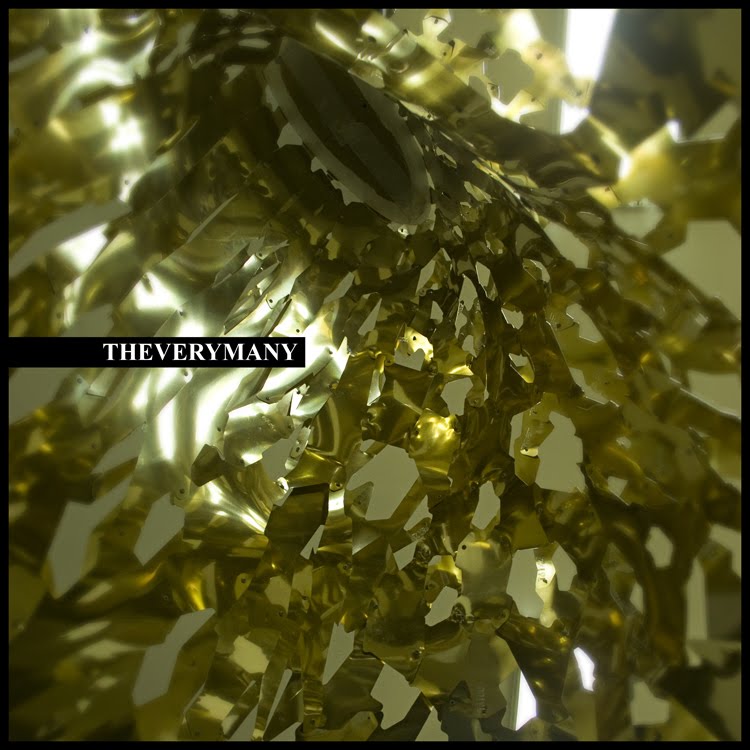
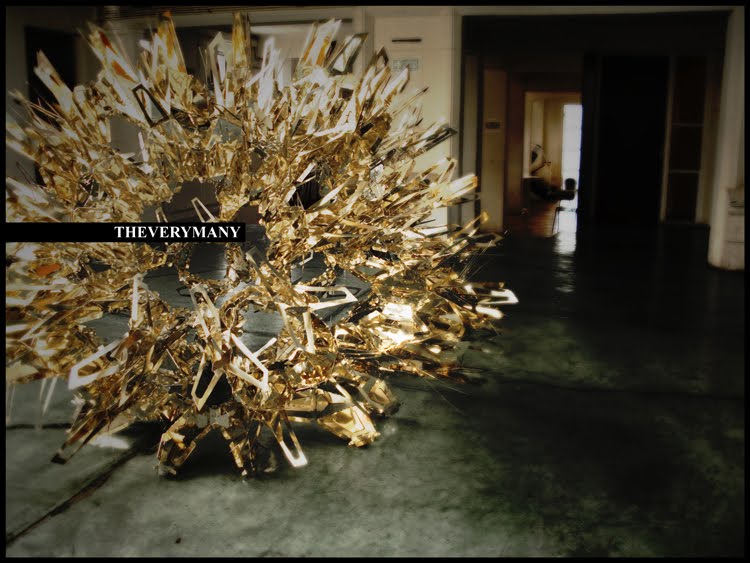
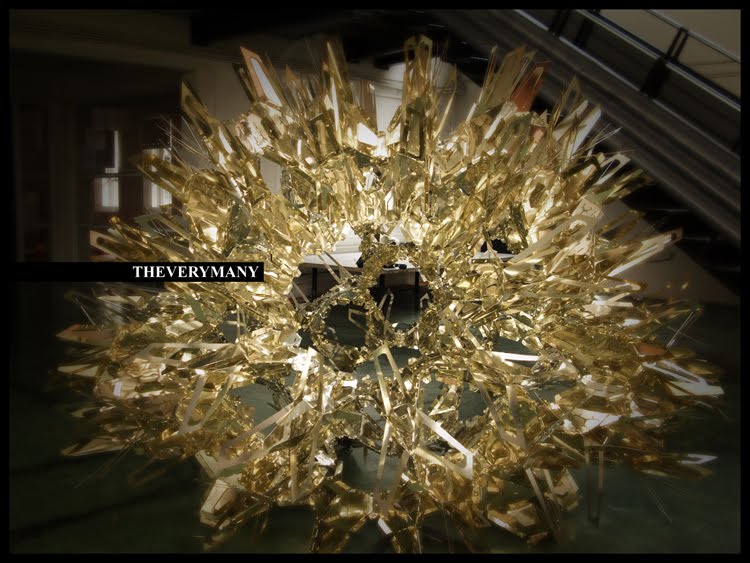
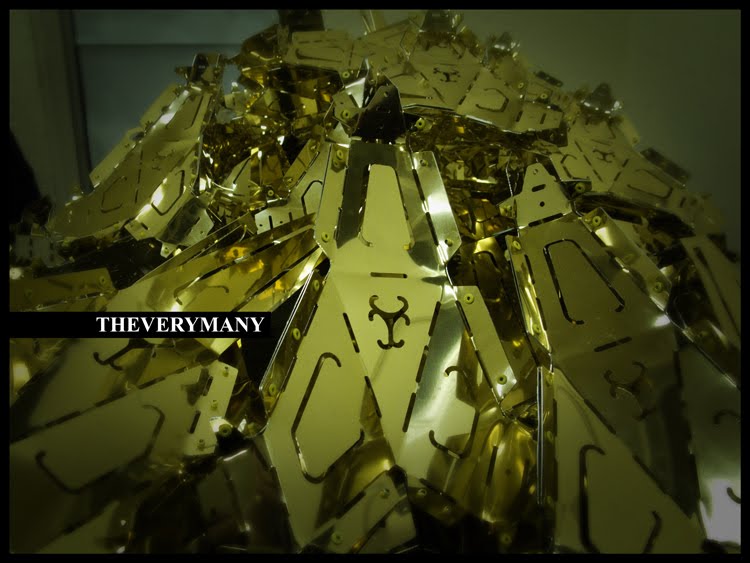
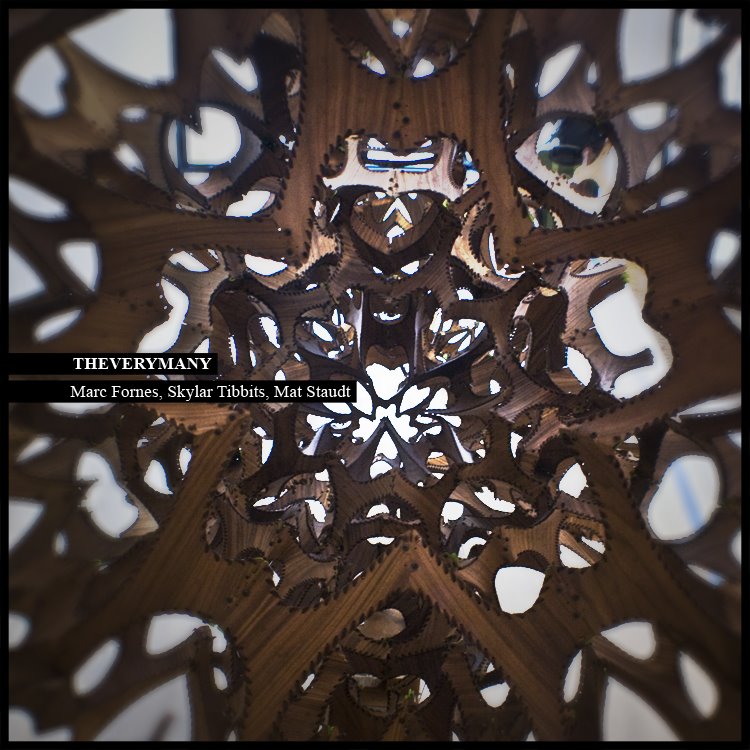
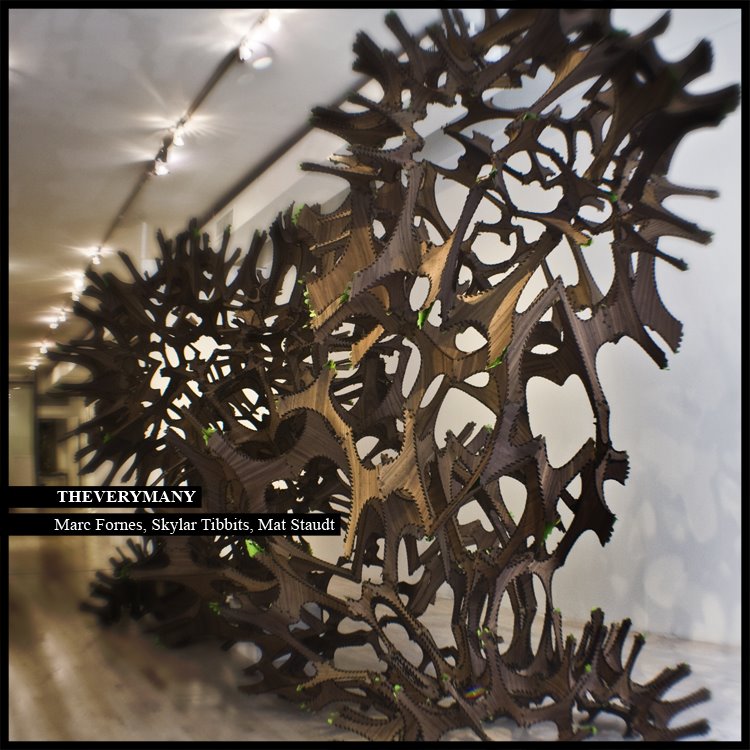
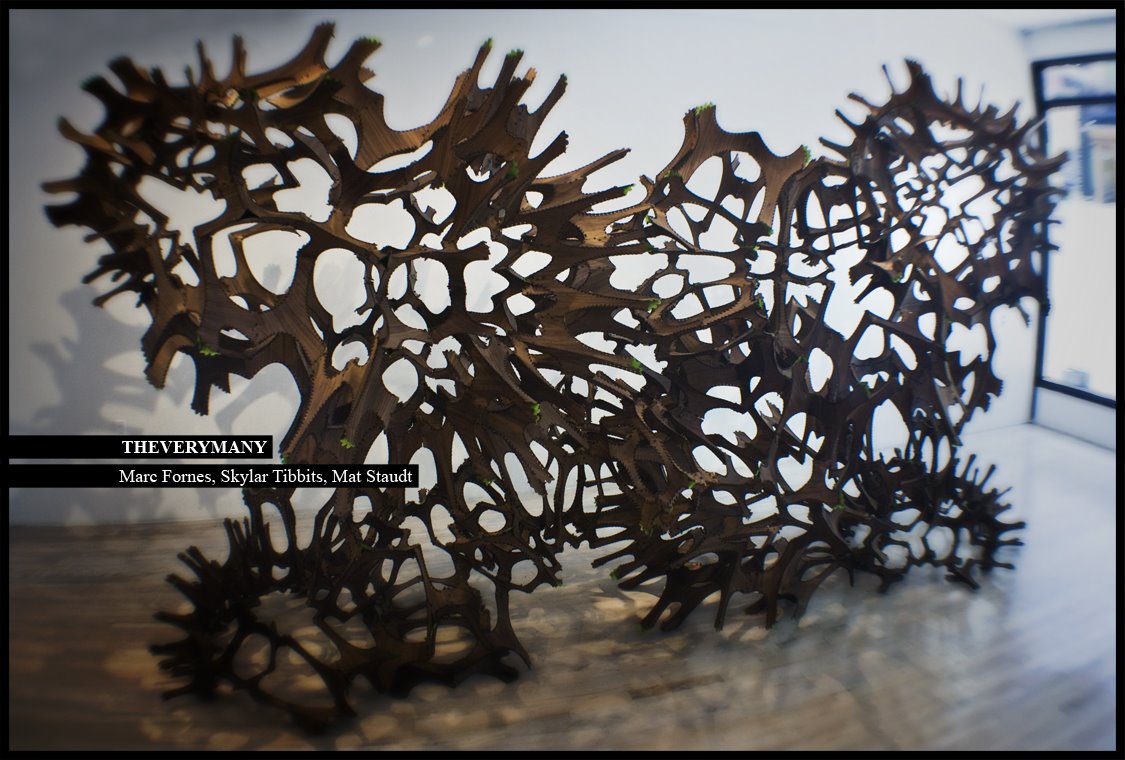
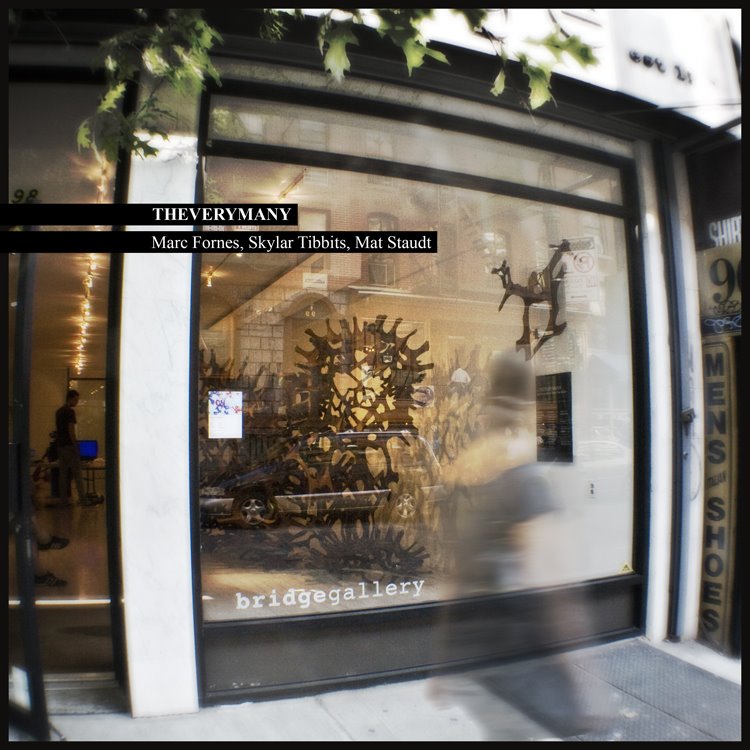
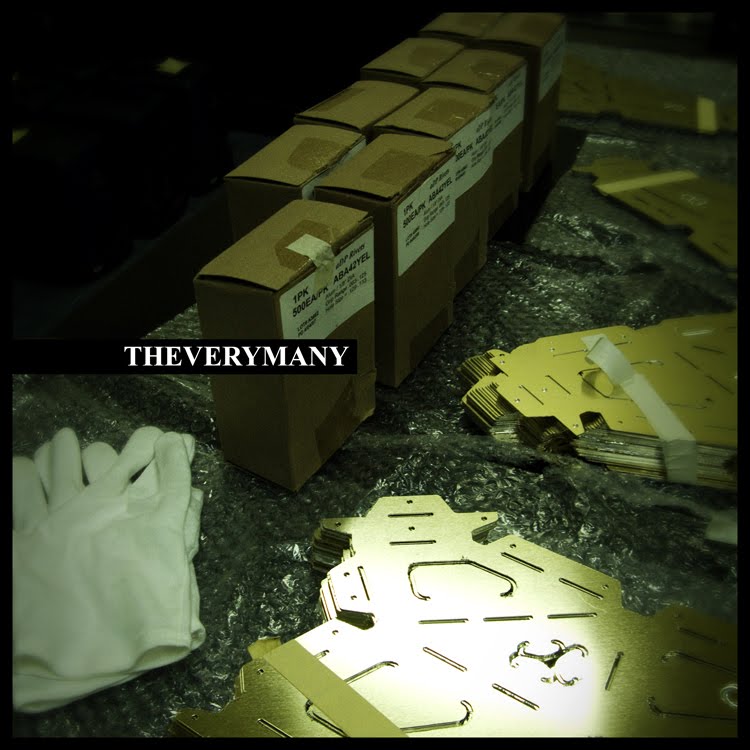
Finally back from several events and wanderings all over the place (Paris, New York, Frankfurt, Strasbourg, Barcelona,...) - here is a first update on the prototype THEVERYMANY produced for Node08 / Frankfurt.

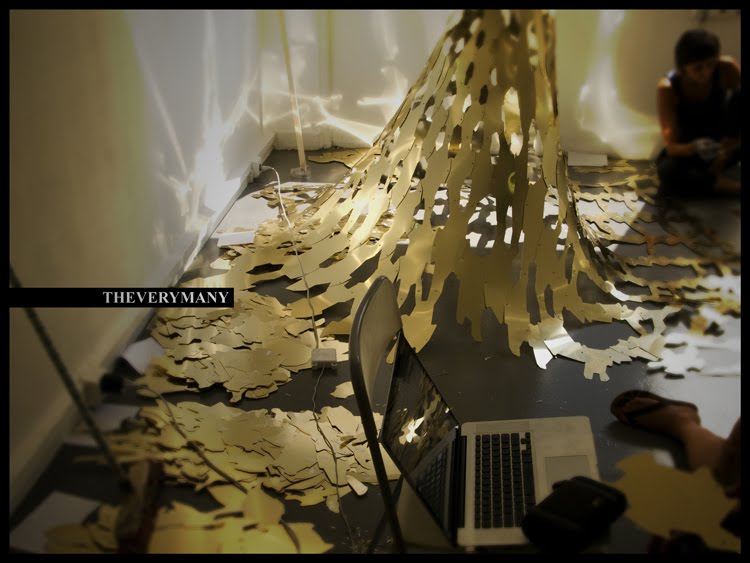
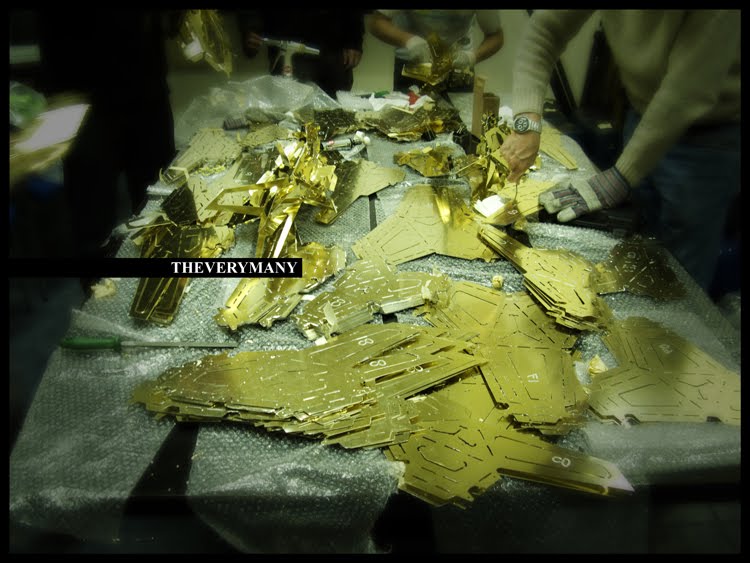
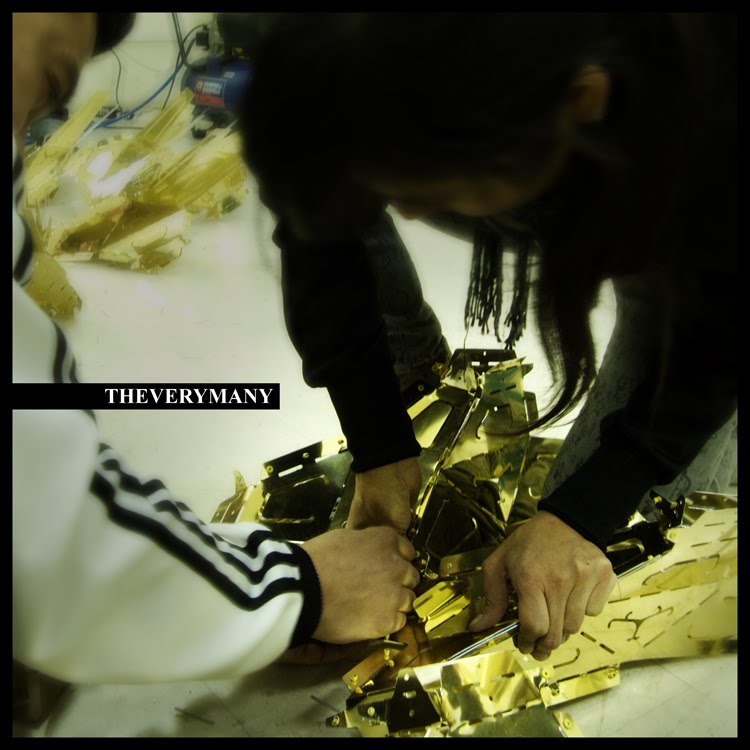
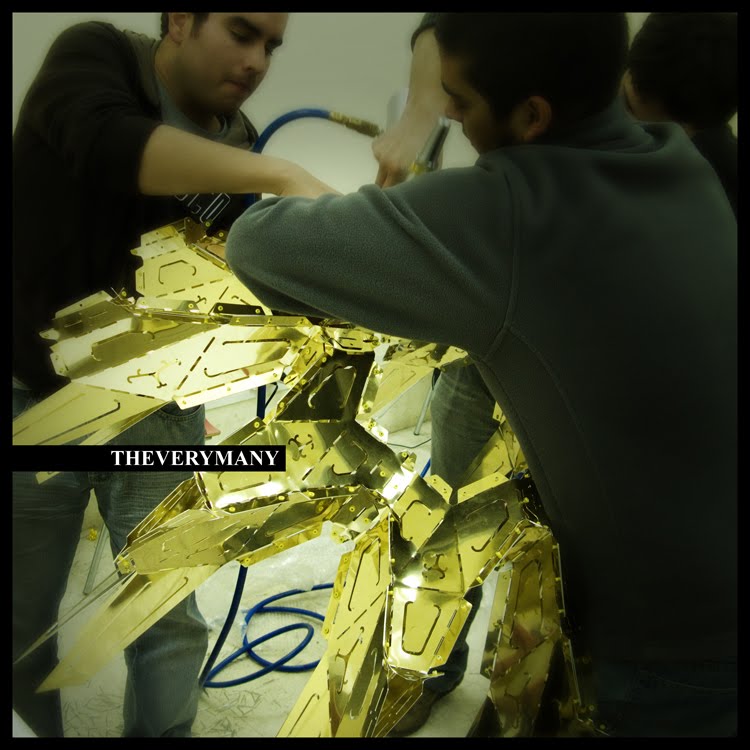
Its assembly has this time been a success (and hughe improvement since v1.0) as it took less than 24 hours & 2 people & 2 laptops to (re-)assemble the 360 panels and 320 nodes...

Once more demonstrating us "one better spend its time within development embedding assembly logic rather than waiting the material world to solve the fuzzines..."

(I will update the "information modeling" improvements on the previous post more focused on the digital back bone approach of the piece...)


"Aperiodic Vertebrae v2.0"
THEVERYMANY (project team: Marc Fornes / Skylar Tibbits)
NODE08 (www.node08.vvvv.org)
April 5th - 12th, Frankfurt / Germany

Many thanks to Eno Henze (http://www.enohenze.de/) & the entire VVVV team (http://vvvv.org) for their invitation & sponsorship

Also many more thanks to our sponsors for the piece:

- Quadrant EPP USA, Inc. (www.quadrantepp.com) > provided us sheets of polyethylene (3/16″ thick)

- Continental Signs (www.continentalsigns.net) and Jared Laucks > CNC cut of the panels

- Dick Dunlop > laser cut of the 320 unique connections (3/16″ acryclic)

Labels: , , , , , , , , ,

Sunday, April 06, 2008

080406_APERIODIC VERTEBRAE v2.0


"Aperiodic Vertebrae v2.0"
THEVERYMANY
(project team: Marc Fornes / Skylar Tibbits)
NODE08 (www.node08.vvvv.org)
April 5th - 12th, Frankfurt / Germany

Many thanks to Eno Henze (http://www.enohenze.de/) & the entire VVVV team (http://vvvv.org/) for their invitation & sponsorship


TEMPLATES FOR FABRICATION:
Like the form finding, all the panels, connections pieces and "helpers" coded strings engraved have all been 100% the result of a performative explicit protocol entirely coded in vb...
That part - even though presented down the row as a formal exercice / sculpture - has always been though from scratch as performative test / prototypical methodologie/process to convince further consulting work...


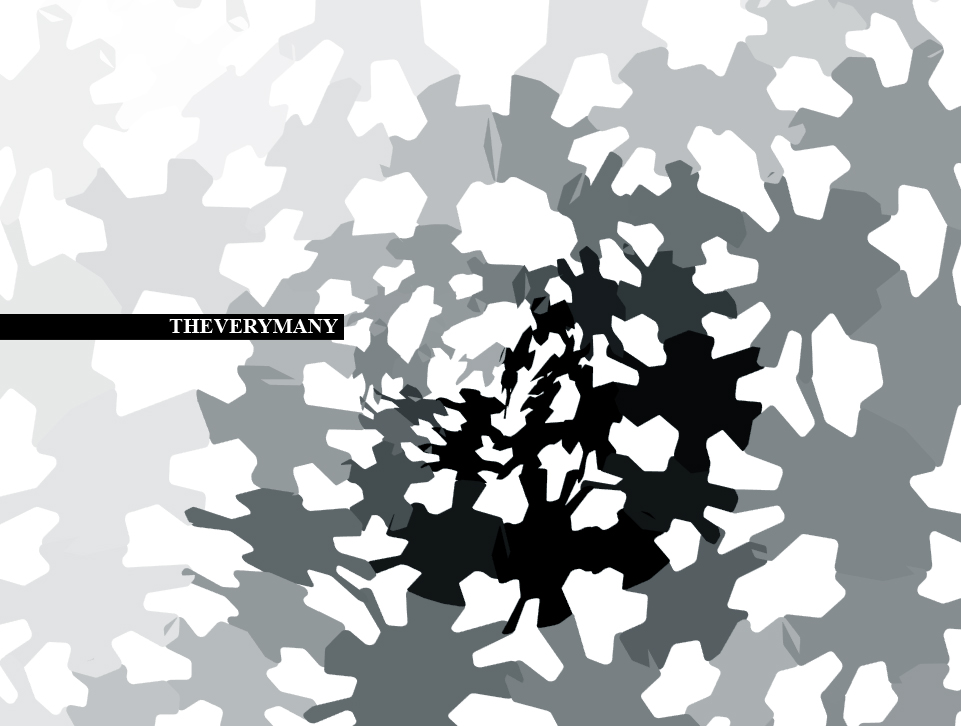
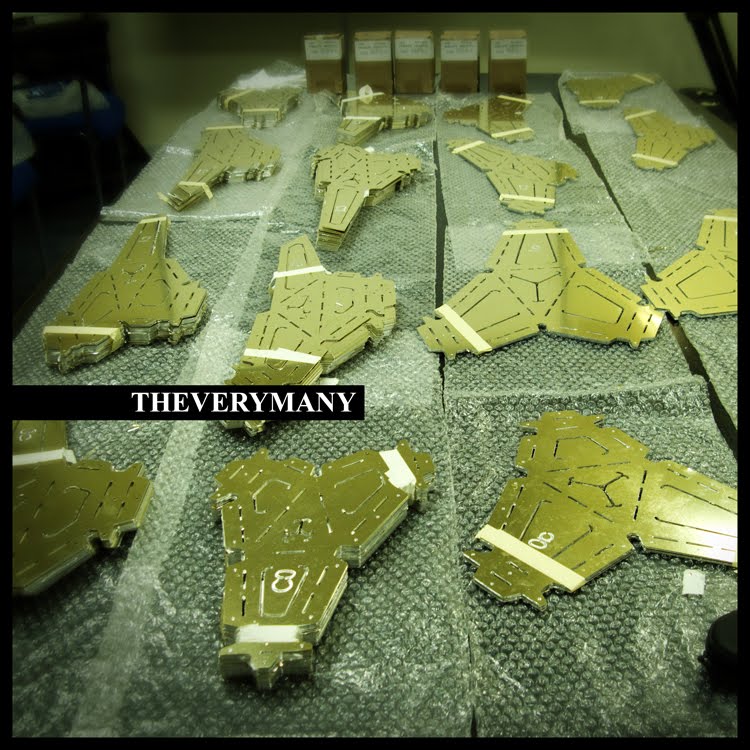
Here are the templates for CNC milling of the panels; 12 unique shapes only are much easier to nest (simple arrays) than all custom pieces...
Many thanks to Quadrant EPP USA, Inc. (http://www.quadrantepp.com/) for providing the 7 sheets of polyethylene required (3/16″ thick)
Many thanks to Continental Signs (http://www.continentalsigns.net/) and Jared Laucks for the CNC cut of those panels


Here are 5 (out of 7) templates for the connections to be laser cut on acrylic sheets (3/16″ thick) - total of 320 unique pieces
Many thanks to Dick Dunlop for the access to the laser cutter (3/16″ acryclic)

Labels: , , , , , , , , , , ,

Friday, February 01, 2008

080131_Exhibition: Aperiodic_Vertebrae (day4)


"Generator.x 2.0: beyond the screen..." an exhibition curated by Marius Watz at the DAM(Berlin) with works by Jared Tarbell (US), Commonwealth (US), Theverymany (FR/US), Leander Herzog (CH), Marius Watz (NO) and participants of the Generator.x 2.0 Workshop...

THEVERYMANY (Marc Fornes, Skylar Tibbits) / Aperiodic_Vertebrae
LOG_assembly_day_04: things are going smoother - one day to go before the opening...

Labels: , , , , , , , , , , , ,

Thursday, January 31, 2008

080130_Exhibition: Aperiodic_Vertebrae


THEVERYMANY has been set up based on a continuum research on explicit and encoded protocols within design - the first implicit consequence of its core is to let traces; those traces - often under the format of simple text files - allow to exactly reproduce or alter the model, eventually share axioms... but it somehow also requires to admit and assume those traces, if so, one can learn from mistakes, errors and/or tolerances of previous stages or generation based on feed back...


Yesterday was the kick start in Berlin of the assembly process for the installation -once again the amount of components generated through a long chaine of various small codes / utilities has directly revealled "dirt"/issues hidden behind a fast/furious seamless process... yet nothing extraordinary beyond the purpose of a physical mock up: large scale test for a complete automate pipe line of form & drawing generation...


DIRTY DIGITAL:
One of the significant issue we came across is related to the nature of tiling and computation - the subdivision algorythm is based on a recursive protocol (or SUBSTITUTION) which is first drawing a primitve pyramide (within a choice of four primitives) which then gets subdivide - the process is repeated many times within itself to generate self-similarity... the issue there is that within each generation the protocol requires to "compare" (points, lenght, areas, etc...) and that matching process needs to determine whether two geometry or parameters are "equal" given an inevitable rounding errors... unfortunately the rounding errors are bound to accumulate whithin each generation...

Yet it wasn't any special issue except when point connection gets generated and therefore requires to increase the tolerance factor not to miss any neighbors... though applying overal tolerance is triggering other error trapping while small naming or matching utilities code are running as host on the larger protocol...

Anyway - suming up it is yet still triggering slight erros and confusion - though I'd like to be transparent and learn within those error trapping - it is defintively part of a certain material paradigm debugging...


Let see which surprises are we getting tomorrow...
"a chaque jour sa peine..."

Labels: , , , , , , , , , ,

Friday, January 25, 2008

080124_Exhibition: Aperiodic_Vertebrae


THEVERYMANY (Marc Fornes, Skylar Tibbits) has been kindly invited to exhibit a physical piece at "Generator.X v2.0: Beyond the screen" - a workshop and exhibition about digital fabrication and generative systems curated by Marius Watz (http://www.generatorx.no/) in collaboration with Club Transmediale and [DAM] Berlin.


Based onto earlier experimentation (Aperiodic series) the installation is an assembly of nearly 500 flat panels (11 types) all milled within 6 sheets (8 feet by 4 feet) of corrugated plastic (4 colors: black, silver grey, white and translucent) and also nearly 500 assembly details (moreless all unique!) all laser cut onto 7 sheets of transparent acrylic...
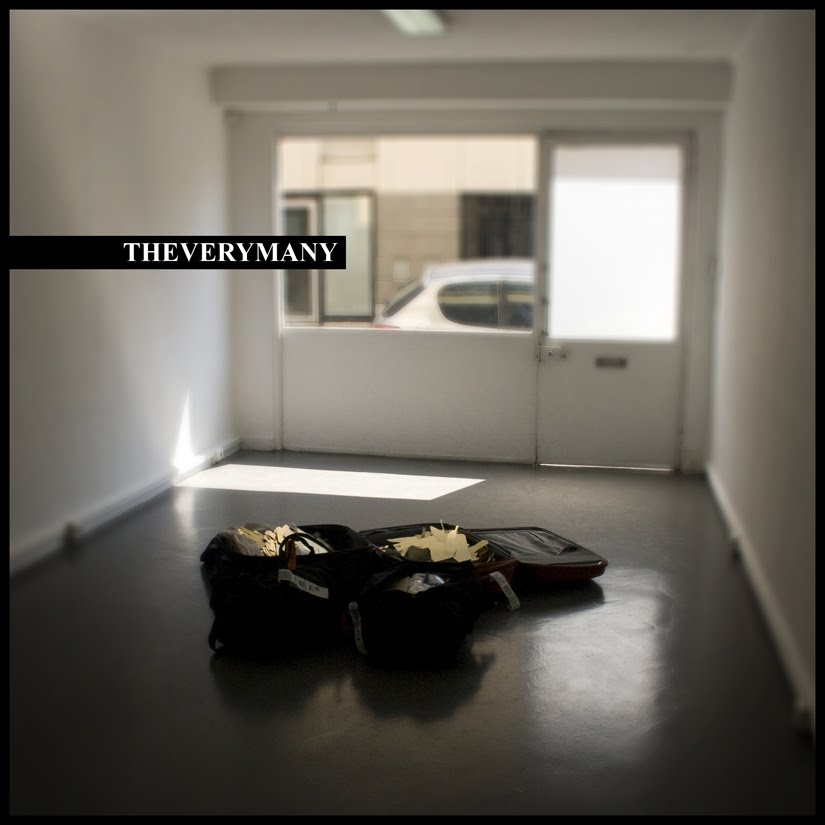
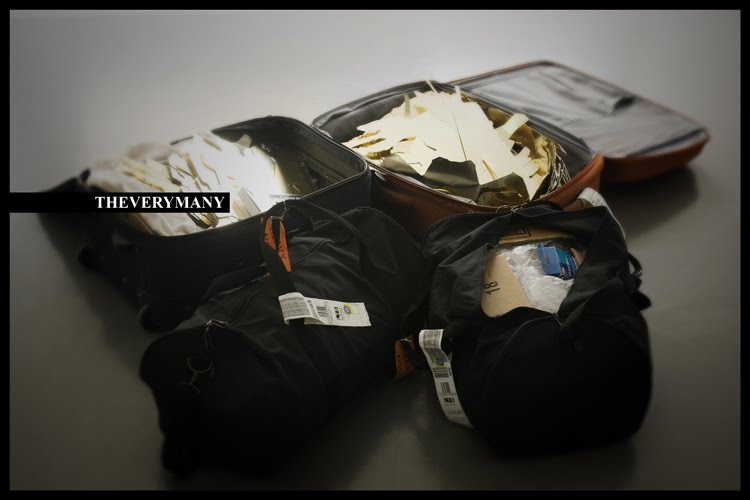
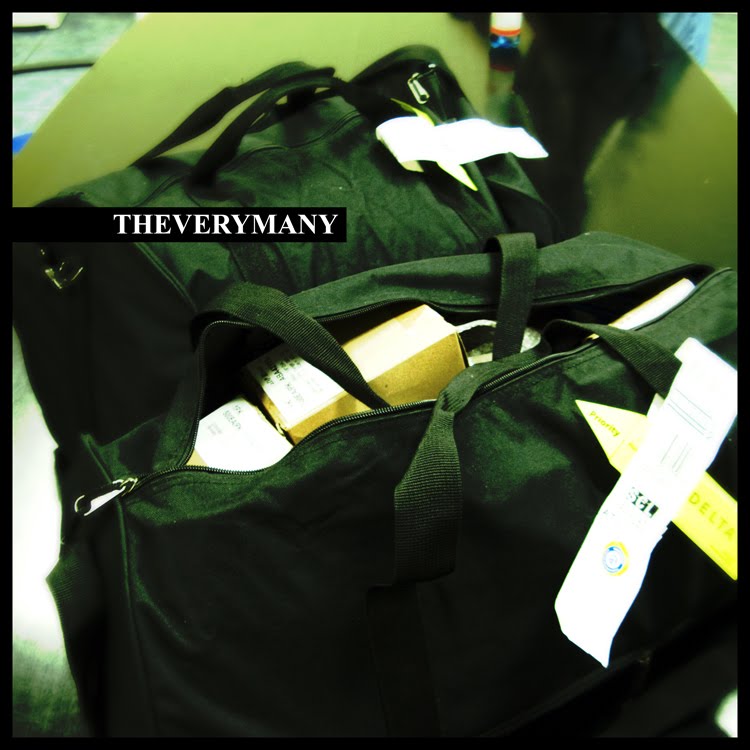
Despite mesuring 13 feet long (after been scaled nearly by half for simple reason of space available within the gallery!) all the panels and assembly details are now flying over nested within one suitcase only...
(pictures of the assembly process should come up soon)


It has been quite some intense moments of scripting since last weekend - mainly sequences of utilities codes - in order to perform a complete automaton starting from the first 4 nurbs curve (those ones were drafted!), the generation of the geometries till the production of each components, notches, unroll, color coding, naming, etc... but there were also a lot of discussion on logic, sequence and protocols to be set up in order to PRE-facilitate as much as we can the entire physical re-fold-assembly of nearly a thousand parts...
Illustrated above (top) the layout of one of the acrylic sheet (number 6) with 66 assembly details - all got named with the number of the piece (as text + name of the object) + each notche with the color of the brick it should connect to and the name of its panel it should locked in...
Illustrated above (bottom) the lay out of one of the 11 types of panels onto a sheets of corrugated plastic - the intersting figure is that the nesting of the panels sheets has been the only hand protocols as a simple traight forward array of the same geometry - this is where it is a hughe gain of time and energy as nesting for so many parts if different would take ages (if even only possible) to find an efficient nested solution...
That starting hypothesis of embeded relative simplicity due to the self-similarity (without even counting the labor time saved to look for the right panels when assembling - imagine a pile of 500 panels to pick from?!!) is RE-questioning the complete mass customization fashion and other kit of parts...
Though the amount of components generated which have to be RE-assembled is also RE-questioning the limit of using generative processes without going further down the line using assembly robots...


Generator.x 2.0: Beyond the Screen
24 Jan -­ 2 Feb 2008, Ballhaus Naunynstrasse / [DAM] Berlin

Credits:
Design: THEVERYMANY (Marc Fornes + Skylar Tibbits)
Scripting: Marc Fornes
Manufacturing protocols: Marc Fornes + Skylar Tibbits
Laser cutting: Skylar Tibbits
CNC & material research: Jared Laucks
Assembling: Skylar Tibbits (+ helpers!)

ANYONE IN BERLIN INTERESTED TO HELP ASSEMBLING IS HIGHLY WELCOME!!
PLEASE COME OVER AT THE [DAM] GALLERY
(starting on the Jan 29th till February 2nd)

Labels: , , , , , , ,

Monday, January 21, 2008

080121_Consulting: polyhedrons frame structure 02


following up on some side escapism while running on more "rational" automaton for an exhibition in berlin (more to come soon)
here the previous code developped for the course of a friend at Knowlton School of Architecture has been applied onto some random polyhedrons.


Labels: , , , , ,

Saturday, January 19, 2008

080118_Consulting: polyhedrons frame structure 01


I recently happen to write few codes for Aurel Von Richtofen who is teaching a course/seminar based on rhinoscript at the Knowlton School Of Architecture (Ohio State University) like: select points within closed polygones, points relaxation/explosion, frame along the edge of polygons, etc...
Whenever I have here or there an hour to kill I often happen to re-read a previous code, clean it and often push it slightly further to render few frames - here are some random fast track results...


PROTOCOL (original version):
- for each closed polygons
- for each faces
- extract edges
- add polylines: array(edge start pt, end pt,face centroide)
- offset the curve (on face - toward the centroide)


Many "quick fix" upgrades are possible:
recursive subdivision according to face aera, membrure thickness according to edge length, etc...

Labels: , , , , ,

Tuesday, January 15, 2008

080115_"SunCare"


Tooling development (in progress) for SOM - different codes:

- Panels: honeycomb subdivision of a nurbs surface based on the UV coordinates of an host nurbs surface (here a sphere) - each cells is re-subdivided into planar panels (triangles) which are able to rotate onto the edge they share with the original cell.

- "SUNCARE" : the facade panels are rotating based on a Sun path "analysis" - in that exemple a random arc inclined 45 degree - though can easily be ploted based on the GPS coordinates of the site and the sun data using as parameters the azimuth and elevation (thx to Neil Katz).

- Animation: rhino animation (number of frame according to sun data sampling) where the honeycomb panels open whenever directly exposed to the sun (with decay)...

AZIMUTH AND ELEVATION - an angular coordinate system for locating positions in the sky. Azimuth is measured clockwise from true north to the point on the horizon directly below the object. Elevation is measured vertically from that point on the horizon up to the object. If you know the azimuth of a constellation is 135° from north, and the elevation is 30°, you can look toward the southeast, about a third of the way up from the horizon to locate that constellation. Because our planet rotates, azimuth and elevation numbers for stars and planets are constantly changing with time and with the observer's location on earth.

Labels: , , , ,

Friday, January 11, 2008

080110_Boolean_Series001


"SIDE TRACK" : CONSTRUCTIVE SOLID GEOMETRY (CSG) (ie wikipedia.org)
Constructive solid geometry (CSG) is a technique used in solid modeling. CSG is often, but not always, a procedural modeling technique used in 3D computer graphics and CAD. Constructive solid geometry allows a modeler to create a complex surface or object by using Boolean operators to combine objects. Often CSG presents a model or surface that appears visually complex, but is actually little more than cleverly combined or decombined objects. (In some cases, constructive solid geometry is performed on polygonal meshes, and may or may not be procedural and/or parametric.)

The simplest solid objects used for the representation are called primitives. Typically they are the objects of simple shape: cuboids, cylinders, prisms, pyramids, spheres, cones. The set of allowable primitives is limited by each software package. Some software packages allow CSG on curved objects while other packages do not.


It is said that an object is constructed from primitives by means of allowable operations, which are typically Boolean operations on sets: union, intersection and difference.

A primitive can typically be described by a procedure which accepts some number of parameters; for example, a sphere may be described by the coordinates of its center point, along with a radius value. These primitives can be combined into compound objects using operations like these:
- boolean union: the merger of two objects into one.
- boolean difference: the subtraction of one object from another.
- boolean intersection: the portion common to both objects

Combining these elementary operations it is possible to build up objects with high complexity starting from simple ones.


EXTEND:
in the case of spheres as primitives - if all have the same exact radius, the complex composite object -resultant from a set of boolean operations- can be describe out of one spherical mould from which all the different parts are trimmed: the challenge here will be to describe and catalogue all the parts not as geometry but rather as 3d trim paths for robotic arm...

Labels: , , ,

Friday, December 14, 2007

071213_Honeycomb_Cushion


Fast track SOM "tooling": developed within the same frame work than "070720_SOM_Rhinoscripting_Class" - the code has been rapidly twiked in order to generate Honeycomb "cushions"; applied onto a primitive geometry type of host - here onto a cylindre - all the cushions are the exact same, except for their orientation: randomly inward or outwoard (therefore two moulds would still be required)

REFERENCE:
Somehow - within that generic test - the bump effect displayed here calls for an obvious references to Herzog and Demeuron's Prada building (though diagrid - glass) or Munich stadium (once more diagrid - inflated ETFE cushions)


PARAMTERS:
- honeycomb vertices in a row
- honeycomb vertices in a column
- depth for the "cushion"
- target percentage for the random number of cushions oriented outward or inward

"SIDE TRACK": ETFE (ie: wikipedia.org)
ETFE (Ethylene Tetrafluoroethylene) is a fluorocarbon-based polymer (a fluoropolymer): a kind of plastic. It was designed to be a material with high corrosion resistance and strength over a wide temperature range.

An example of its use is as pneumatic panels to cover the outside of the football stadium Allianz Arena or the Beijing National Aquatics Centre - the world's largest structure made of ETFE film (laminate). The panels of the Eden Project are also made of ETFE and the Tropical Islands have a 20.000 m² window made of this translucent material.

ETFE is commonly used in the Nuclear Industry for tie or cable wraps. This is because ETFE exhibits excellent mechanical toughness and a chemical resistance that rivals Polytetrafluoroethylene (PTFE). In addition, ETFE exhibits a high-energy radiation resistance and can withstand moderately high temperatures for a long period of time.

Examples of brand names of ETFE are Tefzel by DuPont, Fluon by Asahi Glass Company and Texlon by Vector Foiltec.

Labels: , , , ,

Monday, November 26, 2007

071117_Aperiodic_Series003_Gazebo


PAVILION - Free-standing structure (ie wikipedia)
Pavilion may refer to a free-standing structure sited a short distance from a main residence, whose architecture makes it an object of pleasure. Large or small, there is usually a connection with relaxation and pleasure in its intended use. A pavilion built to take advantage of a view is referred to as a gazebo.


POWERS OF TEN (ie wikipedia)
Powers of Ten is a 1977 short documentary film written and directed by Charles Eames and his wife, Ray. The film depicts the relative scale of the Universe in factors of ten (see also logarithmic scale and order of magnitude). The film is a modern adaptation of the 1957 book Cosmic View by Kees Boeke---and more recently is the basis of a new book version. Both adaptations, film and book, follow the the form of the Boeke original, adding color and photography to the black and white drawings employed by Boeke in his seminal work (Boeke's original concept and visual treatment is all too often uncredited or insufficiently credited in contemporary accounts).

The film begins with an aerial image of a man reclining on a blanket; the view is that of one metre across. The viewpoint, accompanied by expository voiceover by Philip Morrison, then slowly zooms out to a view ten metres across ( or 101 m in standard form), revealing that the man is picnicking in a park with a female companion. The zoom-out continues, to a view of 100 metres (10² m), then 1 kilometre (10³ m), and so on, increasing the perspective—the picnic is revealed to be taking place near Soldier Field on Chicago's lakefront—and continuing to zoom out to a field of view of 1024 metres, or the size of the observable universe. The camera then zooms back in to the picnic, and then to views of negative powers of ten—10-1 m (10 centimetres), and so forth, until we are viewing a carbon nucleus inside the man's hand at a range of 10-18 metre.


AA PAVILION "the powers of ten"
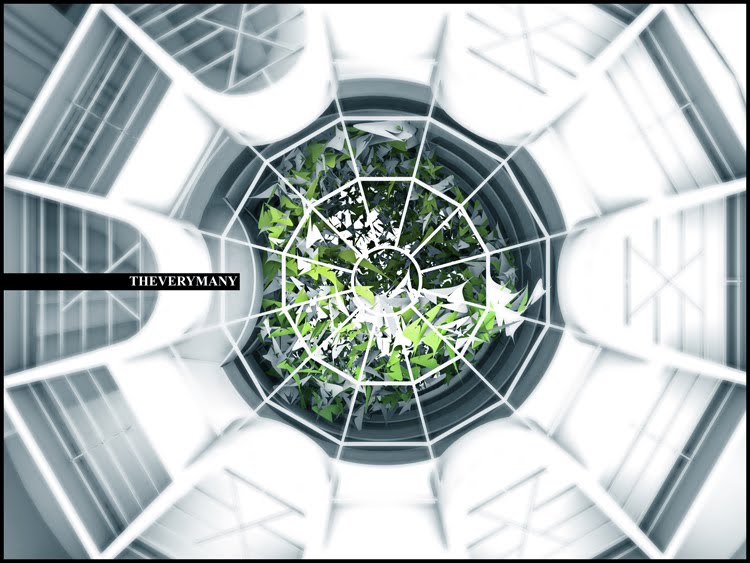
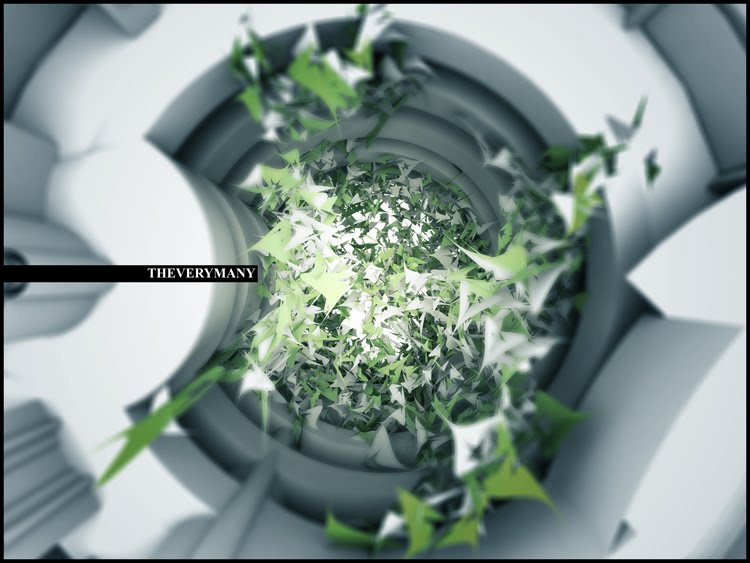
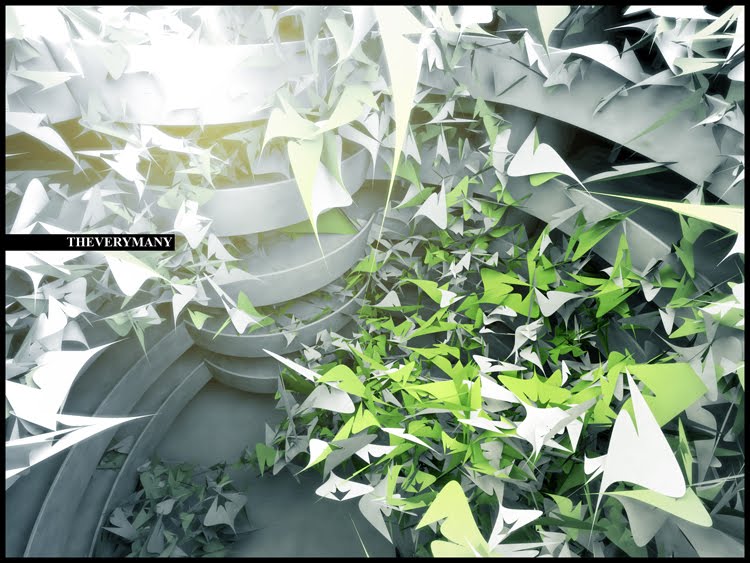
The different renders of that post are extracted from theverymany proposal for the AA Ten pavilion competition. The proposal was looking at "self-similarity" as the driving force behind the structure of its pavilion somehow allowing similarities within the possible "fractal" variation of the scale of its components -embeded within the logic of its aperiodic packing- and the emergent filiation between the 10 generations of AADRL graduates: all are different and all somehow within a certain depth are very similar...


Theverymany is now developping further its proposal -currently pushing with its aperiodic series- and is looking for sponsors and eventual venues to construct it - anyone interested?...

Labels: , , , , ,

Saturday, November 17, 2007

071117_Aperiodic_Series002


The flower is said to be the most conspicuous part of the plant. Their appeal has encouraged Man to know and possess them, developing technique such as gardening. The beauty of their petals - regarded as a highly modified leafs - has mainly been developed to attract pollinators (insects, birds or bats) which play an important role in the reproductive process of pollinating.

As an architect the easy shortcut of assimilating petals to cladding is a very tempting analogy: even though both have very different constraints and mode of operation, cladding -like petals- other than defining and protecting its host is often mainly regarded as an ornamental design exercise with one function only: made to attract… though within one rule only: within budget!


Here that shortcut has been taken to its paradigm as starting hypothesis: assuming the time of a geometrical wandering only - like some sort of temporary but controlled amnesia- that a cladding strategy could be elaborate on a flower attraction effect (affect??) though not by the complex geometry of its petal but rather by the intricacy of its assembly…

If “within a certain cost” intricacy can only be achieved within repetition - here:
- take 4 flowers (flower as assembly but also assemblage) describe within a pyramid
- each flower is made of 4 petals
- each petal is simplified based on a closed nurbs curve written within a triangle
- but also each petals is common at two flowers
- add 4 more flowers as the exact mirror of the first ones
You can therefore describe 8 different flowers of 4 petals with height 8 unique petals only…


If the entire story isn’t based on 4 random pyramids but based on four Danzer tiles you could depending on the scale potentially describe any shapes within such packing based on 4 flowers (connections) and 8 unique petals (tiles)…

Labels: , , , ,

Wednesday, November 07, 2007

071107_Aperiodic_Series001


Here is finally the second post on a series of tests done on 3d aperiodic pattern - here based on a Danzer tiling assembly - the other different types of outputs will be posted as a following series of post...

APERIODIC TILING (http://en.wikipedia.org/wiki/Aperiodic_tiling):
A given set of tiles, in the Euclidean plane or some other geometric setting, admits a tiling if non-overlapping copies of the tiles in the set can be fitted together to cover the entire space. A given set of tiles might admit periodic tilings, tilings that remain invariant after being shifted by a translation. (For example, a lattice of square tiles is periodic.) It is not difficult to design a set of tiles that admits non-periodic tilings as well (For example, randomly arranged tilings using a 2x2 square and 2x1 rectangle will typically be non-periodic.) An aperiodic set of tiles however, admits only non-periodic tilings, an altogether more subtle phenomenon.

DANZER TILING (http://www.cs.williams.edu/~98bcc/tiling/index.html):
There are 22 vertex configurations which occur in an infinite (global) Danzer tiling produced by inflating an initial finite patch an infinite number of times. Danzer says in his paper that there are 27 vertex configurations total, but says nothing about the characteristics of the five configurations which do not appear in a global tiling. We have identified a total of 174 vertex configurations by exhaustive search. At present we are unsure whether Danzer's remark is an error or whether some 5 of these are special in some way.


Acknowledgment: I can't pretend taking much credits in the field of aperiodic pattern in architecture as yet somehow in the direct line of people such as Daniel Bozia, Aranda/Lasch, K. Steinfeld and many others who posted on the web explicit and illustrated information on the subject which helped me to figured it out...

Labels: , , ,

Sunday, October 14, 2007

071014_Coral


Investigations on "combinatorial processes" or some step stones on the development of three interesting discreet algorythms (Meshing+Orientation+Aperature); combined the results display some emergent qualities very near the inticacy of some Coral structures (though staying within the genotype of a certain "flat paradigm")...


Labels: , , , ,

Tuesday, October 02, 2007

071001_StochasticChairDress


STOCHASTIC is synonymous with "random." The word is of Greek origin and means "pertaining to chance" (Parzen 1962, p. 7). It is used to indicate that a particular subject is seen from point of view of randomness. Stochastic is often used as counterpart of the word "deterministic," which means that random phenomena are not involved. Therefore, stochastic models are based on random trials, while deterministic models always produce the same output for a given starting condition. . (ie mathworld.wolfram.com)

Labels: , , ,

Tuesday, September 25, 2007

070925_(n)certainties

(n)certainties biotopes is the brief of the studio Francois Roche / R&Sie and Marc Fornes / theverymany are co-teaching this Fall 2007 at Columbia University:
(n)certainties is based on Robotics & bottom up protocol of growth...
http://ncertainties.wordpress.com/
(thx Francois for the kind inviation!)


Option Explicit
'Script written by Marc Fornes
'Script copyrighted by Marc Fornes / theverymany.net
'Script version 13 September 2007 16:05:03

Call Main()
Sub Main()

Dim i,j,k
Dim arrPt

Dim dblLow : dblLow = -5
Dim dblUp : dblUp = 10

Dim arrPts()
Dim n : n = 0


Call rhino.enableRedraw(False)
' ===========================
For i = 0 To 5
For j = 0 To 5
For k = 0 To 5

ReDim Preserve arrpts(n)
arrPts(n) = array(random(dblLow, dblUp),random(dblLow, dblUp),random(dblLow, k*dblUp))
Call rhino.AddPoint (arrPts(n))

If n >= 2 Then
Dim arrPtNearer : arrPtNearer = functNearestNeighbor(arrPts, n)
Dim strLine : strLine = rhino.addLine(arrPts(n), arrPtNearer)
Call Rhino.AddCone (arrPts(n), arrPtNearer, 0.2)
call rhino.addSphere (arrPts(n), 0.2)
End If

n = n + 1

Next
Next
Next
' ===========================
Call rhino.enableRedraw(True)


End Sub


Function random(low, up)
Randomize
random = (up - low) * Rnd + low
End Function

Function functNearestNeighbor (arrPts, index)

Dim k, dblDist
Dim dblDistMin : dblDistMin = 100000

For k = 0 To UBound(arrPts)

dblDist = Rhino.Distance(arrPts(index), arrPts(k))

If dblDist <> 0 And dblDist < dblDistMin Then
dblDistMin = dblDist
Dim arrPtNearest : arrPtNearest = arrPts(k)
End If

Next

functNearestNeighbor = arrPtNearest

End Function

Labels: , , ,

Wednesday, September 05, 2007

070907_OneLineMoreOrLess


Both images are generated using the exact same code, nearly the same inputs - only one line of code less for the seconde one! dramatic consequences for such little change... it sounds like the principle of chaos theory...

Labels: ,

Friday, August 24, 2007

070824_NurbsFieldAttractor_02


Interesting results for me as the latest outputs are very similar than a previous work from me - within "Play" a DRL group back in 2003; I was there experimenting with particles dynamics within 3dsMax; it took adges on a pentium 2 or 3 to calculate each frames! I left for the Christmas break for 12 days and when I came back my computer was still calulating frames...
Here within rhinoscript it is still not "Fast" but now I do understand the math behind the paramters of those 3dsMax "space warp"...

Labels: , , , , ,

Friday, August 17, 2007

070817_NurbsField


for every pt: sum of attractions = direction; sum of directions in time = path
the sum of paths = nurbsfield; fast track test...

Labels: , , , , ,

Tuesday, August 07, 2007

070806_Tesselation: Flat Panels On Nurbs Surface


Updates an on going research within the studio on how to create a taylor ornementation pattern onto an host nurbs surface with flat panels which are not triangulated - in that option specific option the panels are connected "air tight" (within one specific condition of double curvature only).


Labels: , , ,

Thursday, August 02, 2007

070801_Aperiodic_Series000


very first test or what i would qualify as a "performative computational design sketch" - yet it does look wild - which within the field of "explicit design process" is often consider as "not in control" - I accept the critic - though that one has more thoughts embeded in terms of pre-rational emergent design process that it does look like...


repetition within subdivision - can't argue yet about it as still requires more development - more should come...

Labels: , ,

Thursday, May 31, 2007

070530_Pattern


First test looking at pattern for the floor of an hotel lobby (SOM Interior); one continuous circulation space is treated as a blend of different "moments" or sub-spaces highlighted here through an overall mapping system of ceramic tiles.

THE PATTERN (ie : Wikipedia.org)

The PATTERN is a form, template, or model (or, more abstractly, a set of rules) which can be used to make or to generate things or parts of a thing, especially if the things that are created have enough in common for the underlying pattern to be inferred, in which case the things are said to exhibit the pattern. Pattern matching is the act of checking for the presence of the constituents of a pattern. The detection of underlying patterns is called pattern recognition. The question of how different patterns emerge is accomplished through the work of the scientific field of pattern formation. Patterns are also related to repeated shapes or objects, sometimes referred to as elements of the series.

The simplest patterns are based on repetition/PERIODICITY: several copies of a single template are combined without modification
.”


INCREASING THE RESOLUTION: variation criteria are illustrated through the repetition of "identical", "similar" or "self-similar" hexagonal components via changes of scale (each tile format can be recomposed by an assembly of smaller tiles having the same shape), color (allowed within “stepped ranges” in order not to maximize the number of different colors), finishes ( from glossy to mat and ruff) and orientation (the poly-directionality of the six sided shape of the hexagon chosen here for its best fit to the numerous branching direction of the project is reduced via a re-subdivision into three pairs of two sides, shaping some sort of arrow acting as a compass)


Pseudo Code:

post in progress - requires editing...

Labels: , , , ,

Wednesday, May 02, 2007

070502_rh4_tesselation_flat_panels(3)


("tests render with VRay for rhino")
Some sort of panels "stability" mapping based on the number of connexions for each panels toits neighbours:
- GREEN: connexion to at least three neighbours
- YELLOW: connexion to two neighbours
- RED: connexion to one single neighbour

Labels: , , , ,

Friday, April 20, 2007

070419_rh4_tesselation_flat_panels(2)


SUPERSTRUCTURE

A superstructure is an extension of an existing structure or baseline. (...) The word itself is a combination of super (Latin for above, in addition) and structure (also from Latin meaning to build, to heap up). (ie wikipedia.org)

Here, the routine is plotting first flat components onto the host surface to create a non air tight skin system which serves as "basline" for a secondary searching algorythm looking for intersection points as assembly nodes for a extra structure or superstructure...


Emergent properties:
1/ all the components are intersecting with one neighbour at least which allows them to be connected via that point without requiring extra complex bridging through gaps and difference between the panels of heights, angles, ect... though some sort of "continuity check" algorythm will be required in order to identify larger autonomous clusters which wouldn't be connected to the whole and therefore structurally failling...
2/ the resultant skeletal system - driven from a simple neighbourhood condition and linking all the connexion nodes with the inputed point set - is looking very similar to leafs structures... emergent biomimetism?

Labels: , , ,

Friday, March 23, 2007

070322_LightHive_Update(3)


"the AA autrement"... is a set of abstracts rendered while figuring out the explicit and encoded rules set for LightHive "diffuseur grammaire": one could argue that each drawing is acting as some sort of map of the AA school, where the representation devices are a set of unique geomtries -carefully labelled- showing directions of obstacles, accidents and other folds within the terrain of every room...

Simplified as sets of closed polysurfaces, the 3D model allows the code to check for every room which light sources -selected as a point cloud- are enclosed within...


One of many shape... each arrows is growing along the direction of a vector pointing toward any corner of the room boundaries, or furniture piece...

Labels: , , , ,

Tuesday, March 13, 2007

070312_HoneyComb (re-scripting)


TILING
A plane-filling arrangement of plane figures or its generalization to higher dimensions. Formally, a tiling is a collection of disjoint open sets, the closures of which cover the plane. Given a single tile, the so-called first corona is the set of all tiles that have a common boundary point with the tile (including the original tile itself).

Wang's conjecture (1961) stated that if a set of tiles tiled the plane, then they could always be arranged to do so periodically. A periodic tiling of the plane by polygons or space by polyhedra is called a tessellation. The conjecture was refuted in 1966 when R. Berger showed that an aperiodic set of 20426 tiles exists. By 1971, R. Robinson had reduced the number to six and, in 1974, R. Penrose discovered an aperiodic set (when color-matching rules are included) of two tiles: the so-called Penrose tiles. It is not known if there is a single aperiodic tile.
(ie mathworld.com)

HONEY COMB
As part of a re-visiting codes series -most often following students requirments- I went back to one of my very first rhinoscript code generating Honeycomb cells onto a host nurbs surface and rewrote it... mainly shorter, for sure much faster and somehow within a concern of a certain "elegance" -to quote the latest trend of fitness criteria accoding to Ali Rahim's latest issue of AD magasine!- as an exercice within the exercice...

Tips and tricks:
The generation of the honeycomb cells within rhinoscript is now defined by one unique conditional statment using many booleans operations.
If (i>1 And j>1) And ( ( ((i-1)Mod 2) And (((j-2)Mod 4)= 0) ) Or ( (((i-1)Mod 2)=0) And ((j Mod 4)=0) ) Or ( (((i-1)Mod 2)=0) And (((j-1)Mod 4)=0) ) Or ( (((i-1)Mod 2)) And (((j+1)Mod 4)=0) ) )

HONEYCOMB GEOMETRY: (ie wikipedia.org)
The axes of honeycomb cells are always quasi-horizontal, and the non-angled rows of honeycomb cells are always horizontally (not vertically) aligned. Thus, each cell has two vertical walls, with "floors" and "ceilings" composed of two angled walls. The cells slope slightly upwards, between 9 and 14 degrees, towards the open ends.

There are two possible explanations for the reason that honeycomb is composed of hexagons, rather than any other shape. One, given by Jan Brożek, is that the hexagon tiles the plane with minimal surface area. Thus a hexagonal structure uses the least material to create a lattice of cells with a given volume. Another, given by D'Arcy Wentworth Thompson, is that the shape simply results from the process of individual bees putting cells together: somewhat analogous to the boundary shapes created in a field of soap bubbles. In support of this he notes that queen cells, which are constructed singly, are irregular and lumpy with no apparent attempt at efficiency.

It is likely that the honey bee constructs the honeycomb based on instinct, and the prevailing theory of biology is that the appearance of such efficient shapes in nature is a result of natural selection.

The closed ends of the honeycomb cells are also an example of geometric efficiency, albeit three-dimensional and little-noticed. The ends are trihedral (i.e., composed of three planes) pyramidal in shape, with the dihedral angles of all adjacent surfaces measuring 120°, the angle that minimizes surface area for a given volume. (The angle formed by the edges at the pyramidal apex is approximately 109° 28' 16" (= 180° - arccos(1/3)).)

The shape of the cells is such that two opposing honeycomb layers nest into each other, with each facet of the closed ends being shared by opposing cells.

Individual cells do not, of course, show this geometrical perfection: in a regular comb, there are deviations