Saturday, April 19, 2008

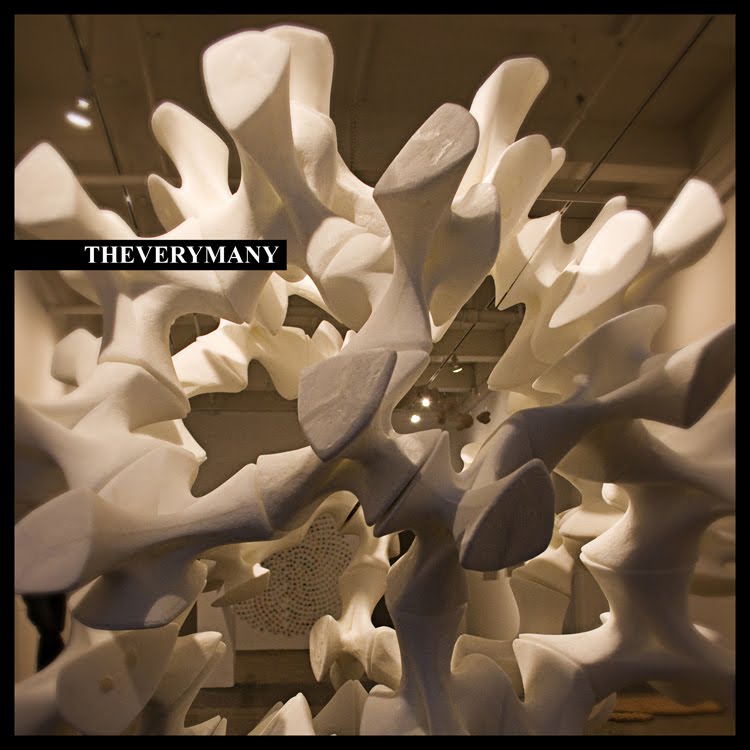
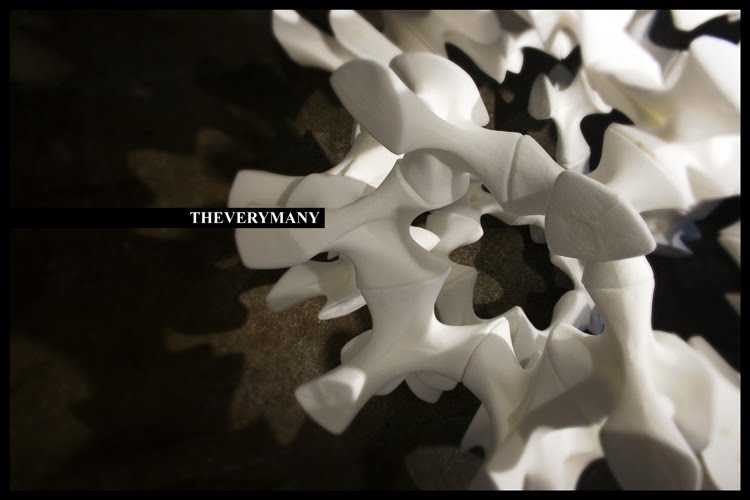
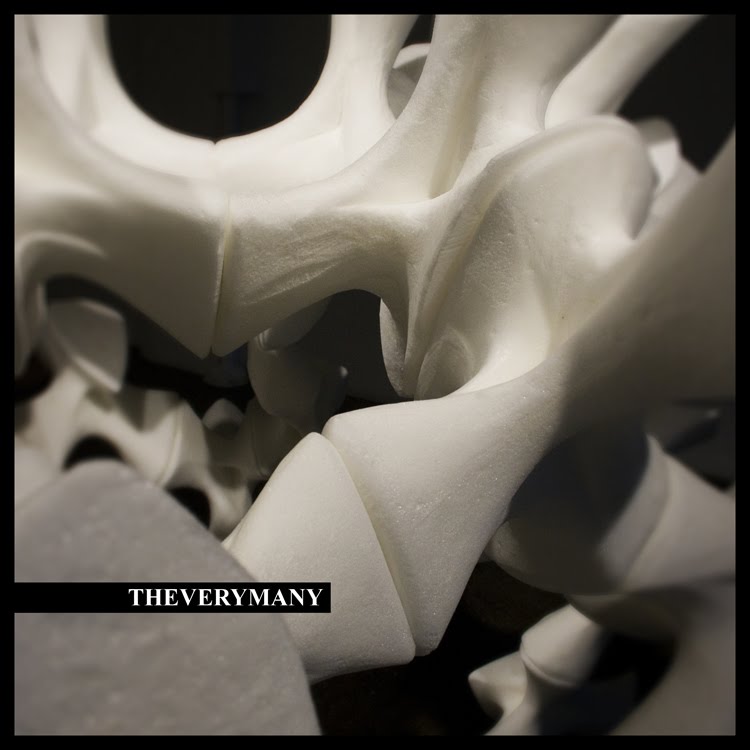
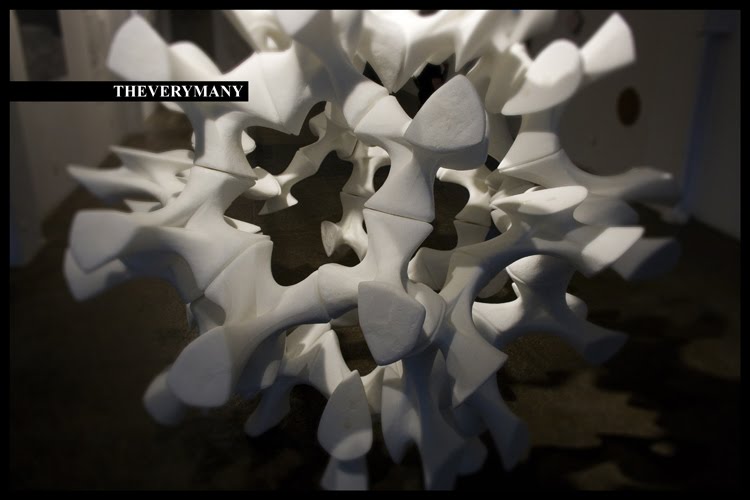
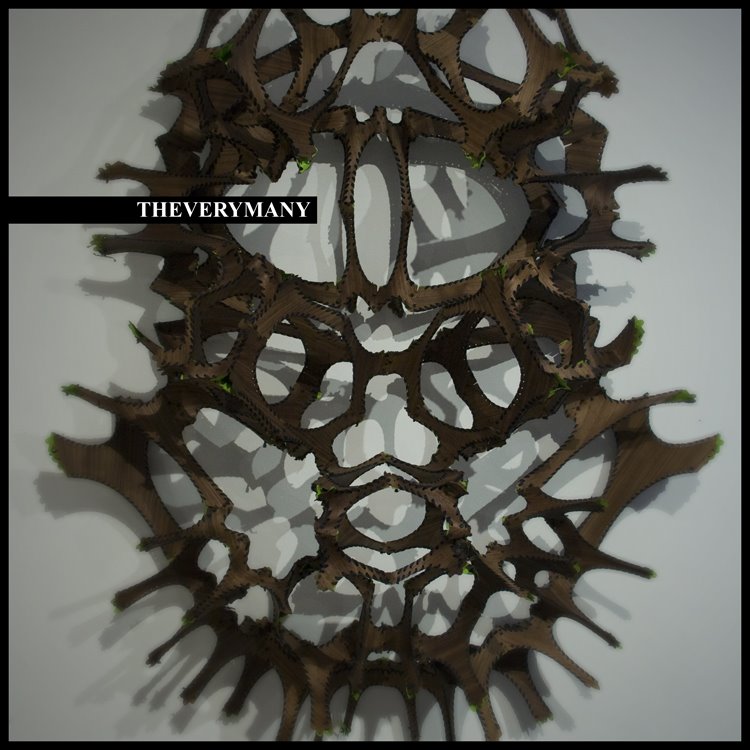
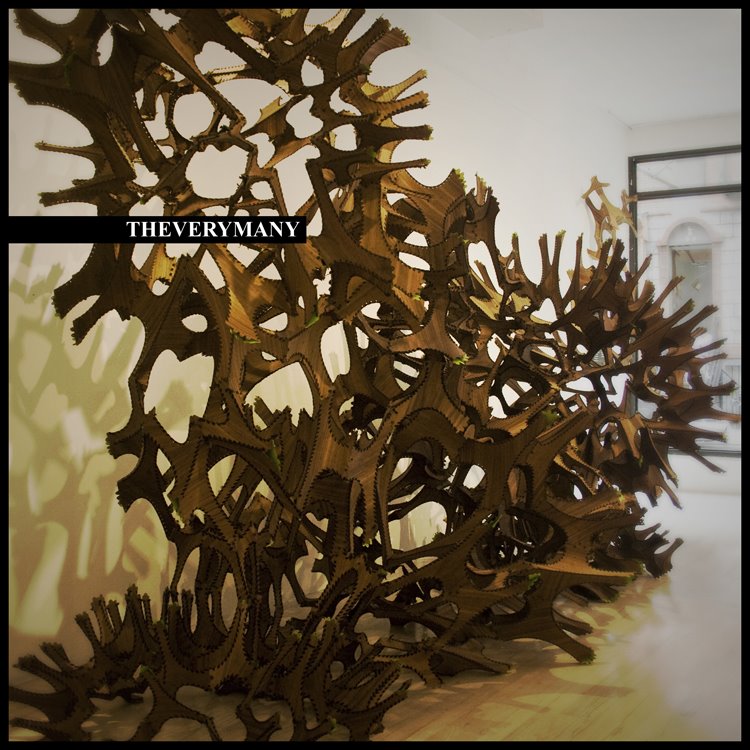
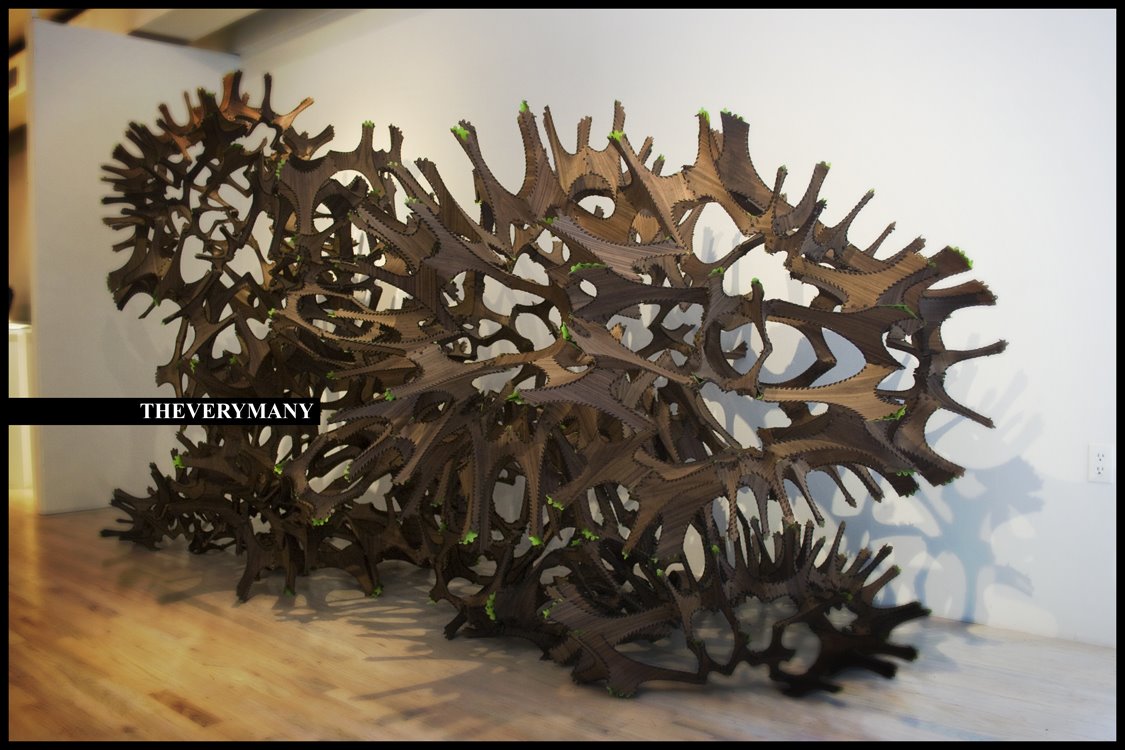
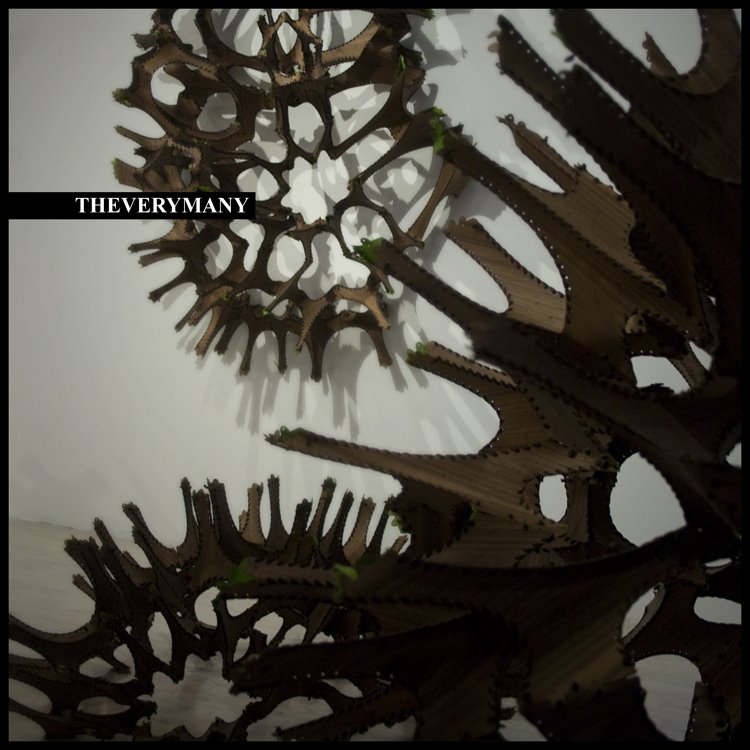
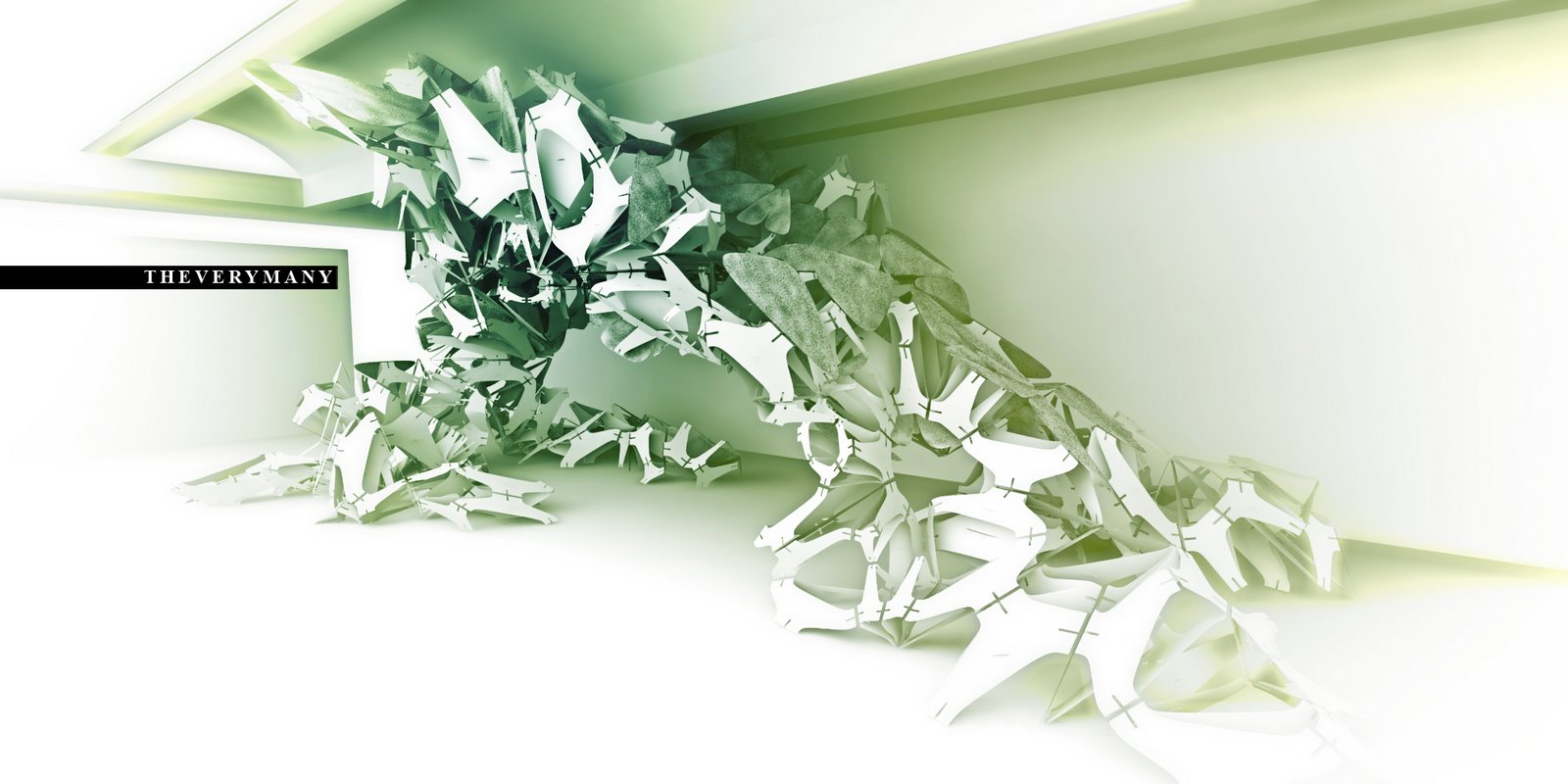
080406_APERIODIC VERTEBRAE v2.0.2


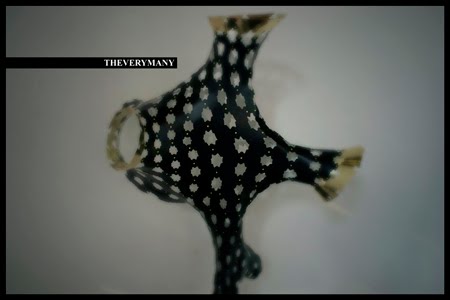
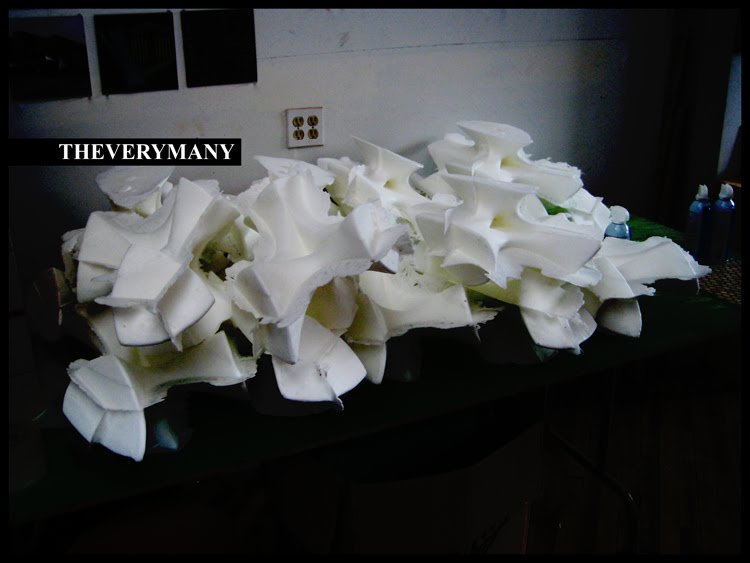
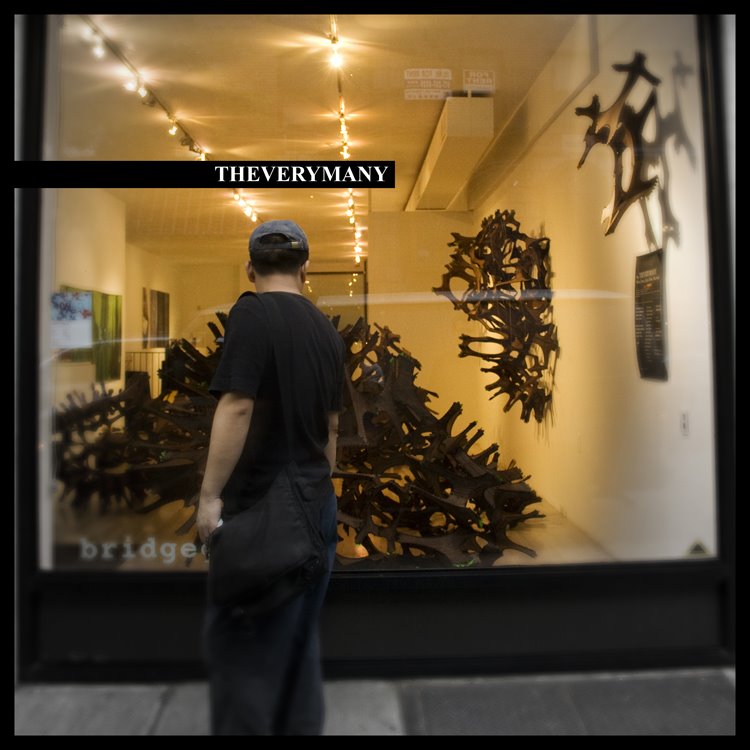
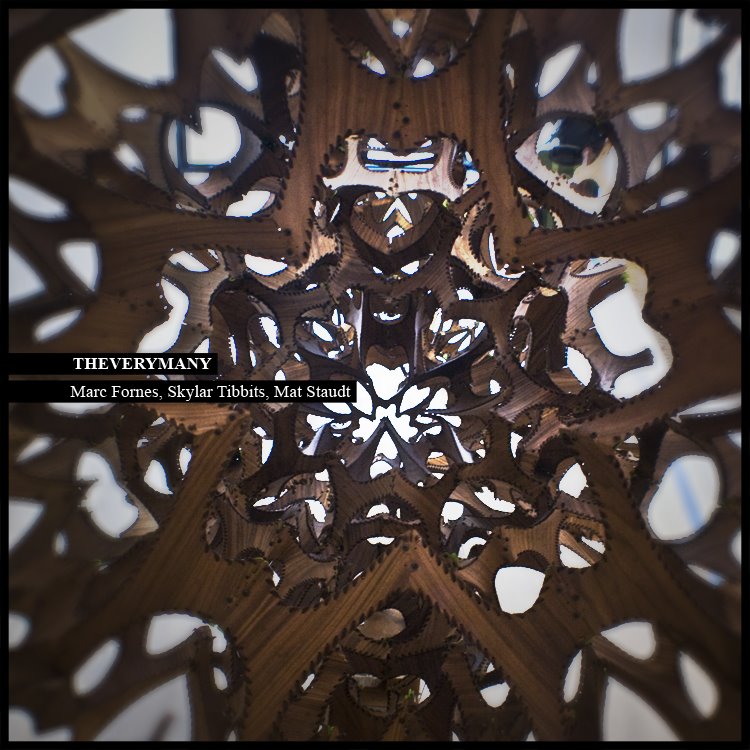
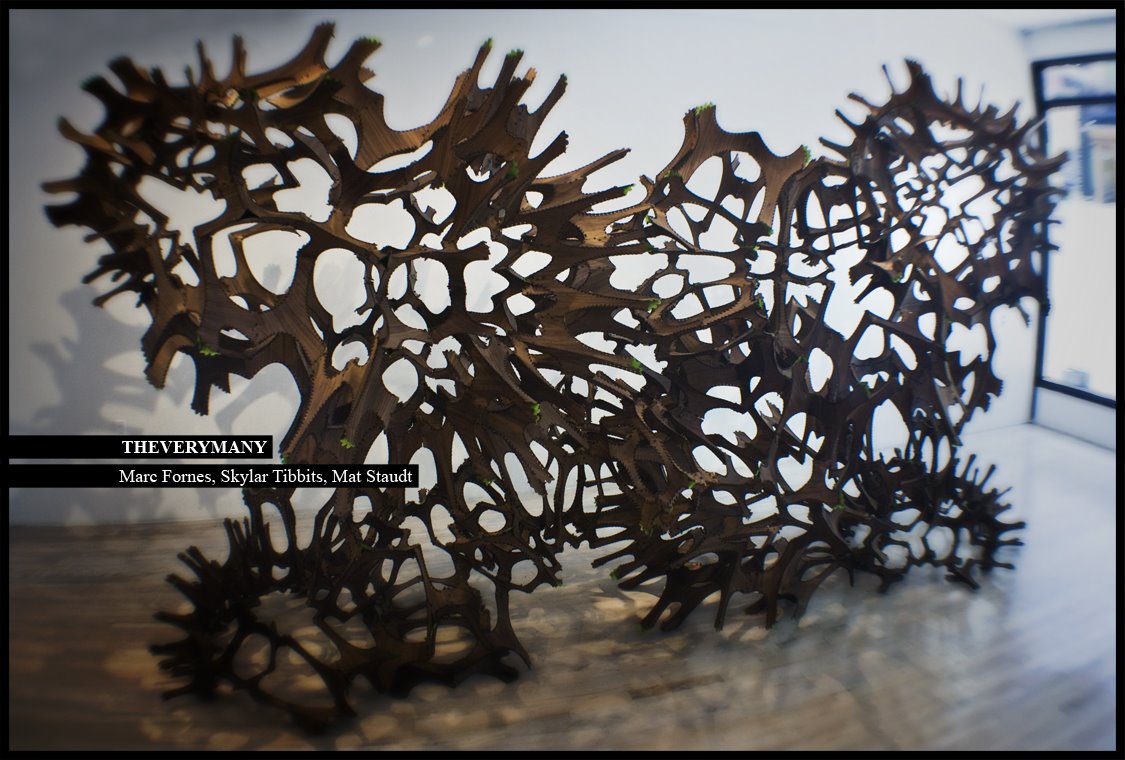
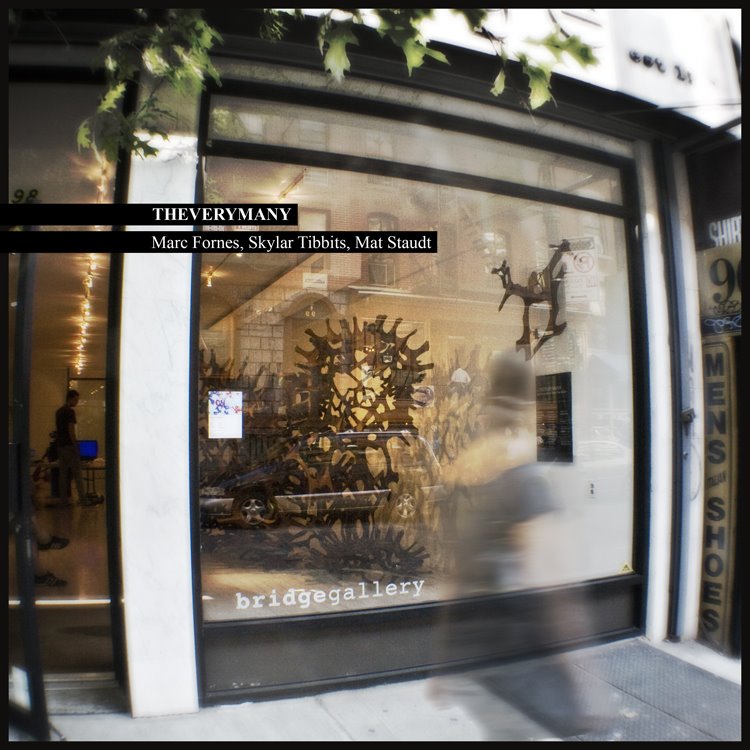
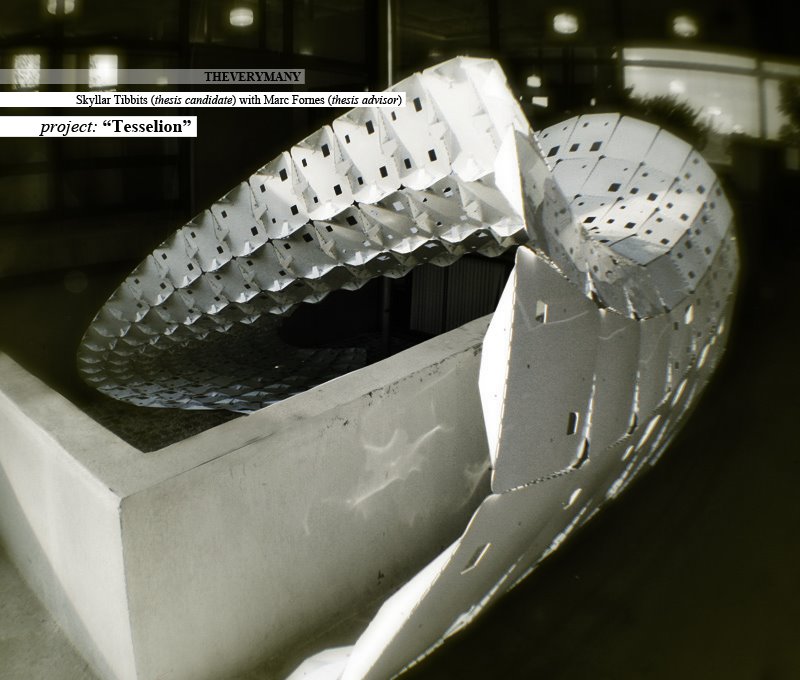
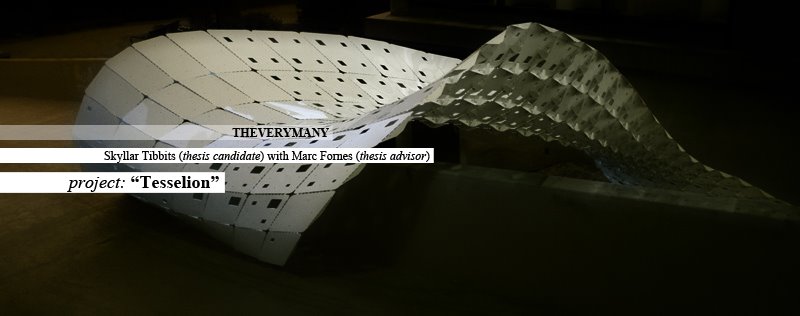
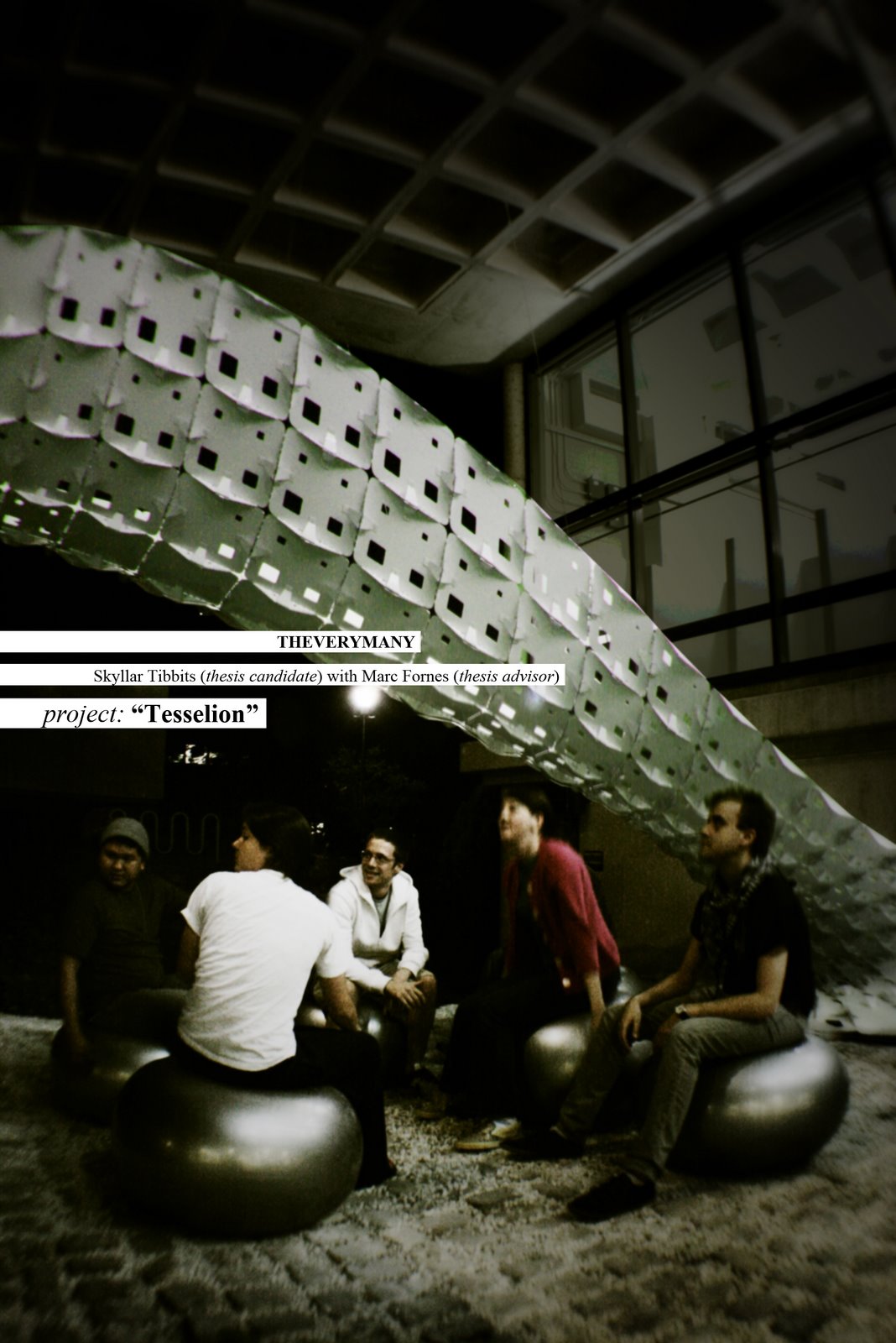
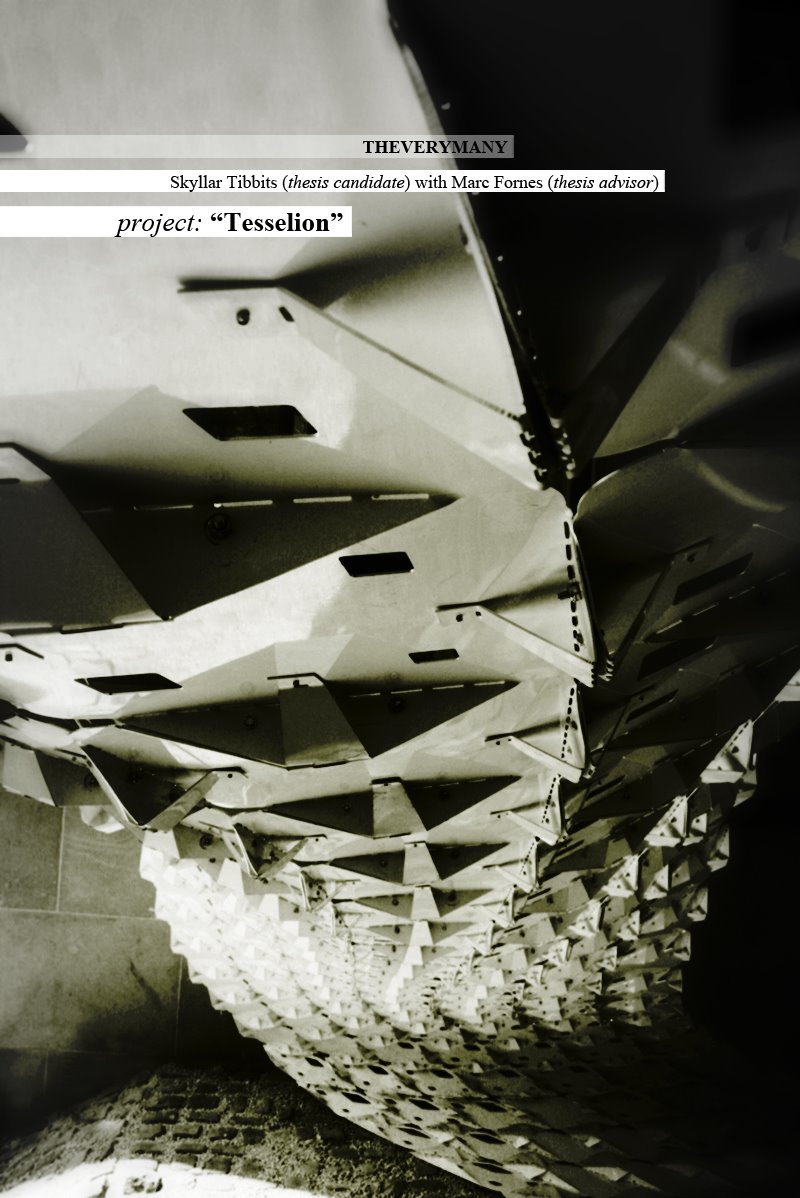
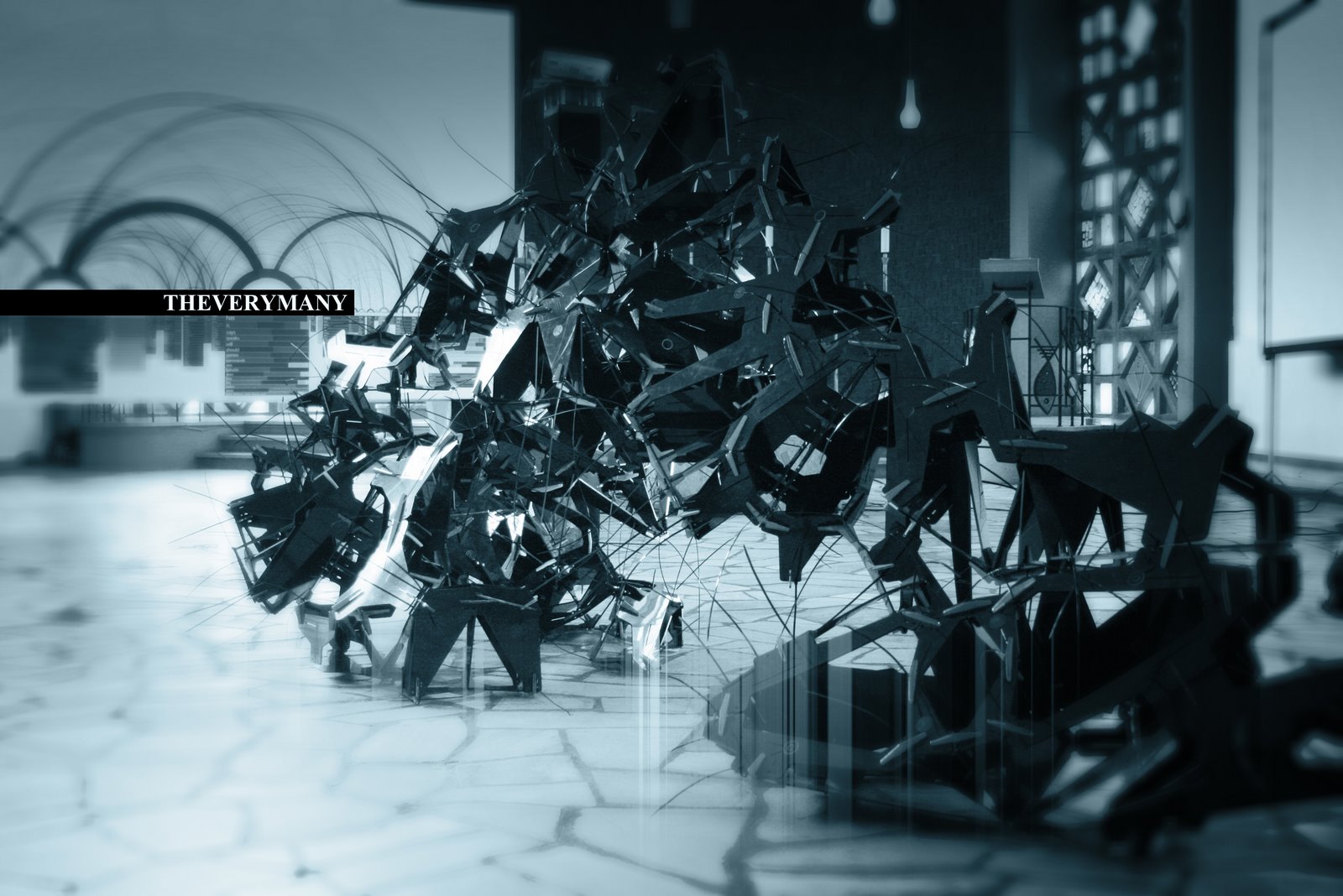
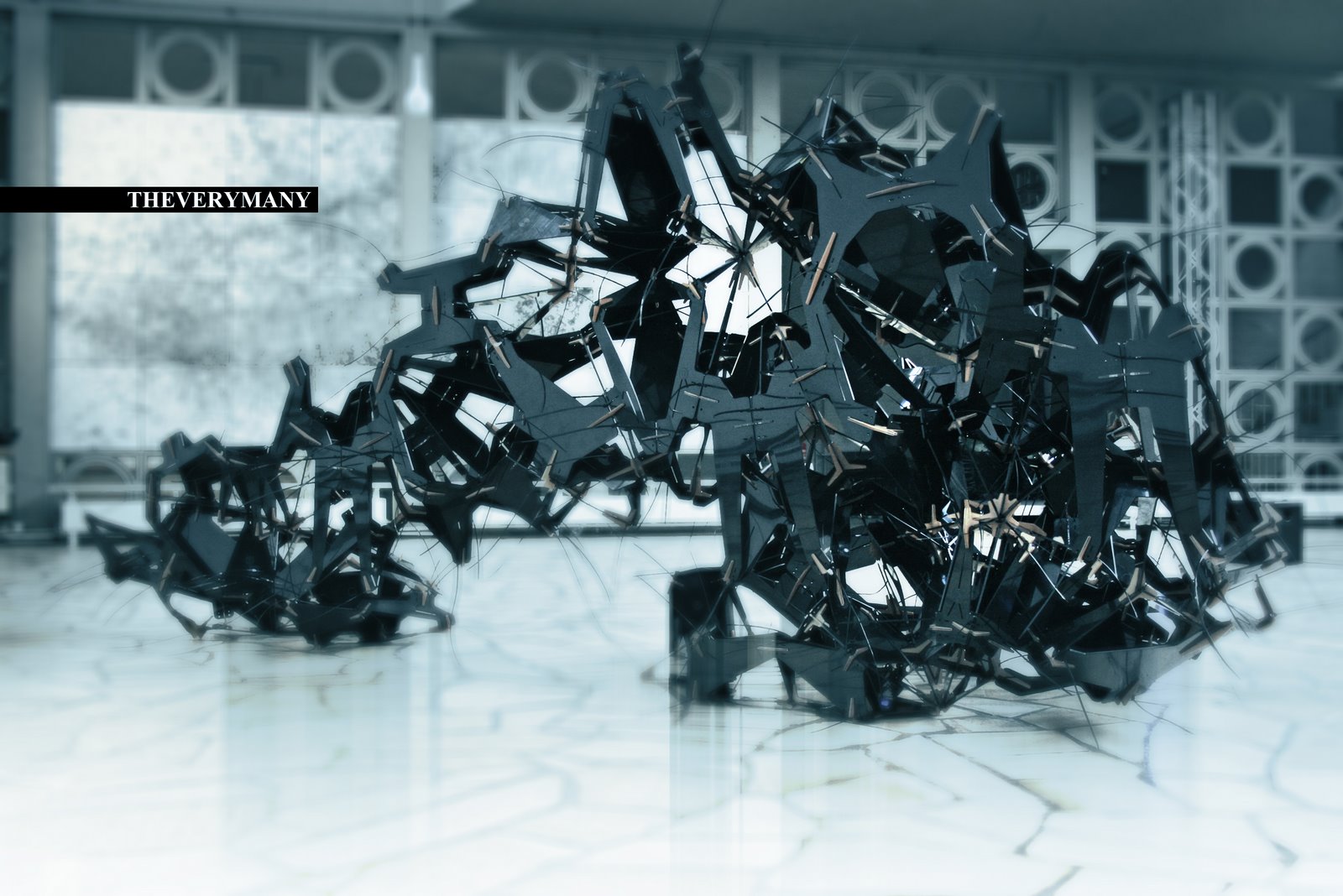
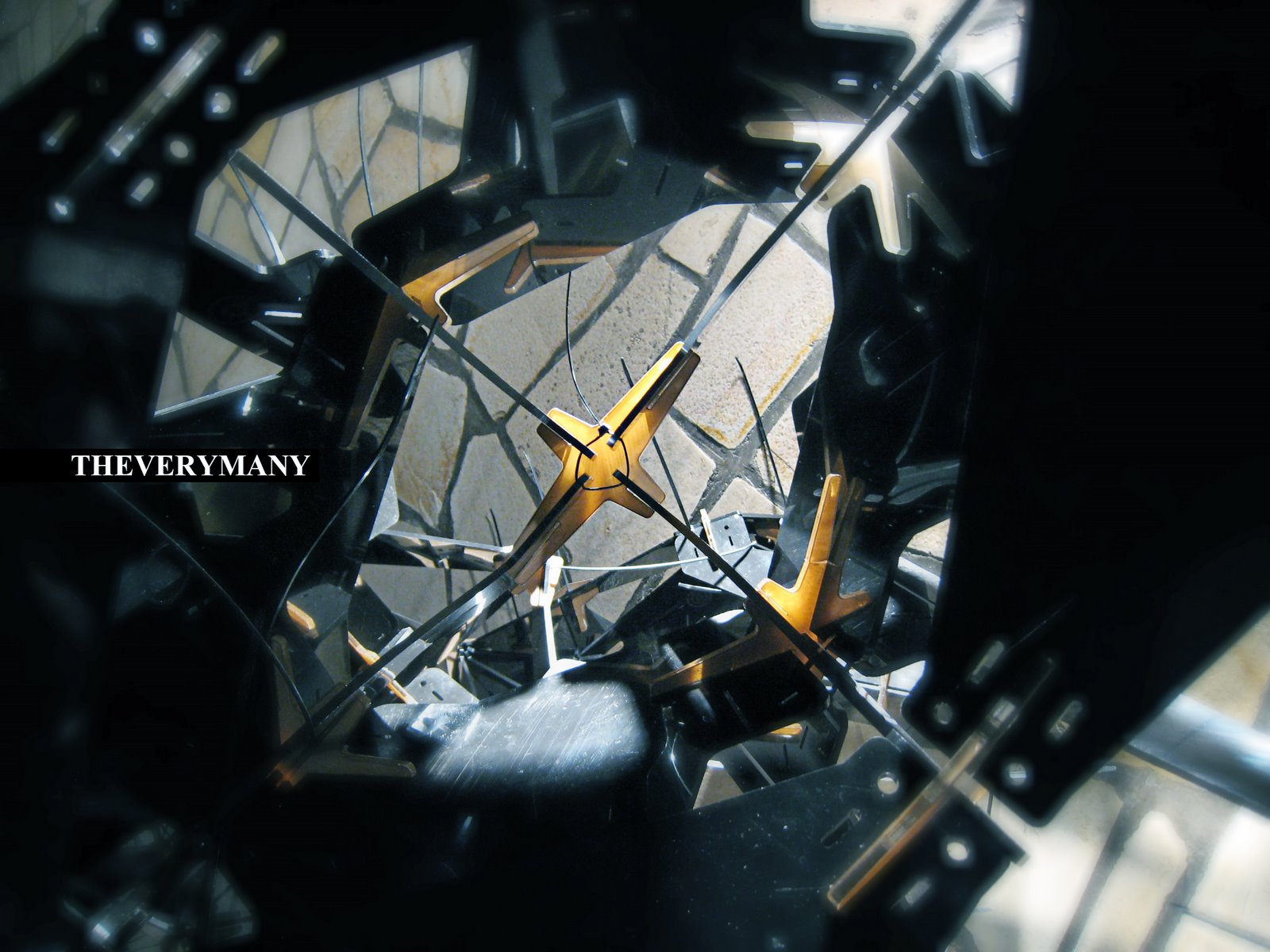
Finally back from several events and wanderings all over the place (Paris, New York, Frankfurt, Strasbourg, Barcelona,...) - here is a first update on the prototype THEVERYMANY produced for Node08 / Frankfurt.

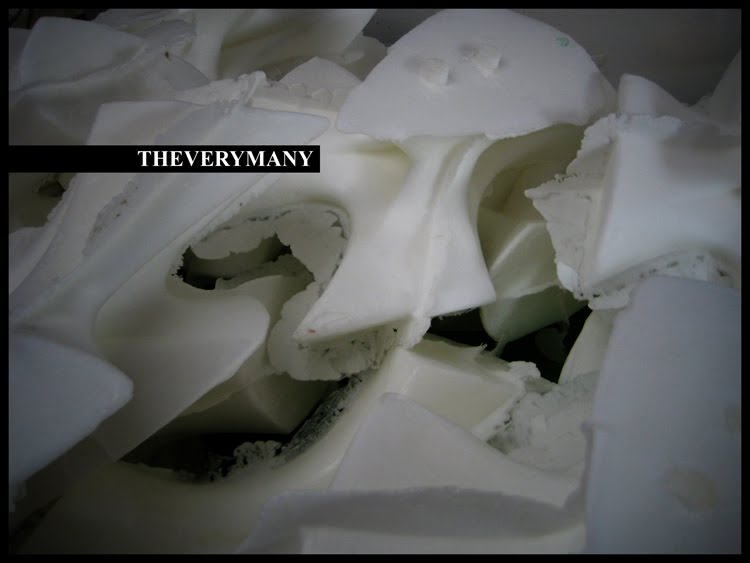
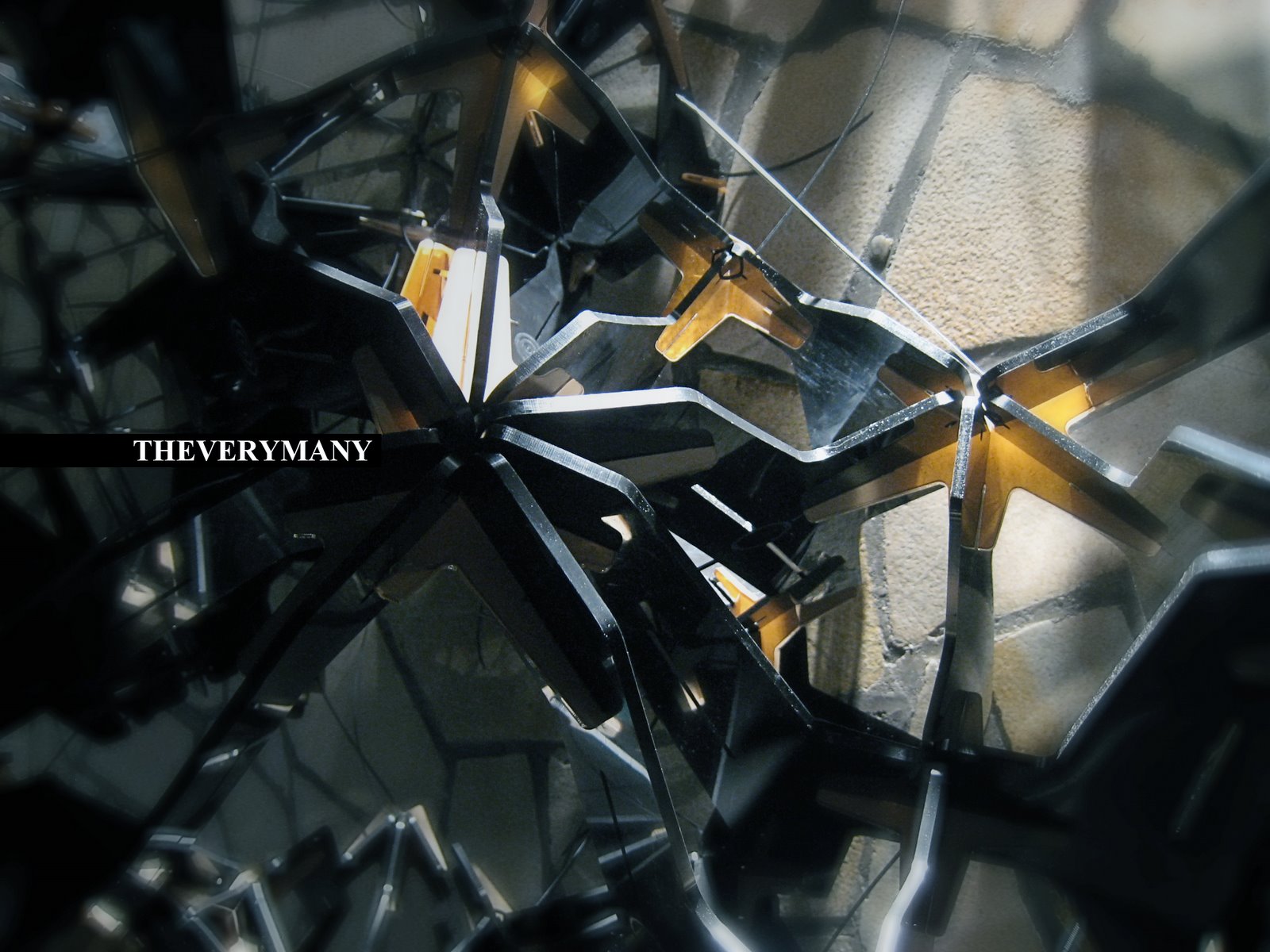
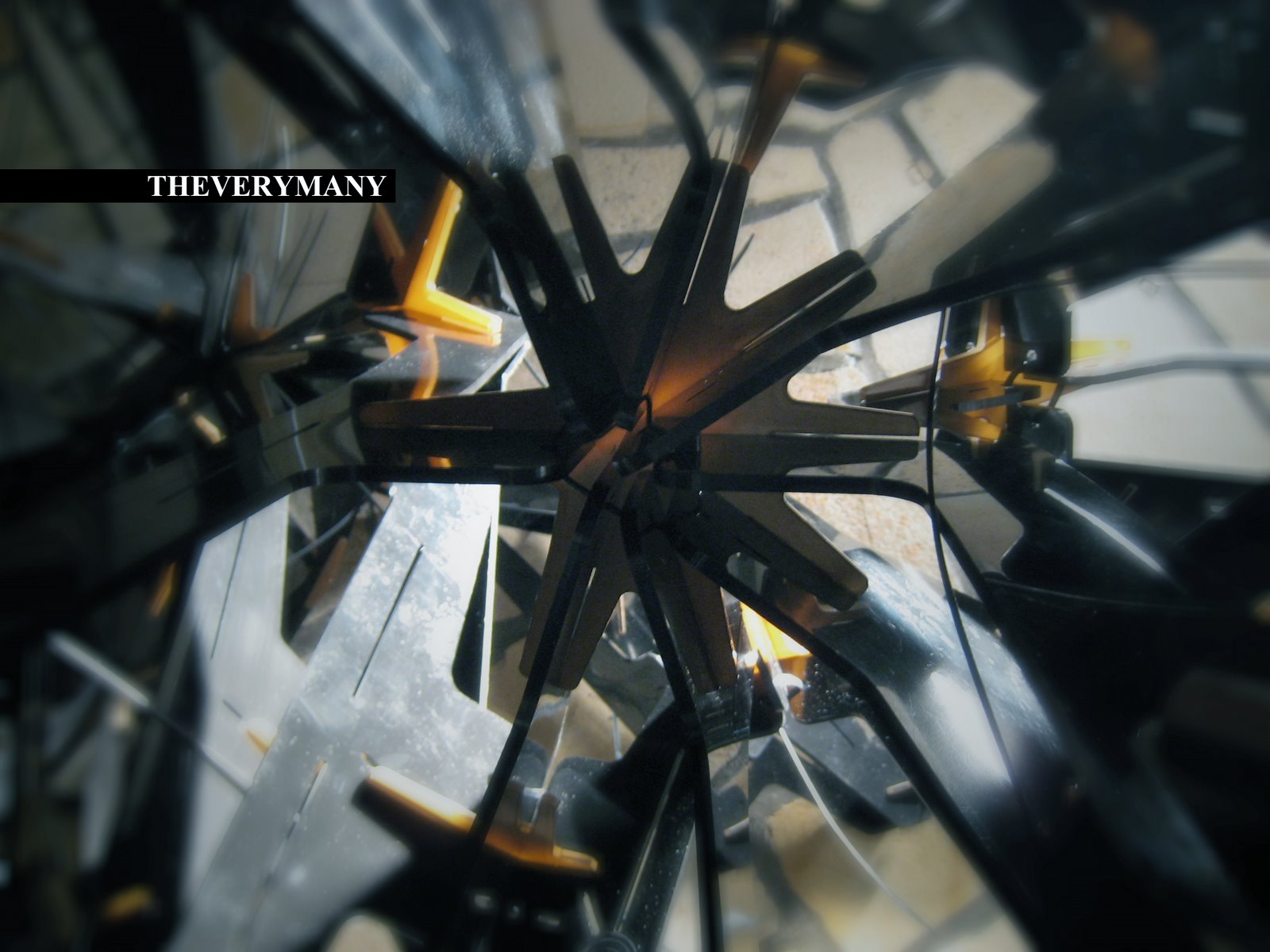
Its assembly has this time been a success (and hughe improvement since v1.0) as it took less than 24 hours & 2 people & 2 laptops to (re-)assemble the 360 panels and 320 nodes...

Once more demonstrating us "one better spend its time within development embedding assembly logic rather than waiting the material world to solve the fuzzines..."

(I will update the "information modeling" improvements on the previous post more focused on the digital back bone approach of the piece...)


"Aperiodic Vertebrae v2.0"
THEVERYMANY (project team: Marc Fornes / Skylar Tibbits)
NODE08 (www.node08.vvvv.org)
April 5th - 12th, Frankfurt / Germany

Many thanks to Eno Henze (http://www.enohenze.de/) & the entire VVVV team (http://vvvv.org) for their invitation & sponsorship

Also many more thanks to our sponsors for the piece:

- Quadrant EPP USA, Inc. (www.quadrantepp.com) > provided us sheets of polyethylene (3/16″ thick)

- Continental Signs (www.continentalsigns.net) and Jared Laucks > CNC cut of the panels

- Dick Dunlop > laser cut of the 320 unique connections (3/16″ acryclic)

Labels: , , , , , , , , ,

Sunday, April 06, 2008

080406_APERIODIC VERTEBRAE v2.0


"Aperiodic Vertebrae v2.0"
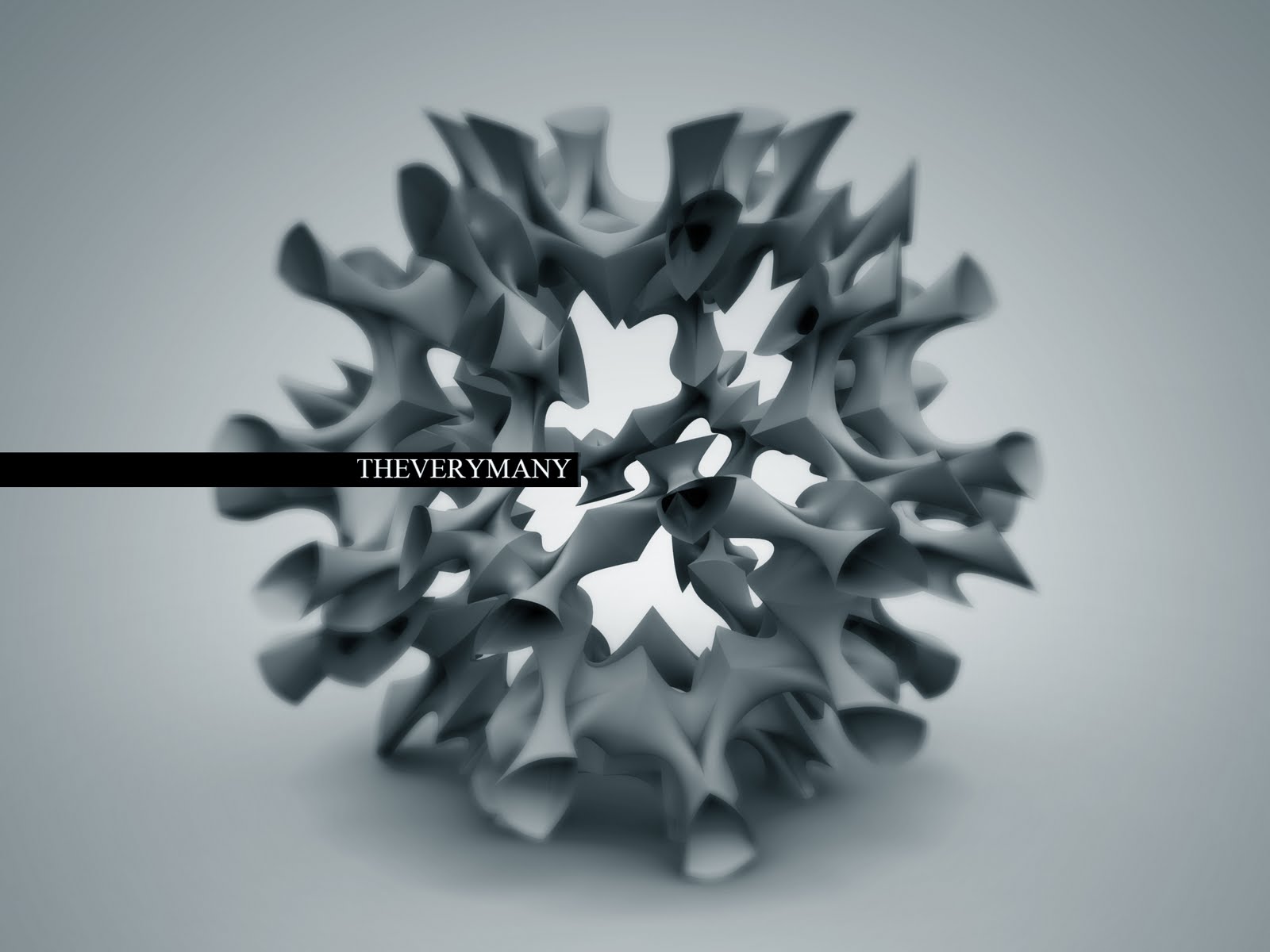
THEVERYMANY
(project team: Marc Fornes / Skylar Tibbits)
NODE08 (www.node08.vvvv.org)
April 5th - 12th, Frankfurt / Germany

Many thanks to Eno Henze (http://www.enohenze.de/) & the entire VVVV team (http://vvvv.org/) for their invitation & sponsorship


TEMPLATES FOR FABRICATION:
Like the form finding, all the panels, connections pieces and "helpers" coded strings engraved have all been 100% the result of a performative explicit protocol entirely coded in vb...
That part - even though presented down the row as a formal exercice / sculpture - has always been though from scratch as performative test / prototypical methodologie/process to convince further consulting work...


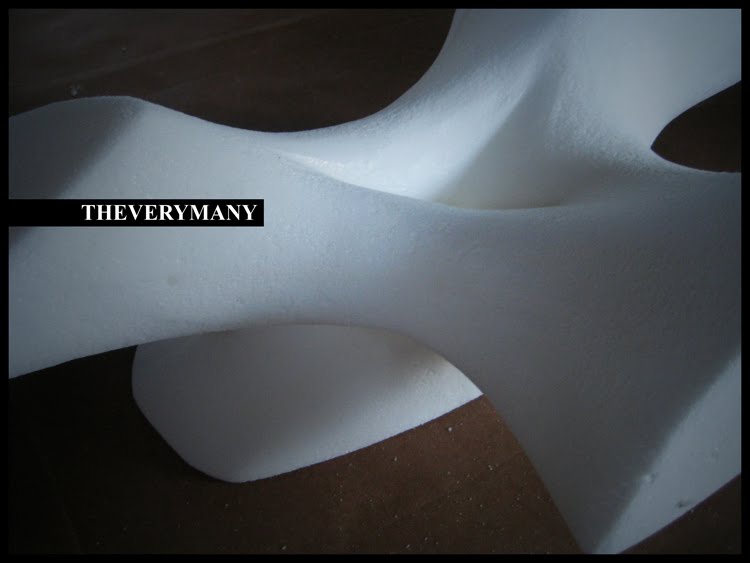
Here are the templates for CNC milling of the panels; 12 unique shapes only are much easier to nest (simple arrays) than all custom pieces...
Many thanks to Quadrant EPP USA, Inc. (http://www.quadrantepp.com/) for providing the 7 sheets of polyethylene required (3/16″ thick)
Many thanks to Continental Signs (http://www.continentalsigns.net/) and Jared Laucks for the CNC cut of those panels


Here are 5 (out of 7) templates for the connections to be laser cut on acrylic sheets (3/16″ thick) - total of 320 unique pieces
Many thanks to Dick Dunlop for the access to the laser cutter (3/16″ acryclic)

Labels: , , , , , , , , , , ,

Friday, February 01, 2008

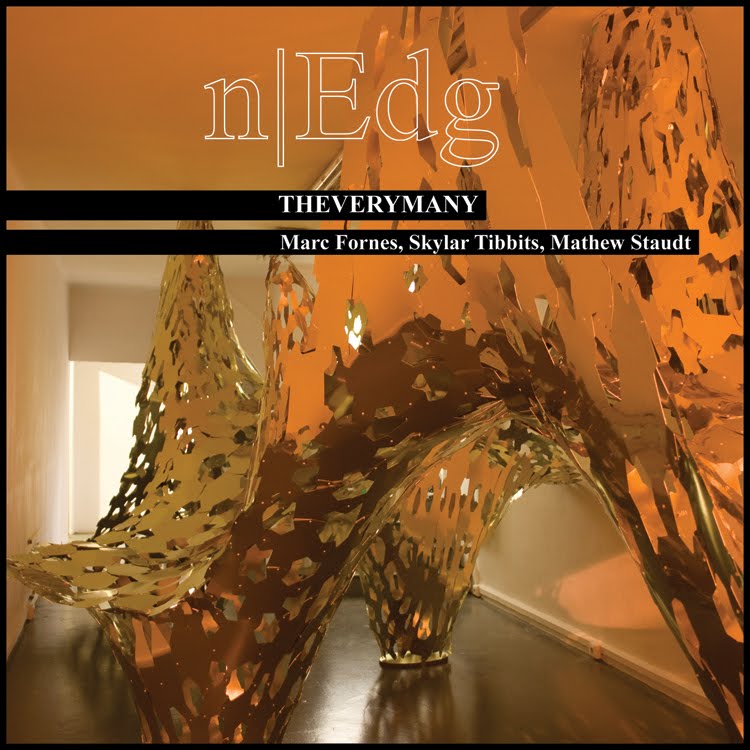
080131_Exhibition: Aperiodic_Vertebrae (day4)


"Generator.x 2.0: beyond the screen..." an exhibition curated by Marius Watz at the DAM(Berlin) with works by Jared Tarbell (US), Commonwealth (US), Theverymany (FR/US), Leander Herzog (CH), Marius Watz (NO) and participants of the Generator.x 2.0 Workshop...

THEVERYMANY (Marc Fornes, Skylar Tibbits) / Aperiodic_Vertebrae
LOG_assembly_day_04: things are going smoother - one day to go before the opening...

Labels: , , , , , , , , , , , ,

Thursday, January 31, 2008

080130_Exhibition: Aperiodic_Vertebrae


THEVERYMANY has been set up based on a continuum research on explicit and encoded protocols within design - the first implicit consequence of its core is to let traces; those traces - often under the format of simple text files - allow to exactly reproduce or alter the model, eventually share axioms... but it somehow also requires to admit and assume those traces, if so, one can learn from mistakes, errors and/or tolerances of previous stages or generation based on feed back...


Yesterday was the kick start in Berlin of the assembly process for the installation -once again the amount of components generated through a long chaine of various small codes / utilities has directly revealled "dirt"/issues hidden behind a fast/furious seamless process... yet nothing extraordinary beyond the purpose of a physical mock up: large scale test for a complete automate pipe line of form & drawing generation...


DIRTY DIGITAL:
One of the significant issue we came across is related to the nature of tiling and computation - the subdivision algorythm is based on a recursive protocol (or SUBSTITUTION) which is first drawing a primitve pyramide (within a choice of four primitives) which then gets subdivide - the process is repeated many times within itself to generate self-similarity... the issue there is that within each generation the protocol requires to "compare" (points, lenght, areas, etc...) and that matching process needs to determine whether two geometry or parameters are "equal" given an inevitable rounding errors... unfortunately the rounding errors are bound to accumulate whithin each generation...

Yet it wasn't any special issue except when point connection gets generated and therefore requires to increase the tolerance factor not to miss any neighbors... though applying overal tolerance is triggering other error trapping while small naming or matching utilities code are running as host on the larger protocol...

Anyway - suming up it is yet still triggering slight erros and confusion - though I'd like to be transparent and learn within those error trapping - it is defintively part of a certain material paradigm debugging...


Let see which surprises are we getting tomorrow...
"a chaque jour sa peine..."

Labels: , , , , , , , , , ,

Friday, March 23, 2007

070322_LightHive_Update(3)


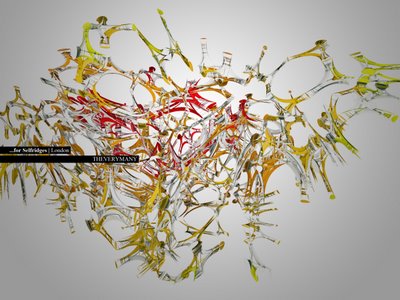
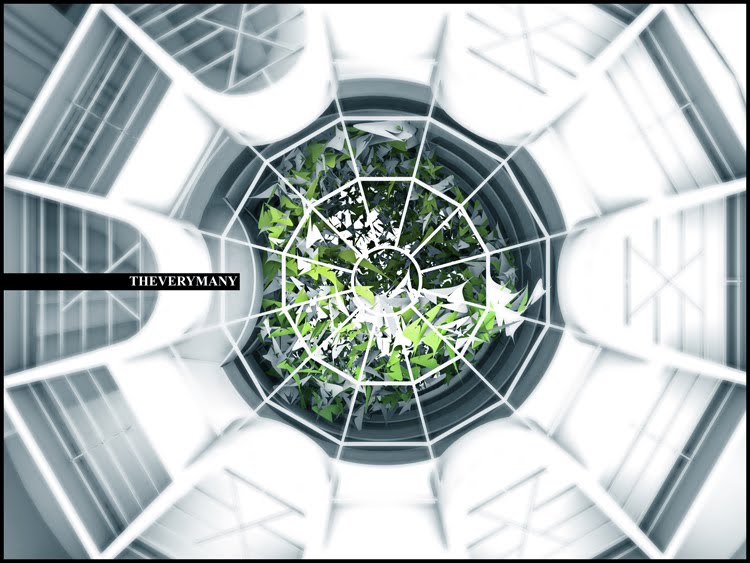
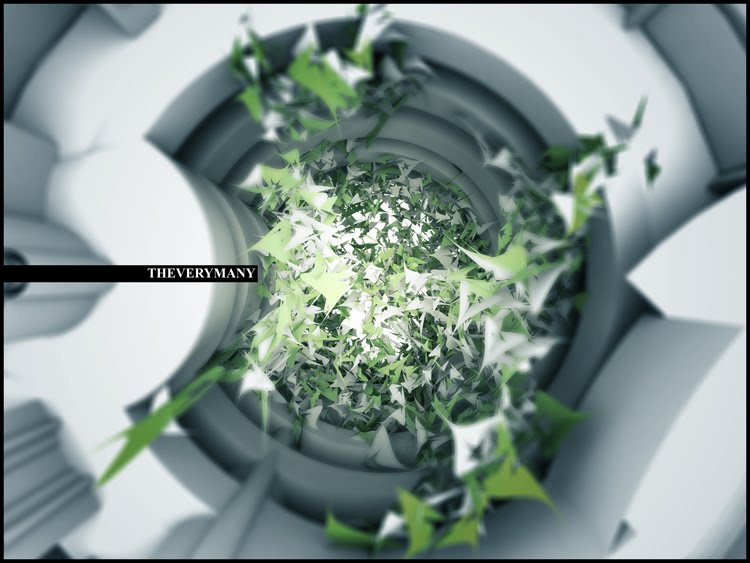
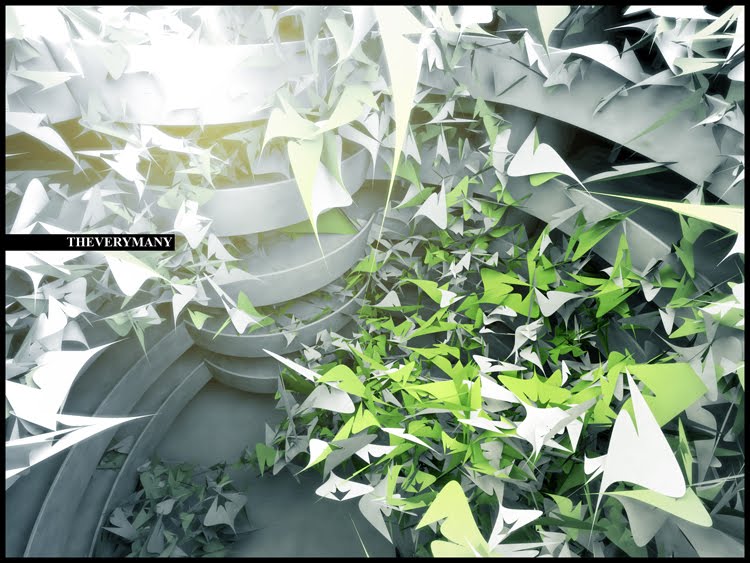
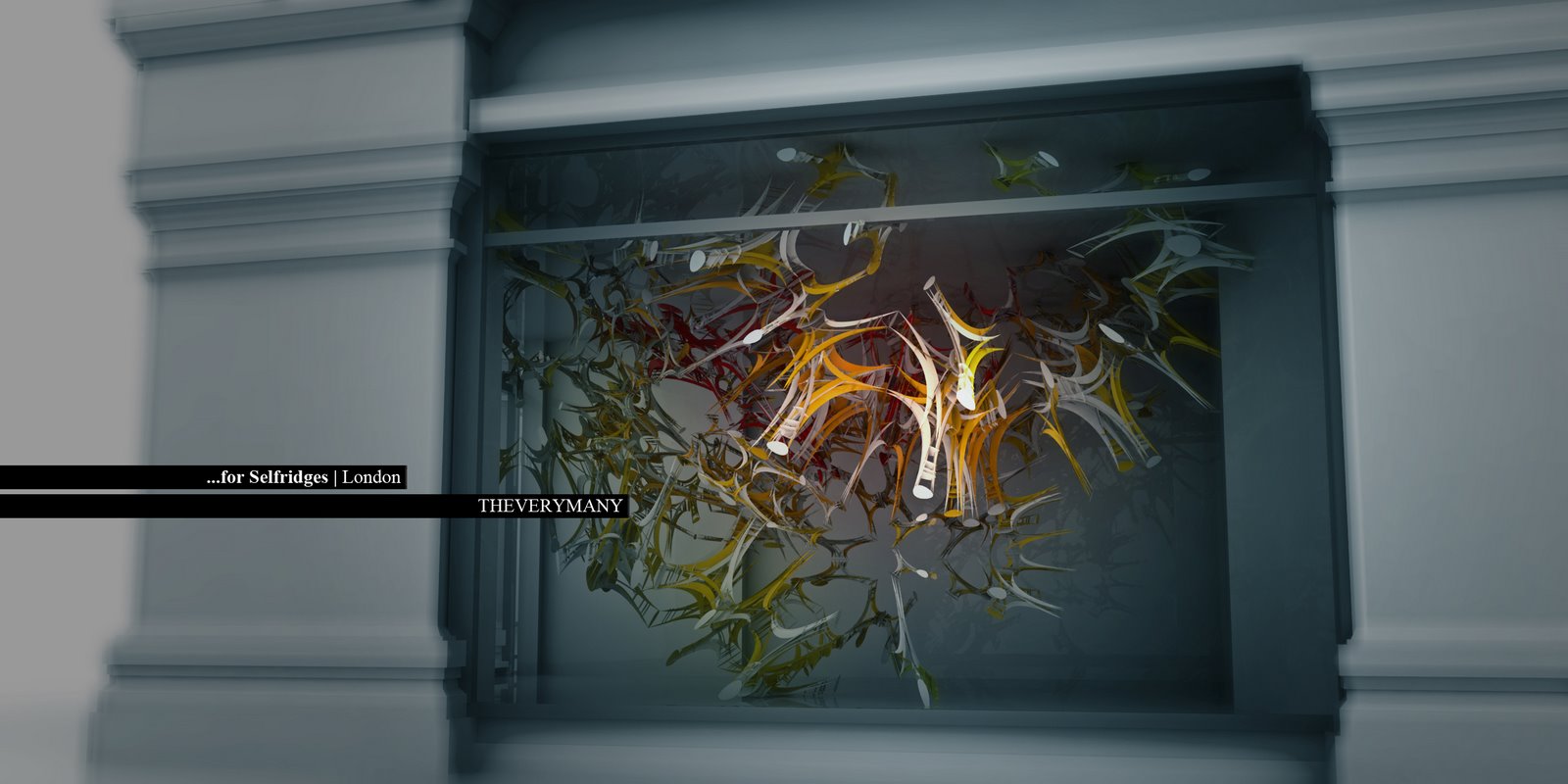
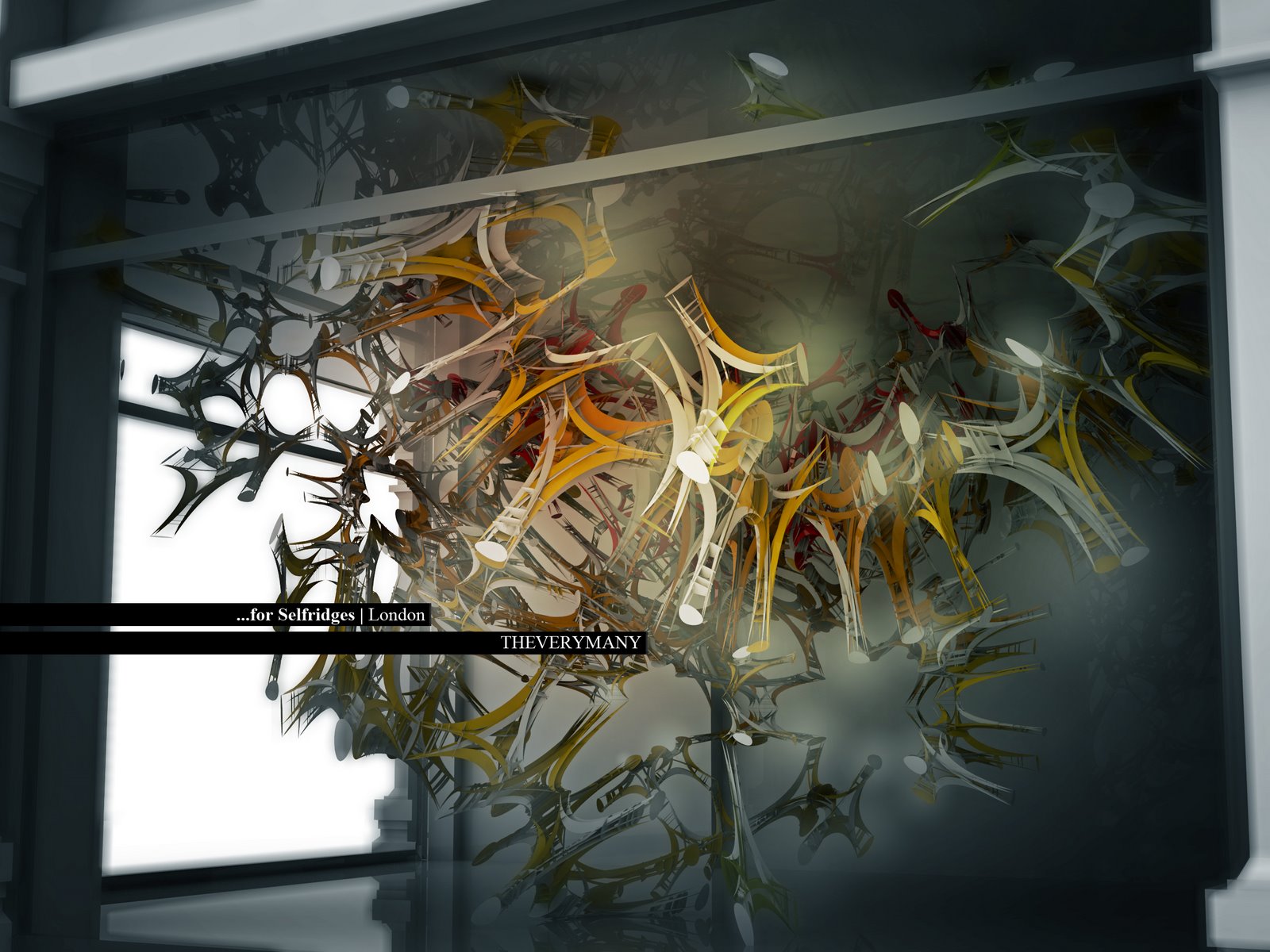
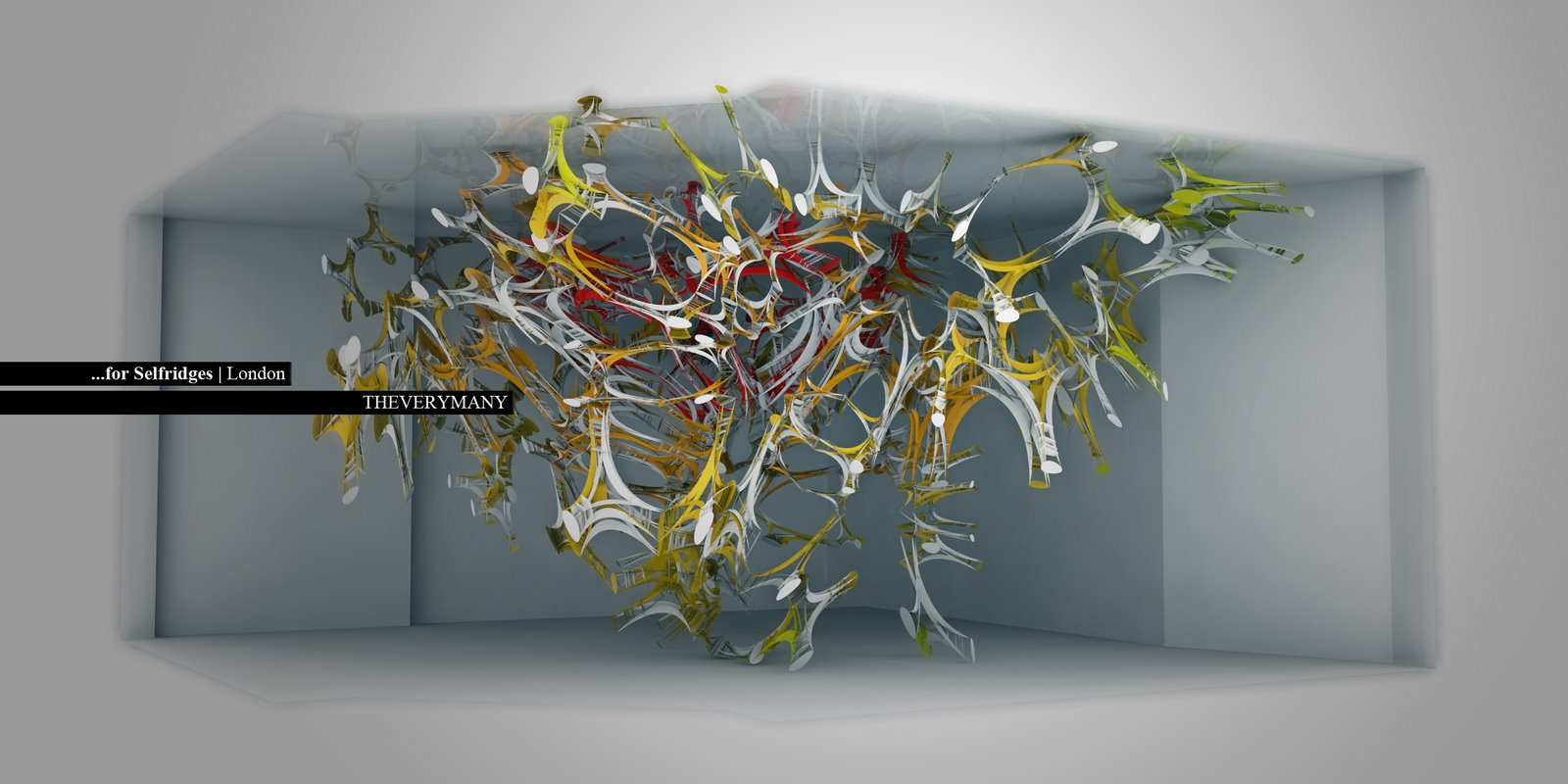
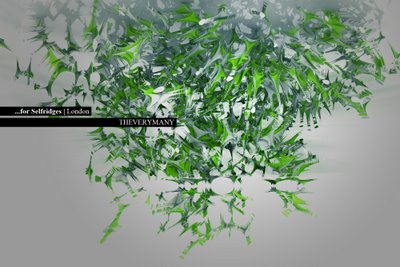
"the AA autrement"... is a set of abstracts rendered while figuring out the explicit and encoded rules set for LightHive "diffuseur grammaire": one could argue that each drawing is acting as some sort of map of the AA school, where the representation devices are a set of unique geomtries -carefully labelled- showing directions of obstacles, accidents and other folds within the terrain of every room...

Simplified as sets of closed polysurfaces, the 3D model allows the code to check for every room which light sources -selected as a point cloud- are enclosed within...


One of many shape... each arrows is growing along the direction of a vector pointing toward any corner of the room boundaries, or furniture piece...

Labels: , , , ,

Tuesday, March 20, 2007

070320_LIGHTHIVE_inProgress


Latest "abstracts" from the development of "LIGHTHIVE"

Lighthive is Alex Haw (Atmos) interactive exhibition at the AA, London (opening early May) for which Marc Fornes & theverymany have been invited to collaborate and write an explicit generative process abble to automatate the shape grammair of most of the 1500 components required to map the exisitng light condition within the AA building.
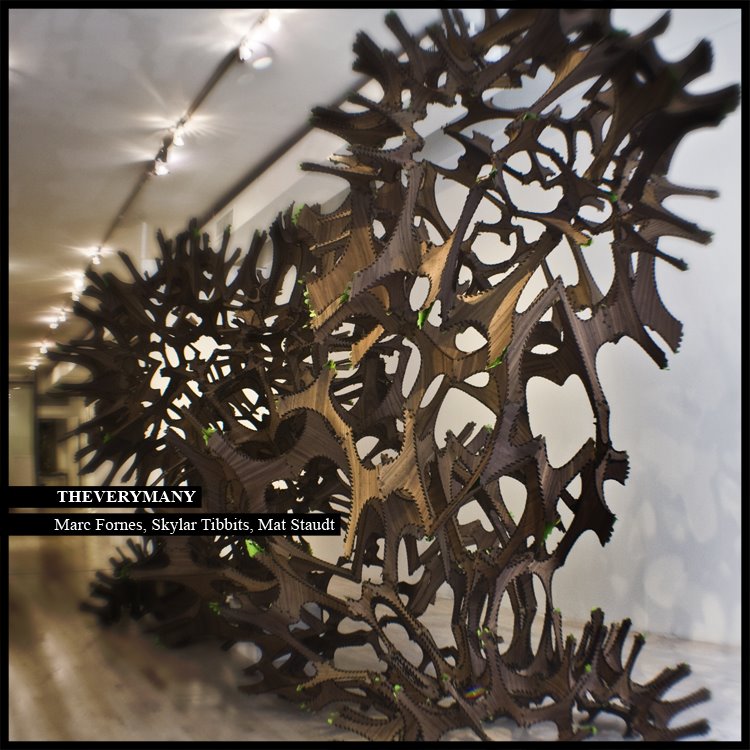
Each of those "3D star" component is an assembly of two 2D star which can be unrolled and laser cut flat onto thick sheet of acrylic.

INPUT (rhinoscript)
-get the 3D model of the AA school as a set of closed polysurface (each polysurface is one room including the boolean of the furnitures)
-get all the light source modelled at their scaled position as a point (color according to light type)

PSEUDO CODE: at the scale of the phenotype, here the 3D model of the school:
- for every pt (lightsource) do
- if pt is within closed polysurface do
- create two planes through each light (orthogonal to each other)
- for each plane do
- intersect plane and polysurface
- for each intersection curve do
- if pt is within curve do


COMPONENT: at the scale of the component "genotype", the challenge is to allow replication, proliferation while developping fondamentales genetic modifications such as custom amount of "spikes", each of those "spikes" having custom lenght, some "spikes" being able to bundle according to neighbourhood condition, etc, etc...

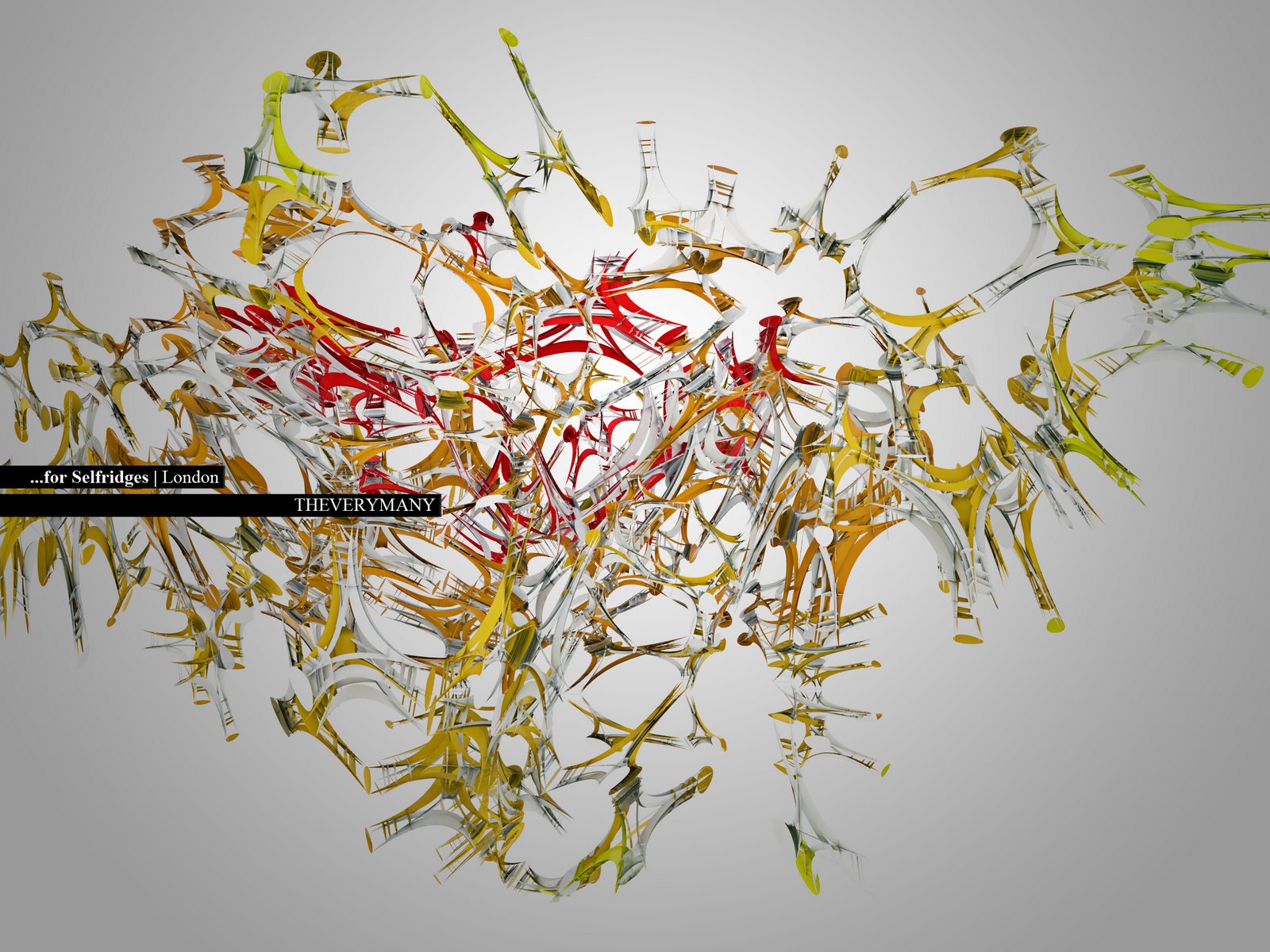
Those components are not displaying any swarm behaviour or collective intelligence, neither is based on dynamic feedback... BUT the generation of each "spike" is following a so long list of rules (possible target tests, few distance tests, many angle tests, etc, etc...) and possible branching transformations according to which there are able to develope and mutate... sometimes up to the point of displaying extreme behaviours impossible to expect... once more "very many" allows or describe a blurry boundary between "automatisation" and Emergence... between Repetition and Intelligence? blurry...
Labels: , , ,